Dr. Nicholas Thanissaro Leads Meditation in the Age of AI at Claremont
Venerable Dr. Nicholas Thanissaro led a March 5 Mind Lunch at Claremont asking whether Large Language Models may help or hinder our pursuit of contemplative knowledge.
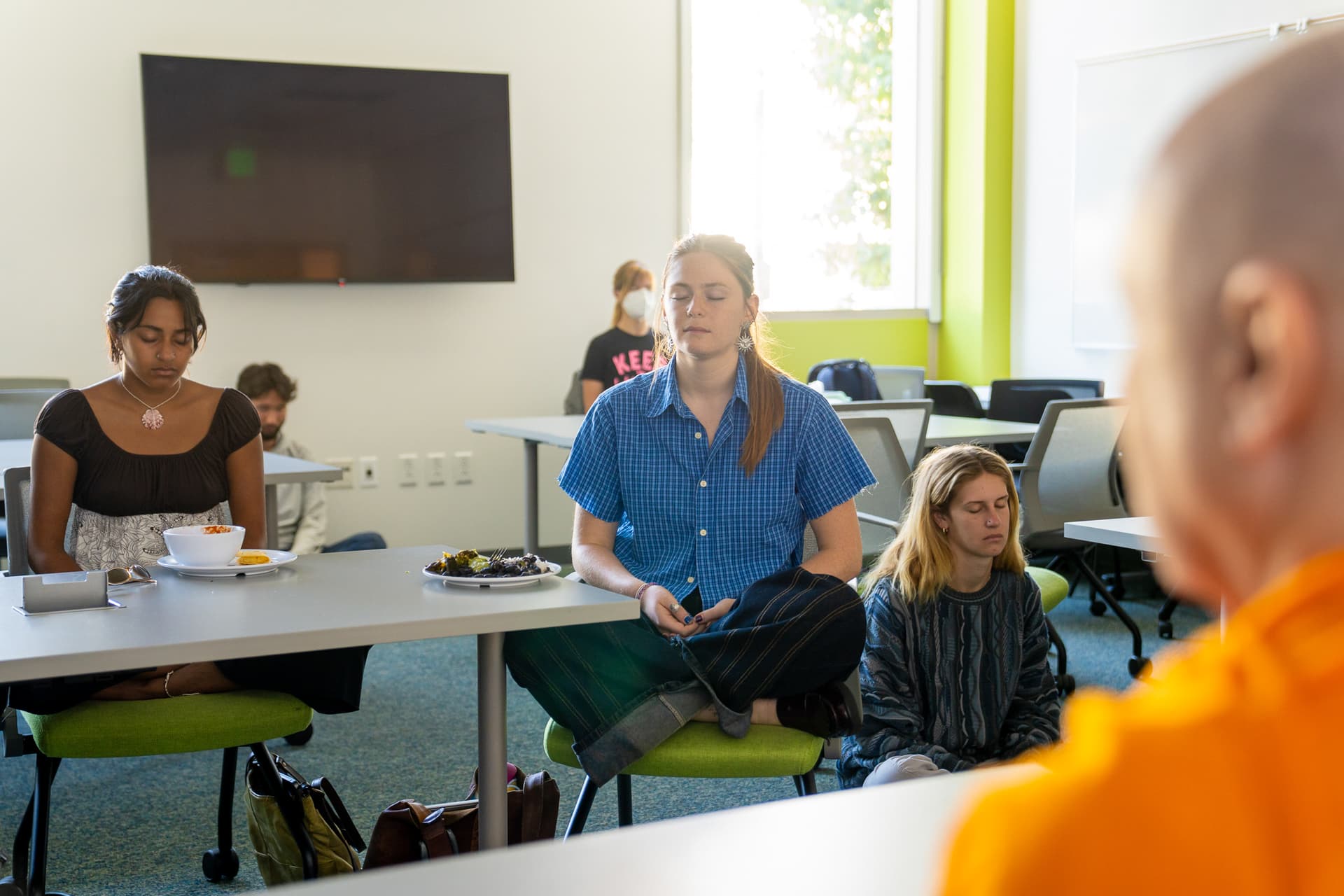
Students and faculty gathered with the lights dimmed in a second-floor classroom of the Nucleus Science Center for a Mind Lunch session titled "Meditation in the Age of AI," led by Venerable Dr. Nicholas Thanissaro. The Thursday gathering, part of a weekly Mind Lunch series, turned a traditional classroom into a place of quiet reflection and lively discussion.
The session centered on the intersection of meditation and artificial intelligence, specifically how Large Language Models, or LLMs, intersect with contemplative learning. As [Tsl News] reported, "[...] This week, Venerable Dr. Nicholas Thanissaro — a Buddhist monk in the Dhammakaya tradition — led a discussion titled 'Meditation in the Age of AI' on how Large Language Models (LLMs) may help or hinder our pursuits for contemplative knowledge."
Thanissaro’s response to the technology was personal and candid. According to [Tsl News], "Thanissaro described how, even as a lifelong teacher and instructor, AI’s ability to easily create meditation guides, synthesize and translate texts initially brought him anxiety." The point framed the session’s tension: tools that speed comprehension can also shortcut the reflective work meditation asks us to do.
That tension was placed in a campus context that many students recognize. [Tsl News] summarized the theme this way: "This Mind Lunch focused on a topic that remains pertinent to many of us on college campuses: how humbling it can feel to think and create in the burgeoning age of artificial intelligence." The coverage included the observation that, "Anyone who has struggled over the perfect word for an idea, or the right thesis for a long essay can attest to the fact that sitting with a question without finding an instant resolution can be a rewarding process."
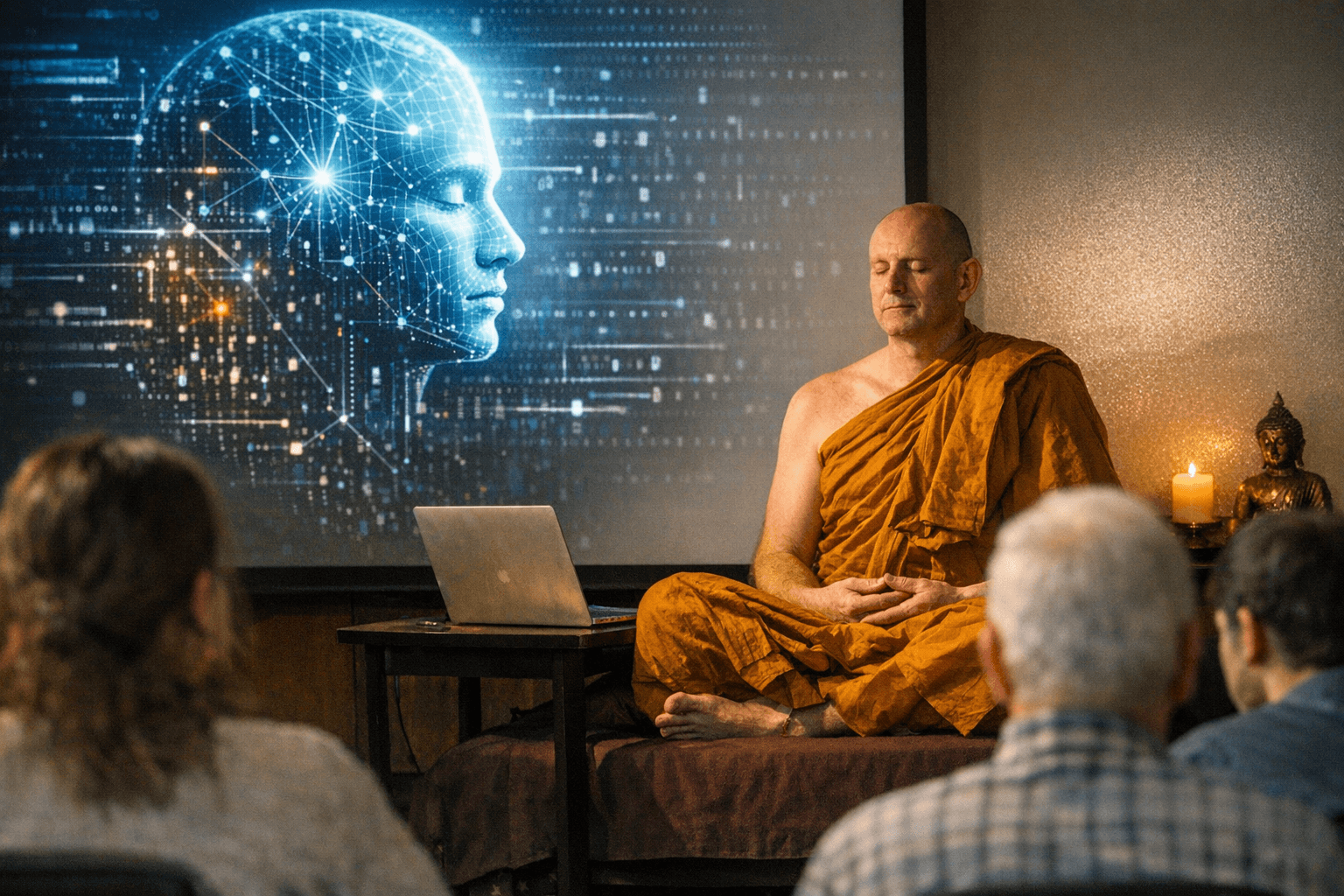
The report went on to contrast that reward with modern convenience: "However, in an era marked by rapid, auto-generated summaries available at the click of a button, this almost meditative practice of lingering on an unknown seems countercultural." The session invited participants to consider whether using LLMs to generate summaries, translations, or practice guides supports contemplative depth or simply delivers tidy answers.
Thanissaro’s background lent weight to the conversation. He is originally from the U.K., first introduced to Buddhism while at university in Manchester, and joined a Buddhist society there. A guest speaker urged him to move to Thailand, where he studied Buddhism and the Thai language, and after eight years he became a monk. He has practiced and taught meditation for over 30 years, a trajectory that framed his reflections on technology and practice.
The Mind Lunch series has grown into a steady Thursday tradition over the past two years, organized in part by a neuroscience professor and described by [Tsl News] as "a beloved new Thursday tradition." Student Life published an account of the March 5 session on March 6, 2026, noting that every week the speaker changes, attendees rotate, and participants "each take an hour out of their hectic schedules to share a meditative moment." The March 5 conversation left the question hanging for future gatherings: can the speed and synthesis of LLMs be harnessed without losing the patient work of contemplative practice.
Know something we missed? Have a correction or additional information?
Submit a Tip