Drought-stricken Iraqi marshes revive as water returns and families come back
Water has returned to the Chibayish marshes, bringing back buffalo, boats and families after drought emptied a landscape tied to Marsh Arab life.
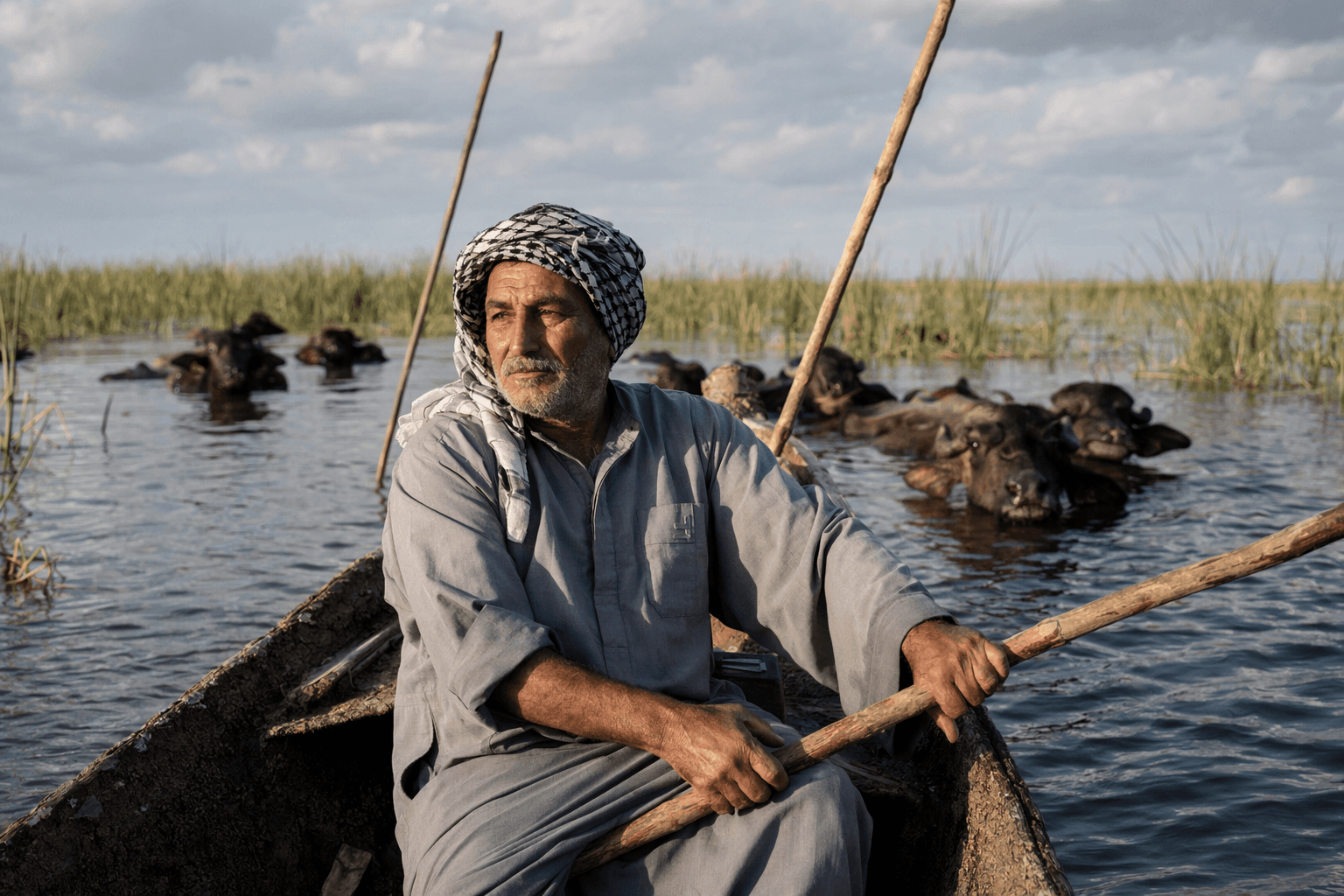
Water is moving again through the Chibayish marshes, where canoes have returned to reopened channels, water buffalo are wading through shallow stretches and patches of green pasture are reappearing on land that had been abandoned to dust. After years of drought, submerged marshland has climbed from under 8% in recent years to roughly 32% to 36%, a striking recovery that is already drawing farmers and fishermen back, even as the outlook remains tied to rainfall, reservoir levels and government releases.
For Haidar Qassem, who raises water buffalo in the central marshes, the change has been personal and painful. “Some time ago, all our livestock died and there was no water at all,” he said, describing how drought pushed many residents to migrate. Now, as water levels rise, some are returning cautiously to the same waterways and grazing grounds that sustained Marsh Arab communities for generations through fishing, buffalo herding and reed harvesting.
The revival matters because the marshes are far more than a scenic wetland. The Ahwar of Southern Iraq, inscribed by UNESCO as a World Heritage Site in 2016, is made up of seven components, including three archaeological sites and four wetland marsh areas. UNESCO describes it as one of the world’s largest inland delta systems in an extremely hot and arid environment, a place where biodiversity and human settlement have long been intertwined. As water returns, fish stocks, vegetation and wildlife have a chance to recover after a period of ecological collapse.
But the recovery is fragile, and the politics of water remain decisive. UN Iraq said in January 2026 that the Mesopotamian Marshes continued to shrink despite their World Heritage status, with buffalo herds down by more than 76% and fishing, the primary livelihood for more than 40% of marsh residents, falling from 80 tons a day to nearly zero in the worst period. The same UN figures said more than 170,000 people had been displaced since 2018, while Iraq’s national water reserves dropped to an 80-year low of about 4 billion cubic meters. Chatham House linked the crisis to shrinking river flows, major Turkish and Iranian dams and weak water diplomacy, underscoring how quickly the marshes can lose ground again.
The return of water is a relief for families in Dhi Qar, Maysan and neighboring provinces, but it is not yet a restoration. With hotter months ahead and upstream controls still uncertain, the marshes stand as a measure of Iraq’s climate resilience and its water insecurity at the same time.
This article was produced by Prism’s automated news system from verified source data, official records, and press releases, then run through automated quality and moderation checks before publishing. The system is built and supervised by the people who set the standards it runs under. Read our full AI policy.
Did this article answer your question?


