Klingbeil blames Iran war for energy shock, cuts Germany tax outlook
Klingbeil tied Germany’s tax downgrade to Trump’s Iran war, as Berlin cut its 2026-2030 revenue outlook by 87.5 billion euros and warned of a deeper budget squeeze.
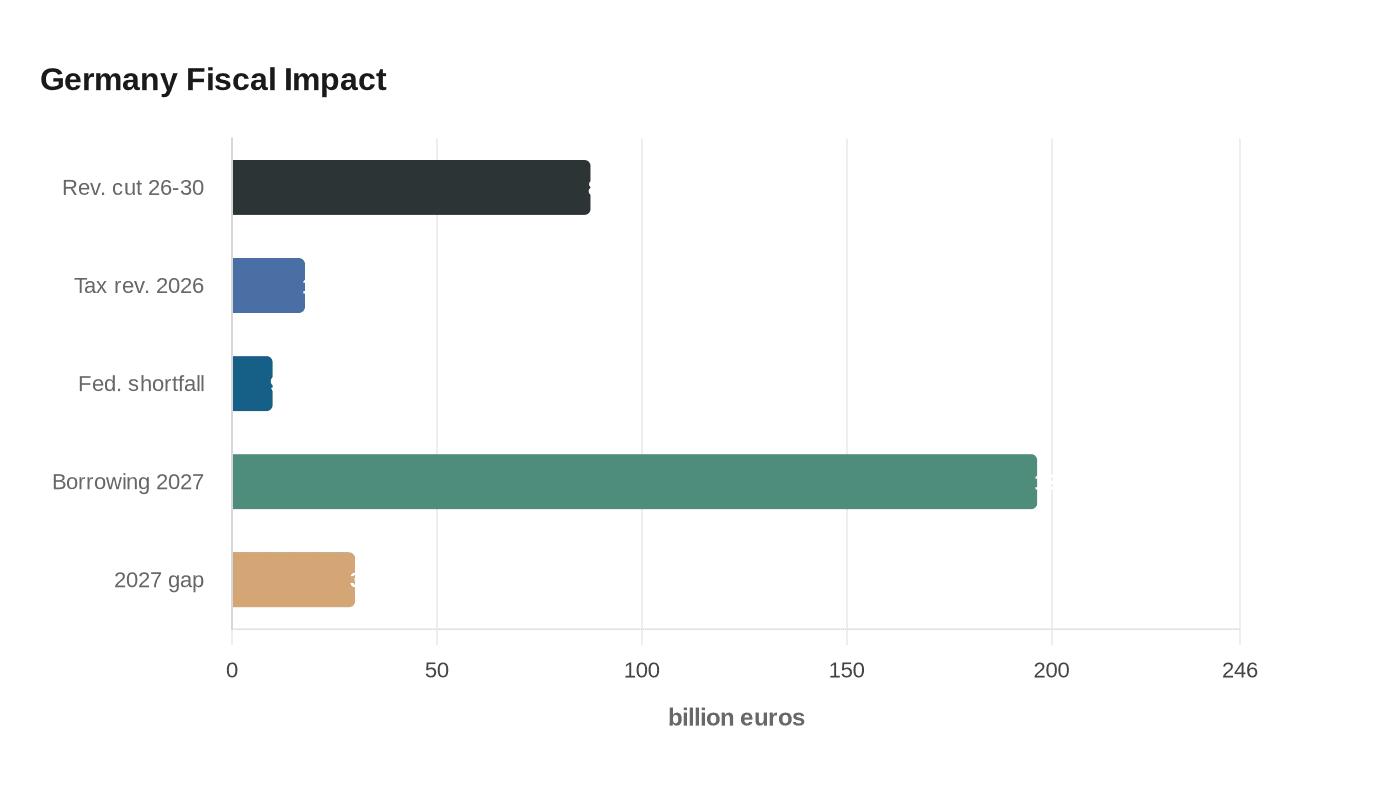
Germany’s finance minister linked the country’s worsening fiscal outlook to Donald Trump’s war in Iran, arguing that the conflict’s energy shock was already slowing economic momentum in Berlin even though Germany was not directly involved. The argument landed alongside a sharp downgrade from Germany’s council of tax experts, which cut its 2026 to 2030 revenue forecast by 87.5 billion euros from October’s estimate.
The immediate damage to the public finances is clear. The finance ministry said the federal government, states and municipalities were now expected to collect 17.8 billion euros less in tax revenue in 2026 than previously assumed. The federal government alone was facing a 9.9 billion euro shortfall next year, a fresh blow for Chancellor Friedrich Merz’s coalition as it prepares the 2027 budget and a medium-term fiscal plan.

Lars Klingbeil said the war and the resulting global energy price shock were slowing Germany’s positive economic momentum. His case is politically charged, but it is not disconnected from the data now shaping Berlin’s forecasts. Germany’s economy ministry already cut its 2026 growth outlook to 0.5 percent in April, down from 1 percent, while raising its inflation projection as oil and gas prices moved higher after the conflict in the Middle East. The ministry has said the war has created an energy price shock that is putting a real burden on people and on the economy.
The timing matters because Germany has spent months trying to steady its finances while facing yawning budget gaps, higher defence costs and weak growth. The cabinet approved key 2027 budget targets on April 29, including total borrowing of 196.5 billion euros, a figure meant to support record investment and higher defence spending. Earlier government warnings pointed to a roughly 30 billion euro shortfall in the 2027 budget, underscoring how little room Berlin has left if revenues keep slipping.
The broader backdrop reaches beyond Germany. Discussions around the International Monetary Fund and World Bank spring meetings have focused on energy markets, supply security and growth, reflecting the view in Berlin that the Iran war will affect the global economy for a long time. For Germany, which depends heavily on trade, factory output and stable energy prices, that means an external shock is feeding directly into domestic tax receipts, budget planning and the credibility of the coalition’s economic strategy.
This article was produced by Prism’s automated news system from verified source data, official records, and press releases, then run through automated quality and moderation checks before publishing. The system is built and supervised by the people who set the standards it runs under. Read our full AI policy.
Did this article answer your question?


