Egyptian tomb discovery reveals 600 years of changing burial rites
Wild boar burials, rare in ancient Egyptian tombs, turned up beside coffins and pit graves at Tell Kom Aziza, tracing 600 years of changing rites.
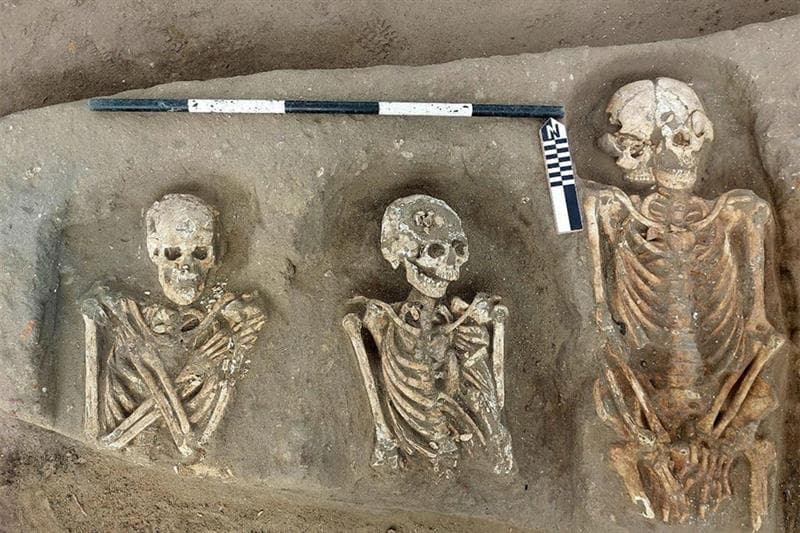
Human and animal remains unearthed at Tell Kom Aziza in Egypt’s Nile Delta have exposed a burial ground that changed shape over centuries, not in a single break. The Egyptian mission from the Supreme Council of Antiquities uncovered part of a Greco-Roman necropolis in Beheira Governorate, north of Cairo, where simple pit burials sat beside mud-brick-lined graves, painted plaster coffins and barrel-shaped pottery coffins.
The discovery, announced on Friday, June 5, added a new layer to what archaeologists now see as a much older and more complex site. Stratigraphic evidence shows Tell Kom Aziza was occupied long before the cemetery phase, with earlier levels dating to the Old Kingdom, New Kingdom and Late Period. That sequence suggests the area moved gradually from settlement use into a major burial landscape, preserving a long record of how communities adapted the same ground for different purposes.
Preliminary study of the human remains also points to changing funerary practice. Some bodies were laid north-south, others east-west, and arm positions varied from hands folded over the pelvis to near the neck or crossed over the chest in the Osirian pose. The barrel-shaped pottery coffins are commonly associated with the Ptolemaic period, while the painted plaster coffins and mud-brick-lined graves show that burial customs at the site were never uniform.
The cemetery yielded more than tombs. Officials said the excavations also brought up pottery, stone vessels, bread molds, tools, ovens and storage jars, along with large quantities of animal, fish and bird bones. Those finds widen the picture beyond funerary ritual and into the daily economy of the people who lived around the site, handled food, made goods and buried their dead in the same landscape.
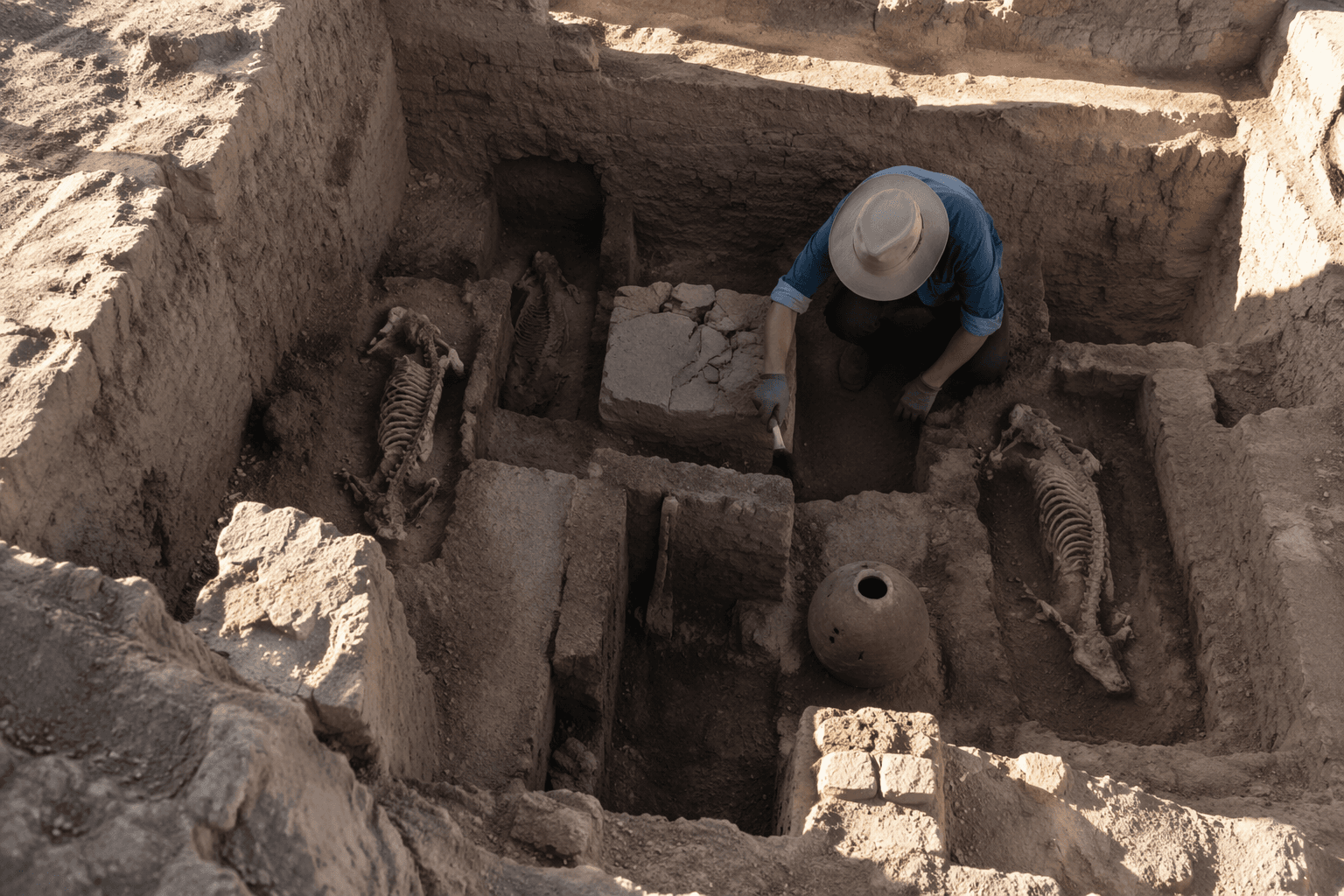
Among the most striking discoveries were complete wild boar burials, which Khaled Abdel-Ghani Farhat, director-general of Beheira Antiquities and head of the excavation mission, described as extremely rare in ancient Egyptian funerary contexts. Researchers noted that pigs were symbolically linked to the god Set, raising the possibility that the boars had economic or domestic meaning tied to a particular phase of the site’s use.
Minister of Tourism and Antiquities Sherif Fathy said the site offers more than funerary evidence, pointing to how ancient communities lived, adapted and interacted with their environment over millennia. Hisham El-Leithy and Mohamed Abdel-Badie said ongoing and future excavations are expected to deepen the record at Tell Kom Aziza, a layered site where changing burial rites now sit atop traces of far older lives.
This article was produced by Prism’s automated news system from verified source data, official records, and press releases, then run through automated quality and moderation checks before publishing. The system is built and supervised by the people who set the standards it runs under. Read our full AI policy.
Know something we missed? Have a correction or additional information?
Submit a Tip