EU to release 16 billion euros as Hungary advances reforms
Brussels moved to free 16 billion euros after Hungary’s judicial reforms, even as media and anti-corruption weaknesses remain under EU scrutiny.
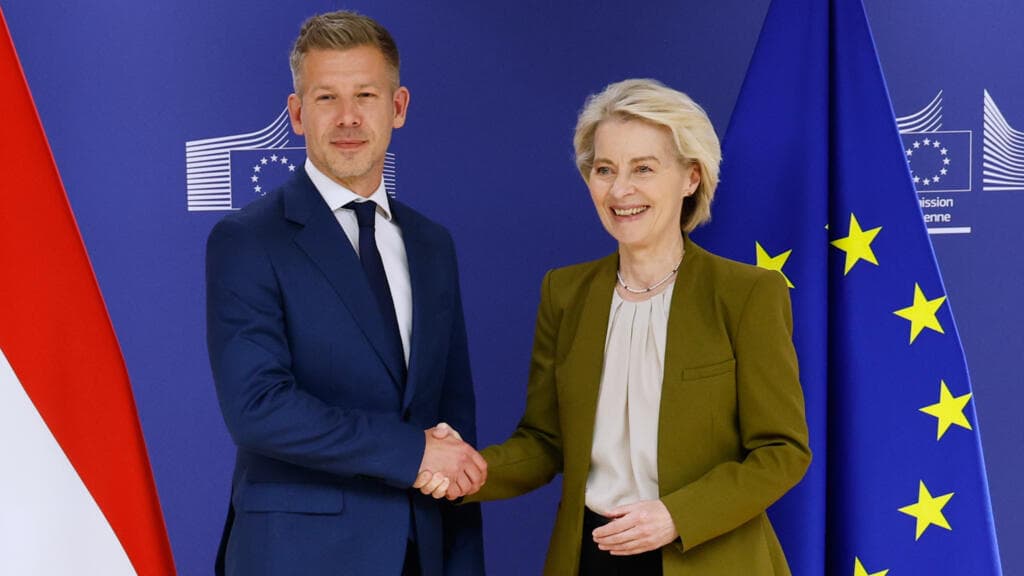
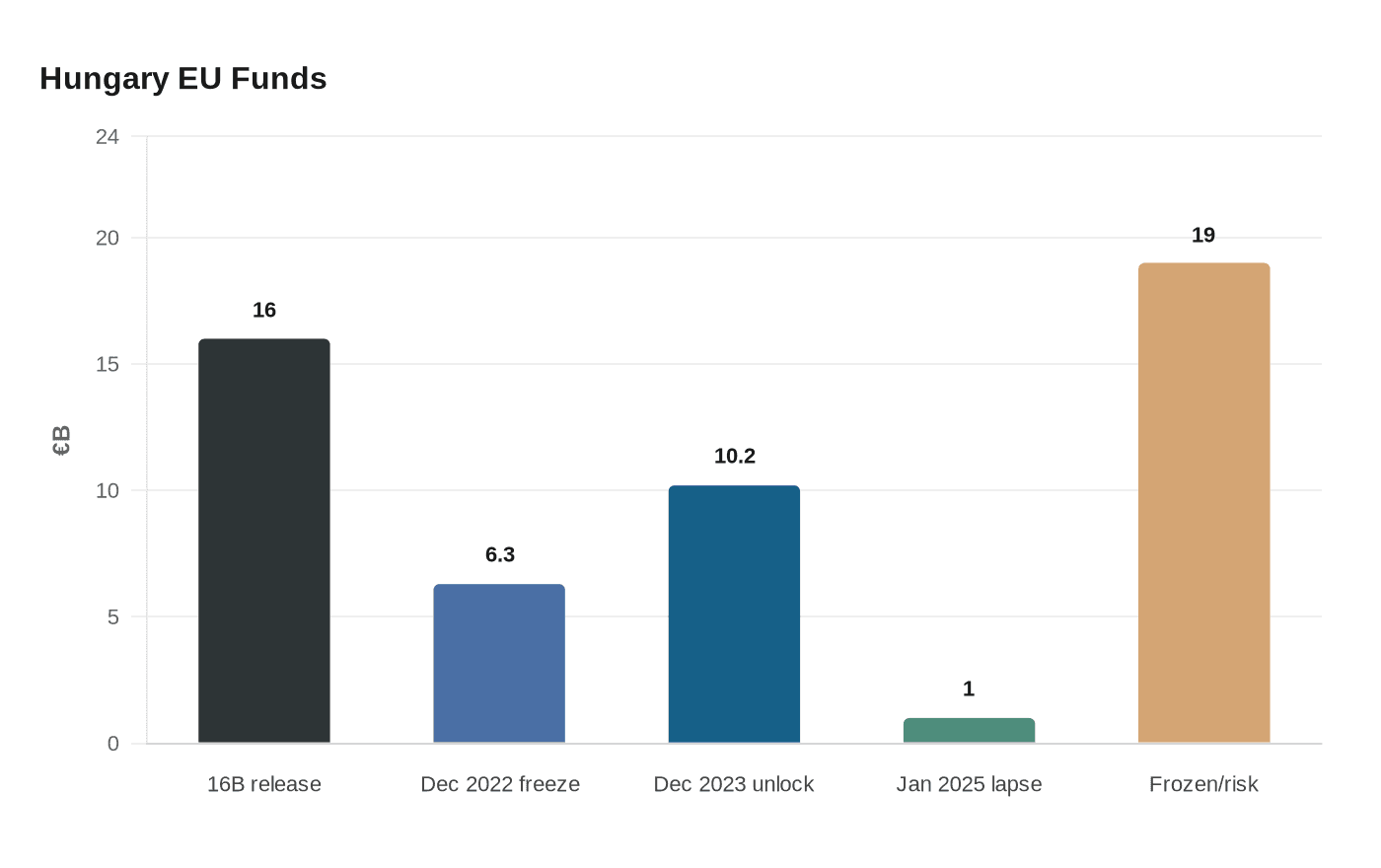
The European Union moved to release 16 billion euros to Hungary as Brussels tested whether judicial fixes are enough to justify easing pressure on a government long accused of democratic backsliding. The decision sharpened a central question for the bloc: whether money is being restored because reforms are durable, or because Viktor Orbán’s defeat has created a political reset in Budapest.
The EU first deployed its rule-of-law conditionality weapon in December 2022, freezing about 6.3 billion euros in budget commitments over concerns tied to public procurement, prosecutorial effectiveness and the fight against corruption. In December 2023, the European Commission said Hungary’s judicial overhaul had addressed deficiencies in judicial independence, allowing about 10.2 billion euros in cohesion funds to be unlocked. By January 2025, Hungary lost access to about 1 billion euros after a tranche expired when required reforms were not finished on time, the first time Brussels let money lapse under the mechanism.
That shifting mix of freezes, releases and expirations left roughly 19 billion euros either frozen or at risk across related procedures, showing how the Commission and the Council have tried to use EU cash as leverage over rule-of-law standards. The conditionality tool is designed to protect the bloc’s budget when member states breach those principles, but Hungary’s case has become the clearest stress test of whether financial pressure can force lasting institutional change.
The latest Commission rule-of-law chapter on Hungary still flagged unresolved problems in media pluralism, the independence of the media authority, state advertising, and the editorial and financial independence of public-service media. Civil society groups including Transparency International Hungary, the Hungarian Helsinki Committee, Amnesty International Hungary, K-Monitor and Political Capital have continued to document those concerns and feed them into the Commission’s reporting process, underscoring how far the dispute has extended beyond court reforms into the broader health of Hungary’s democratic institutions.
The political backdrop changed abruptly when Péter Magyar defeated Orbán on April 12, 2026, ending Orbán’s 16-year rule. Ursula von der Leyen said the European Commission would move quickly to work with the incoming government and that Hungary’s people deserved progress on EU funds and reforms. Before the election, Magyar’s team said it wanted to restore access to about 17 billion euros in blocked EU money, roughly 10 percent of Hungary’s annual GDP. That makes Hungary more than a one-country dispute: it is now a precedent for how far Brussels will go in policing governments that challenge EU standards, and how quickly it will reward them when the political wind turns.
This article was produced by Prism’s automated news system from verified source data, official records, and press releases, then run through automated quality and moderation checks before publishing. The system is built and supervised by the people who set the standards it runs under. Read our full AI policy.
Know something we missed? Have a correction or additional information?
Submit a Tip