Ukraine strikes Russian supply trucks, choking Crimea corridor
Ukrainian drones have turned the Crimea supply corridor into a convoy trap, with analysts counting more than 125 strikes and at least 125 trucks hit in May.
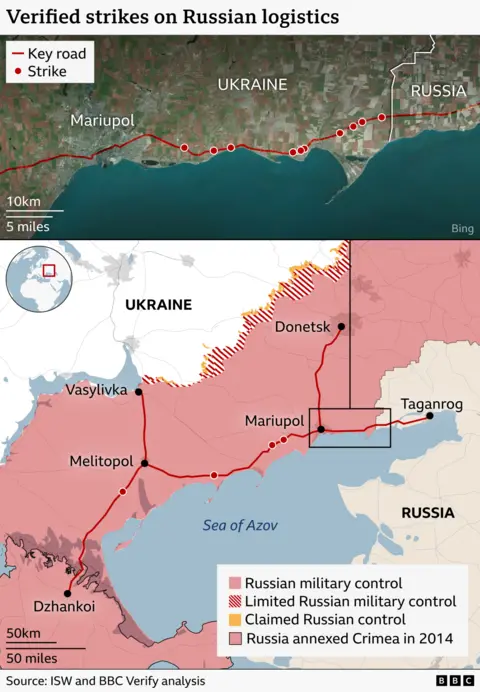
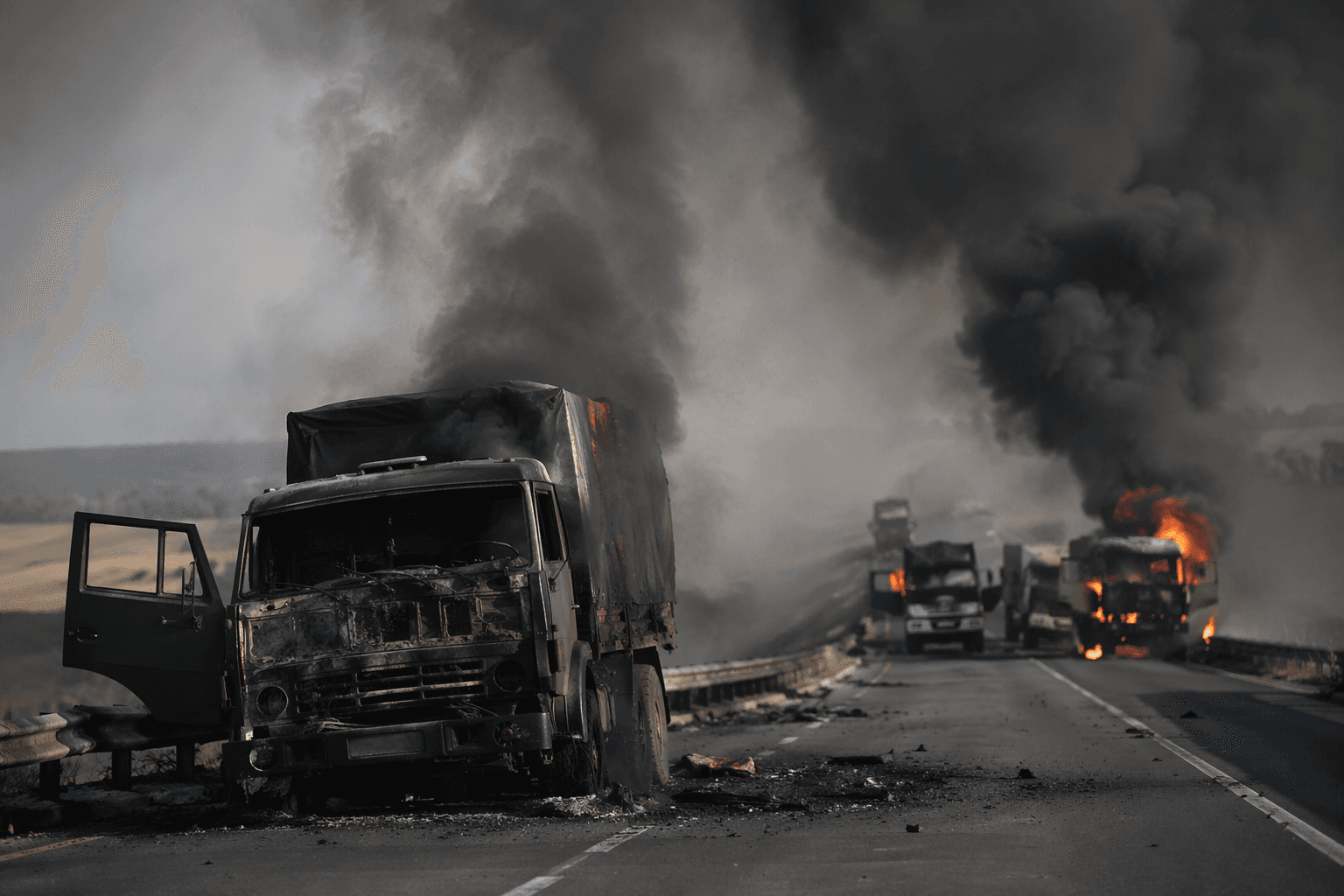
Ukrainian drone crews are going after the war’s hidden nerve center: the trucks that feed Russia’s front. BBC Verify reviewed videos of attacks in occupied Ukraine on Russian vehicles carrying ammunition, fuel and food, while open-source analyst Clément Molin has counted more than 125 strikes along the corridor from Rostov-on-Don to occupied Crimea. Some reports say at least 125 Russian trucks were hit in May, with more than 80 reportedly destroyed, a toll that points to a campaign built to choke movement rather than chase headlines.
The pressure is concentrating on the R-280, or “Novorossiya,” route, which runs through occupied Mariupol, Melitopol and Simferopol, as well as on roads around Berdyansk, Donetsk Oblast and Luhansk Oblast. On May 26, the 412th Nemesis Brigade said the strikes had effectively blocked the key logistics route, and recent reporting says Russia has responded by restricting civilian traffic on some roads and increasing security on rear-area transport routes. That kind of reaction matters: it suggests the corridor is no longer a quiet rear zone, but a contested supply line under constant threat.
Military analysts have described the effort as a “logistics lockdown” and a bid for logistical paralysis, because the targets are supply vehicles rather than only battlefield positions. The Institute for the Study of War said on May 8 that Ukrainian forces were interdicting Russian ground lines of communication in and near occupied Mariupol, about 105 kilometers from the front line. In April, Ukrainian Special Operations Forces said they carried out a week-long drone campaign that hit three arsenals, three depots and two logistics hubs along the same corridor, reinforcing the picture of a sustained effort to disrupt Russian sustainment at depth.
The broader shift is technological as much as tactical. Reporting in May 2026 says AI-enabled drones are increasingly being used to improve target acquisition and terminal guidance, locking onto vehicles in the final moments before impact. For Ukraine, that means cheaper systems can impose outsized costs on Russia’s fuel, food and ammunition pipeline. For Russia, it means every convoy moving toward Crimea now has to survive not just distance, but a growing, data-driven hunt that is reshaping the economics of modern warfare.
This article was produced by Prism’s automated news system from verified source data, official records, and press releases, then run through automated quality and moderation checks before publishing. The system is built and supervised by the people who set the standards it runs under. Read our full AI policy.
Know something we missed? Have a correction or additional information?
Submit a Tip