Euro zone current account surplus narrows sharply in March, ECB says
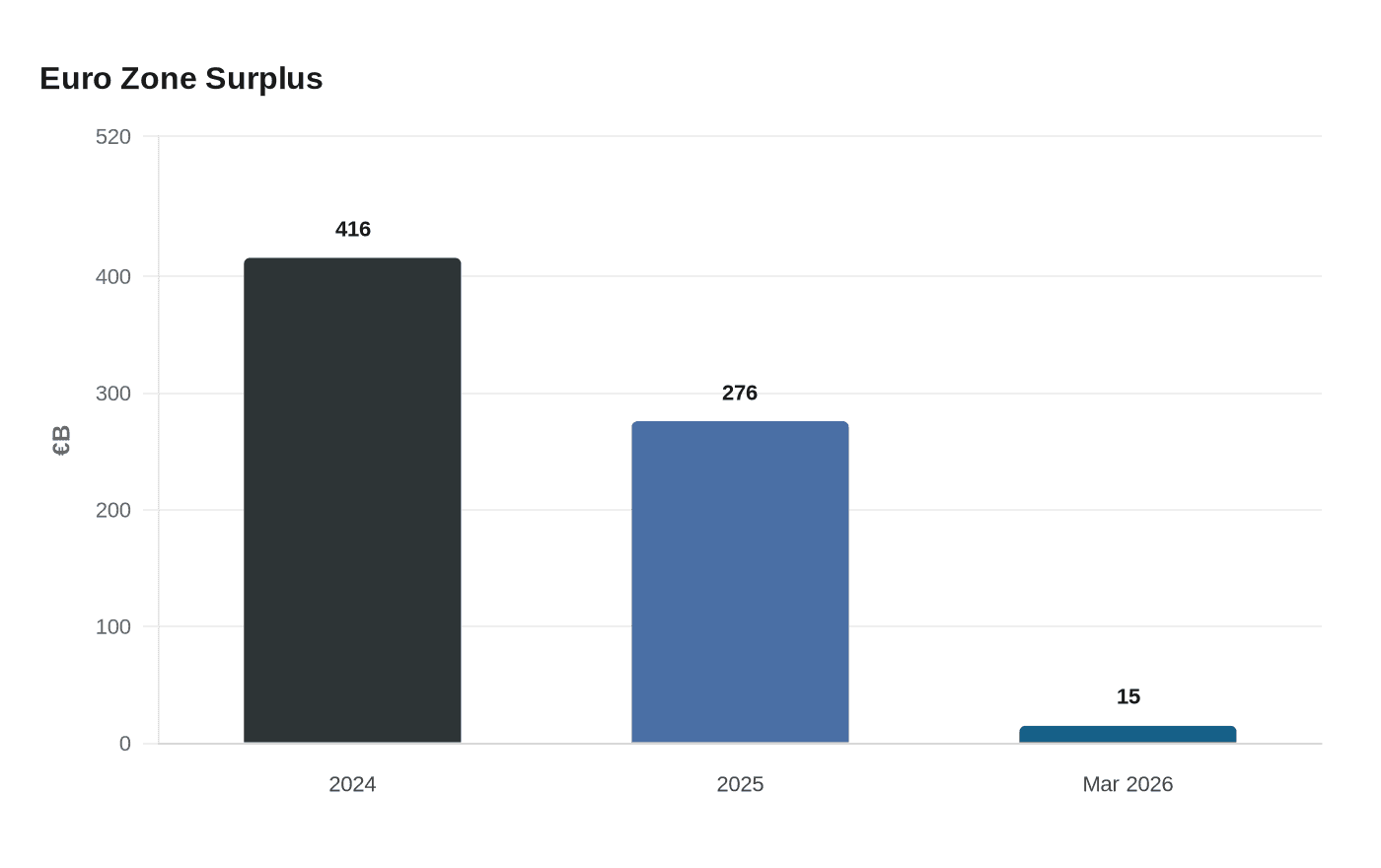
Euro zone surplus fell to €15 billion in March, a sign weaker exports and energy costs are thinning Europe’s external cushion.

A smaller euro zone current account surplus is an early warning for Europe’s economy: weaker export demand and higher energy costs are eroding the region’s external buffer just as markets weigh growth, inflation and the path of interest rates. For U.S. readers, that matters because softer European trade can feed into global growth, cross-border profits and transatlantic business sentiment.
The European Central Bank said the euro area recorded a current account surplus of about €15 billion in March 2026, down €11 billion from February’s level and far below the scale of the bloc’s broader surpluses in recent years. The monthly balance showed €14 billion surpluses in goods and services, plus €2 billion in primary income, partly offset by a €16 billion secondary-income deficit. The move came after a sharp drop in the trade surplus, which analysts linked to higher energy costs.

The March reading does not point to a crisis, but it does show how quickly Europe’s external cushion can narrow when trade conditions weaken. The current account is a broad balance-of-payments measure that captures cross-border flows of goods, services, primary income and secondary income, so a decline signals more than a one-off trade wobble. It suggests the euro area is still being shaped by forces outside the bloc, especially energy prices and the health of demand from major trading partners.
The slowdown is also visible in the longer trend. In the 12 months to March 2026, the euro area’s current account surplus totaled €275 billion, equal to 1.7% of GDP, down from €368 billion, or 2.4% of GDP, a year earlier. The ECB said the annual decline was driven by all major components, including a swing in primary income from a €17 billion surplus to a €19 billion deficit, along with smaller goods and services surpluses and a larger secondary-income deficit.
The full-year picture for 2025 shows the same direction. The euro area posted a current account surplus of €276 billion, down from €416 billion in 2024. The bloc’s largest bilateral surpluses were with the United Kingdom, at €229 billion, and Switzerland, at €55 billion. For markets, the message is straightforward: Europe still runs a surplus, but the margin is shrinking, leaving the euro zone more exposed if trade demand cools further or energy costs rise again.
Know something we missed? Have a correction or additional information?
Submit a Tip