Mortgage rates stay elevated as housing market shows signs of momentum
Rates stayed above 6.3%, but the monthly bill on a $300,000 loan still lands near $1,922, and refinancing costs remain higher at 7.48% APR.

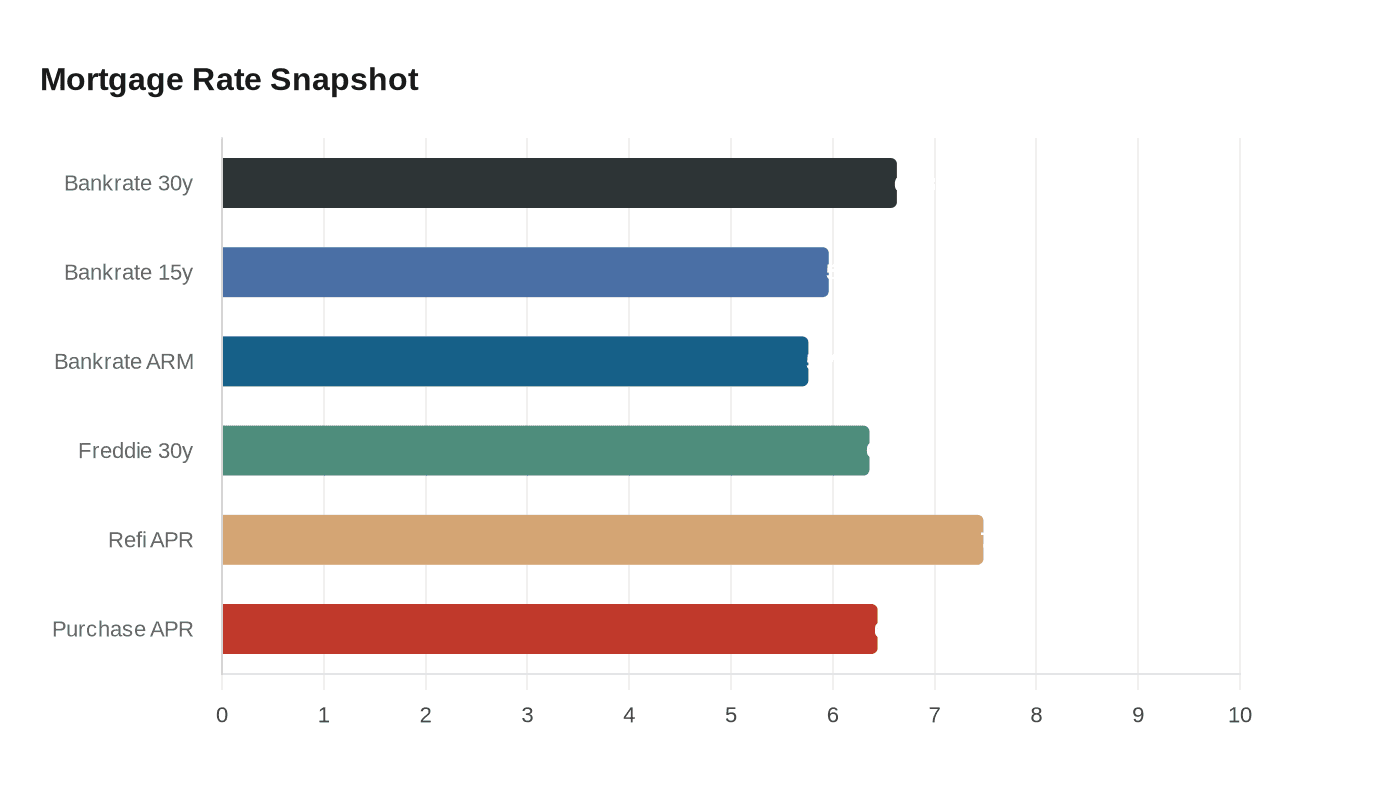
Mortgage rates stayed elevated on Thursday even as the housing market showed clearer signs of momentum. Bankrate put the average 30-year fixed mortgage at 6.63%, up 0.17 percentage points from the previous week, while the benchmark 15-year fixed averaged 5.96% and the 5/1 ARM 5.76%. Freddie Mac's weekly survey showed the 30-year at 6.36% as of May 14, down from 6.81% a year earlier, and said the recent improvement, along with firmer purchase applications, refinance activity and monthly pending home sales, pointed to improving momentum in housing.
The payment math is where the rate story becomes personal. At 6.63%, a $300,000 mortgage works out to about $1,922 a month in principal and interest, while a $450,000 loan lands near $2,883. Using Freddie Mac's 6.36% average, those same loans would be about $1,869 and $2,803, roughly $53 and $80 less each month. On a $100,000 mortgage, the difference between the two readings is about $18 a month, a reminder that a few tenths of a point matter more as loan sizes rise.

That is the decision threshold for many buyers. A borrower with a contract closing soon has less reason to gamble on a small downtick, especially on a larger loan. Buyers with a flexible timeline can afford to watch whether weekly averages keep easing, but the rate change should be weighed against the full housing bill, including taxes, insurance, HOA dues and closing costs, which can matter more than a modest move in mortgage pricing.
Refinancers faced a tougher hurdle. NerdWallet's 30-year fixed refinance APR was 7.48% at 10:20 a.m. EDT, well above its 6.44% national average 30-year purchase APR recorded Thursday morning. On a $250,000 balance, a fresh 30-year schedule at 7.48% would be about $1,745 a month, roughly $143 more than the same balance at 6.63%. For many homeowners, that kind of spread means a refinance only works if it cuts other costs, shortens the term or unlocks equity for a specific goal.
Freddie Mac's Primary Mortgage Market Survey has tracked weekly mortgage rates since 1971 and is typically released on Thursdays, except when a U.S. holiday falls on that day. That long record shows the same pattern: rates can stay stubbornly high, but even small improvements can quickly change the buying and refinancing calculus.
Know something we missed? Have a correction or additional information?
Submit a Tip