Explosions and gunfire hit Bamako and Mali military bases in coordinated attacks
Explosions near Kati and gunfire at Bamako’s airport spread across Mali, exposing how far militants can reach from the capital to Kidal, Gao and Sevare.
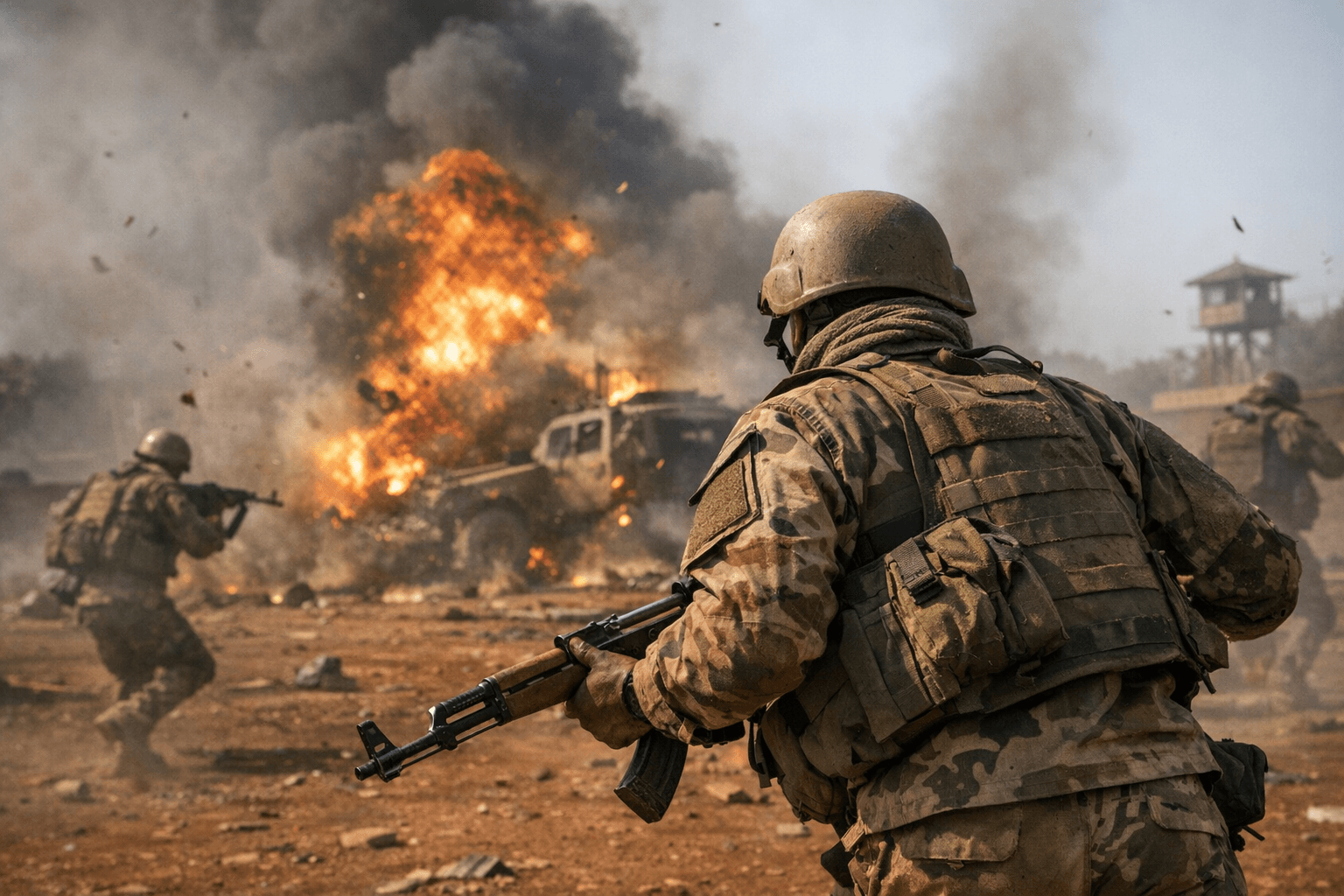
Explosions and sustained gunfire rang out near Mali’s main military base outside Bamako before dawn, then spread across the country in a wave of attacks that challenged the junta’s claim that it has brought the security crisis under control. Witnesses near Kati heard two loud blasts and heavy gunfire shortly before 6 a.m. local time, while soldiers moved to block roads around the military area that sits outside the capital and is home to military ruler General Assimi Goita.
Gunfire was also reported at Modibo Keïta International Airport, about 15 kilometers, or 9 miles, from central Bamako. An AP journalist in the capital heard sustained heavy weapons and automatic rifle fire coming from the airport area and saw a helicopter circling nearby neighborhoods. A resident near the airport said three helicopters were patrolling overhead, underscoring how quickly the violence reached into the airspace and outskirts of the capital.
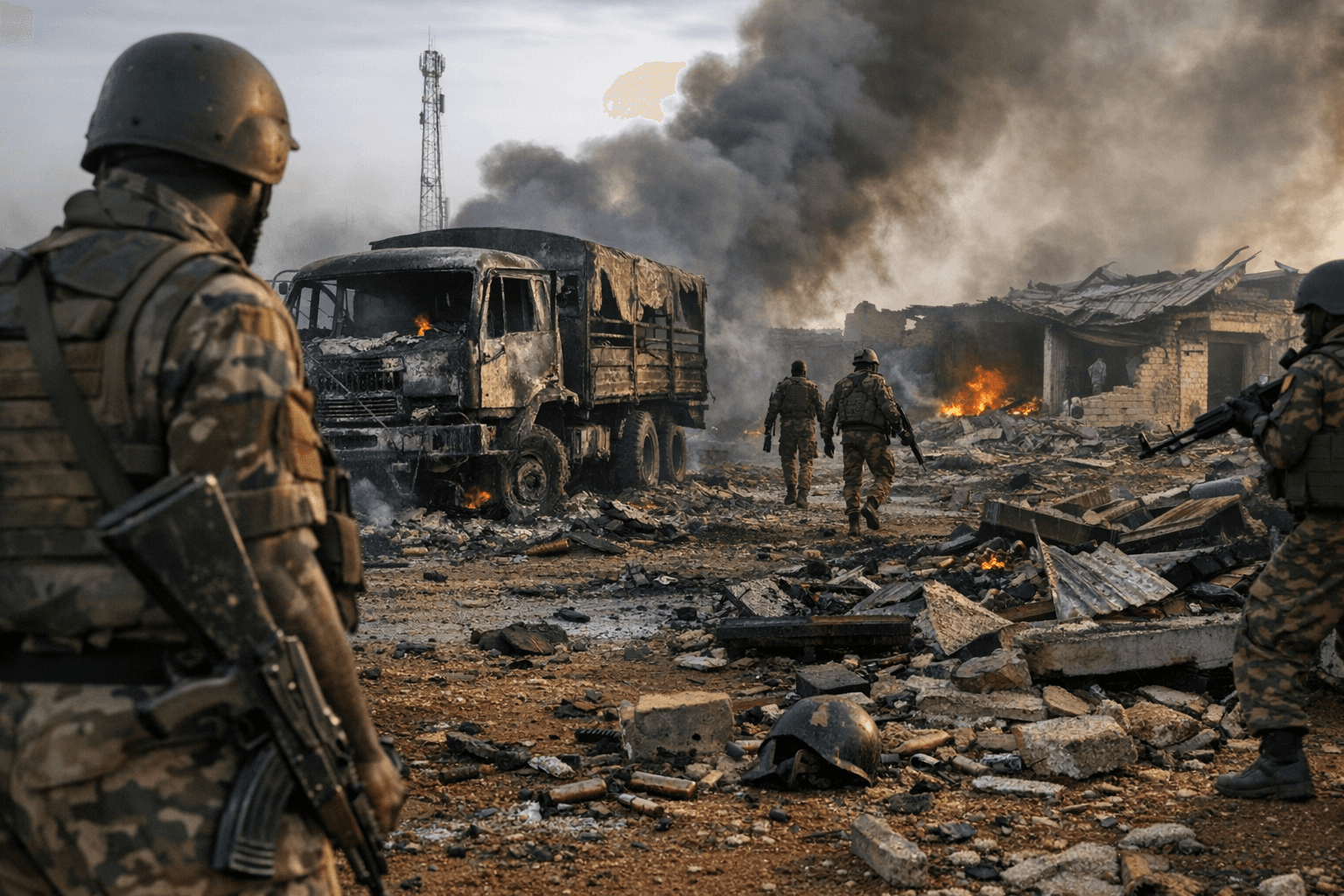
The army said unidentified armed "terrorist" groups attacked military positions in Bamako and in several towns in the interior, describing the assault as coordinated and saying fighting was still under way. Reports also placed gunfire and blasts in Kidal, Gao and Sevare, pushing the attack far beyond a single front and suggesting a broad challenge to state authority across northern and central Mali.
In Kidal, a former mayor said gunmen entered the city and took control of some neighborhoods, leading to exchanges with the army. Mohamed Elmaouloud Ramadane, a spokesman for the Azawad Liberation Front, said its forces had taken control of multiple positions in Kidal and Gao, though that claim could not be independently verified. Four security sources also said the al-Qaida affiliate Jama'at Nusrat al-Islam wal-Muslimin was involved, but the group had not claimed responsibility.
The attacks landed in a country already strained by years of insurgency linked to al-Qaida and Islamic State affiliates, alongside a separatist rebellion in the north. The Azawad movement has long sought an independent state in northern Mali, and a 2015 peace deal that once opened the door for some ex-rebels to enter the Malian military has since collapsed. The violence stretching from Kati to Kidal is a stark reminder that Mali’s governing problem is not only militant violence, but the state’s inability to secure territory far beyond the capital.
Know something we missed? Have a correction or additional information?
Submit a Tip