Families Celebrate Final Days of Iranian New Year With Picnics and Games
Iranians marked Sizdah Bedar on April 2, celebrating the 13th day of Nowruz with park picnics and games on the 34th day of an ongoing war.
Across Tehran's public parks on April 2, families spread out blankets, grilled kebabs, played cards, and watched children dart through crowded green spaces to mark Sizdah Bedar, the ancient Persian festival that closes the Nowruz holiday season. This year's celebrations carried unusual weight: Iran was entering the 34th day of a war triggered by joint U.S. and Israeli strikes.
Sizdah Bedar is a national holiday observed on the 13th day of the Persian New Year, traditionally bringing families outdoors for picnics, games, and gatherings in nature, symbolically bringing the Nowruz holiday season to a close. The name itself translates to "getting rid of thirteen," representing the cleansing of negativity and bad luck associated with the number 13. Nowruz began on March 20, making April 2 both the calendar close of the holiday and, this year, a moment of collective public defiance.
In Tehran's parks, families were seen laying out picnic spreads, grilling kebabs, playing cards, and watching children run through crowded green spaces. Children played together, women painted Iranian flags on the faces of young boys and girls, and groups exercised near Milad Tower. Scenes unfolded across several of the capital's parks, including Parvaz Park, Ab-o Atash Park, and Mellat Park, where goldfish and sabzeh, the sprouted greens that anchor the traditional Haft-Seen display, remained on display as the holiday drew to its close.
Key traditions of Sizdah Bedar include throwing the Haft-Seen sabzeh into running water, grass knotting for wishes of love and marriage, and community gatherings with singing and dancing. Discarding the greenery is a way for families to cast off the past year's hardships and misfortunes.
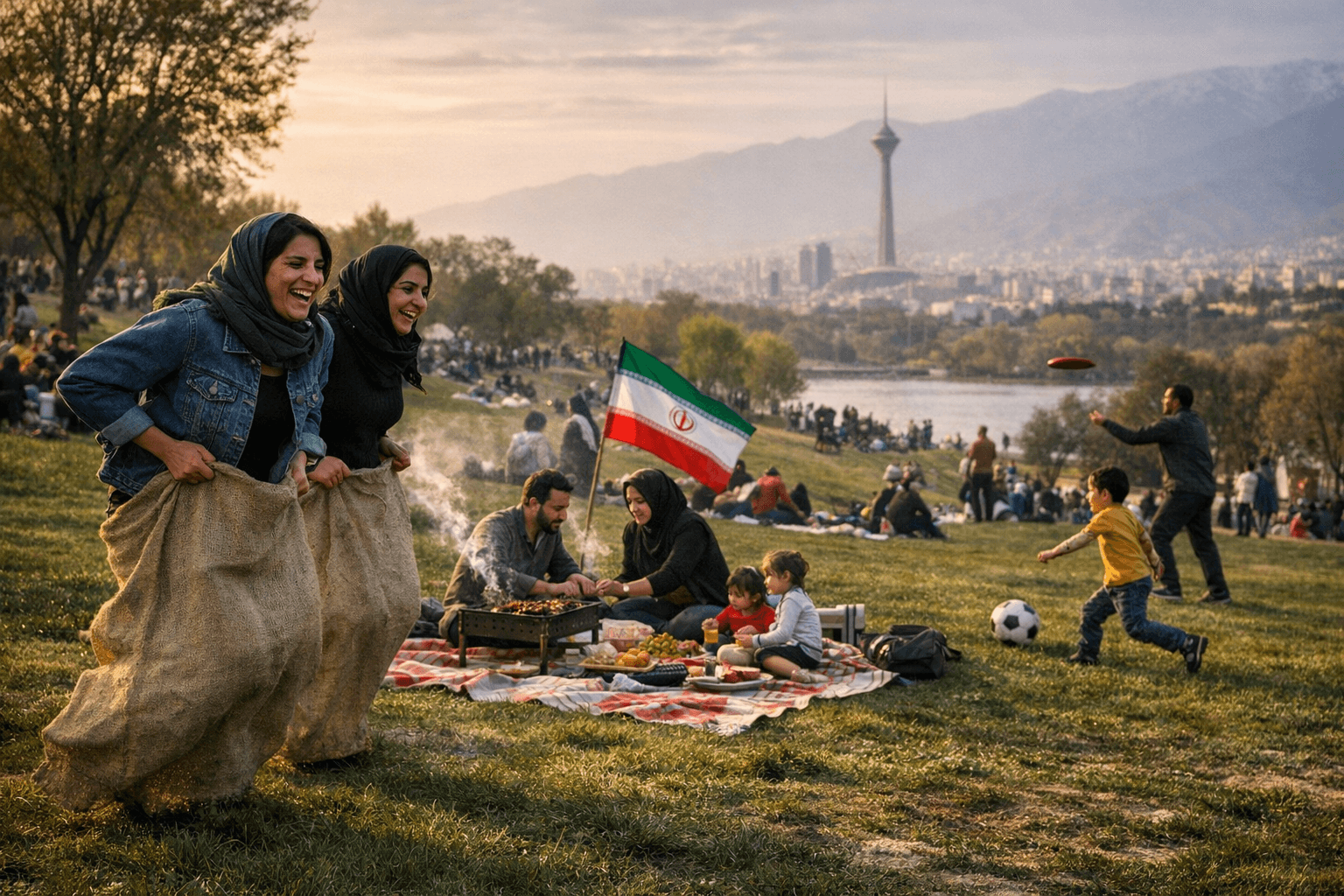
Beyond Tehran, similar scenes were reported elsewhere, as residents marked the holiday with public gatherings in nature despite wartime conditions, a show of social solidarity and public morale that gave this year's Sizdah Bedar special significance.
The festival has its origins in Zoroastrianism, symbolizing spring's triumph over winter, with the belief that spending time outside on this day helps ward off evil spirits. That symbolism took on a literal dimension this year, as families across Iran stepped into the open air not only to honor an ancient tradition but to assert something quieter and more stubborn: the persistence of ordinary life.
This article was produced by Prism’s automated news system from verified source data, official records, and press releases, then run through automated quality and moderation checks before publishing. The system is built and supervised by the people who set the standards it runs under. Read our full AI policy.
Did this article answer your question?


