FATF says Austria still falls short on money laundering prosecutions and oversight
Austria won a better rating on paper, but FATF says weak prosecutions, thin oversight and a strained intelligence unit still leave Europe exposed.
Austria has improved its anti-money-laundering framework, but the Financial Action Task Force says the country still fails at the point that matters most: turning suspicious activity into prosecutions, asset recovery and deterrence.
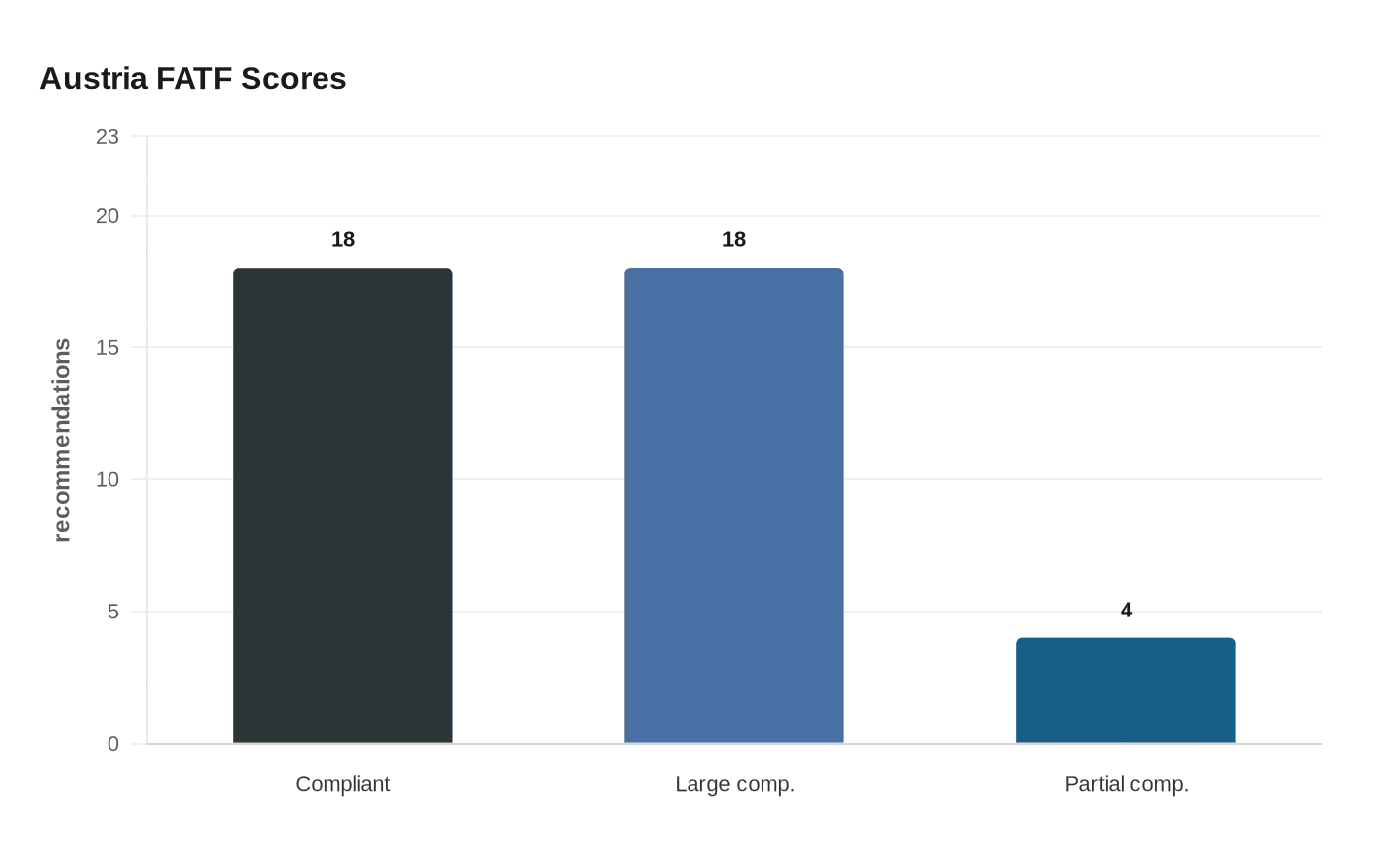
The Paris-based watchdog adopted its latest mutual evaluation of Austria at a plenary in Mexico City on Feb. 13, 2026, after an on-site assessment in June and July 2025. The final report was published on April 30, 2026, as part of a newer FATF round that puts more weight on results, not just legal checkboxes. Austria’s technical scorecard looks respectable, with compliance on 18 of the 40 recommendations, large compliance on 18 more and partial compliance on 4, but FATF said the harder test is whether the system actually stops illicit finance.

That is where Austria still falls short. FATF said authorities have improved their understanding of money-laundering and terrorist-financing risks, but have not built a consistent response across the institutions meant to stop financial crime. The Austrian Financial Intelligence Unit also drew criticism for limited resources and constraints on independence. That matters because the unit, part of Criminal Intelligence Service Austria, handles suspicious transaction analysis and the intelligence that can feed prosecutions.
The weaknesses are not new. FATF’s 2016 review said Austria’s Financial Investigation Unit did not fully perform the suspicious transaction report analysis and dissemination functions expected of a true FIU. That earlier report also pointed to low convictions, low legal penalties and low confiscation amounts, warning that the country’s system looked more effective on paper than in practice. FATF said those same pressures still weigh on enforcement today.
The report is especially consequential because Austria sits at a financial and geographic crossroads between Western Europe and Central, Eastern and Southeastern Europe. FATF has long treated that location as a vulnerability, one that can attract criminal proceeds moving through banking channels, transit routes and cross-border networks. In the current European climate, that leaves Austria exposed not only to organized-crime money but also to sanctions evasion risks and capital linked to Russian and other illicit flows.
FATF said Austria still needs more resources for financial intelligence and a tougher prosecution system over the next three years if it wants to close the gap between formal compliance and real-world results. The Austrian Finance Ministry says Austria left FATF enhanced follow-up in October 2019, and it has since prepared a National Risk Assessment 2025 and passed the FATF Audit Adjustment Act 2024 and FM-GwG Adjustment Act on Nov. 20, 2024. The Austrian Financial Market Authority reported 14 AML enforcement actions totaling €4.3 million in fines in 2024, but FATF’s message was clear: for a wealthy EU country that serves as a gateway to the east, anything less than strong prosecutions weakens Europe’s own anti-money-laundering credibility.
This article was produced by Prism’s automated news system from verified source data, official records, and press releases, then run through automated quality and moderation checks before publishing. The system is built and supervised by the people who set the standards it runs under. Read our full AI policy.
Did this article answer your question?

