FCC approves Verizon’s $1 billion U.S. Cellular spectrum deal
FCC approval clears Verizon to buy U.S. Cellular spectrum across 618 counties, a move that could ease congestion but deepen wireless concentration.
Verizon won federal approval to buy a slice of U.S. Cellular’s spectrum holdings for $1 billion, a deal the government said should improve network coverage, capacity and performance for Verizon Wireless customers. The Federal Communications Commission signed off on the transfer in a May 14 memorandum opinion and order, clearing assignments in 618 counties across 140 Cellular Market Areas in 19 states, territory that reaches about 8% of the U.S. population.
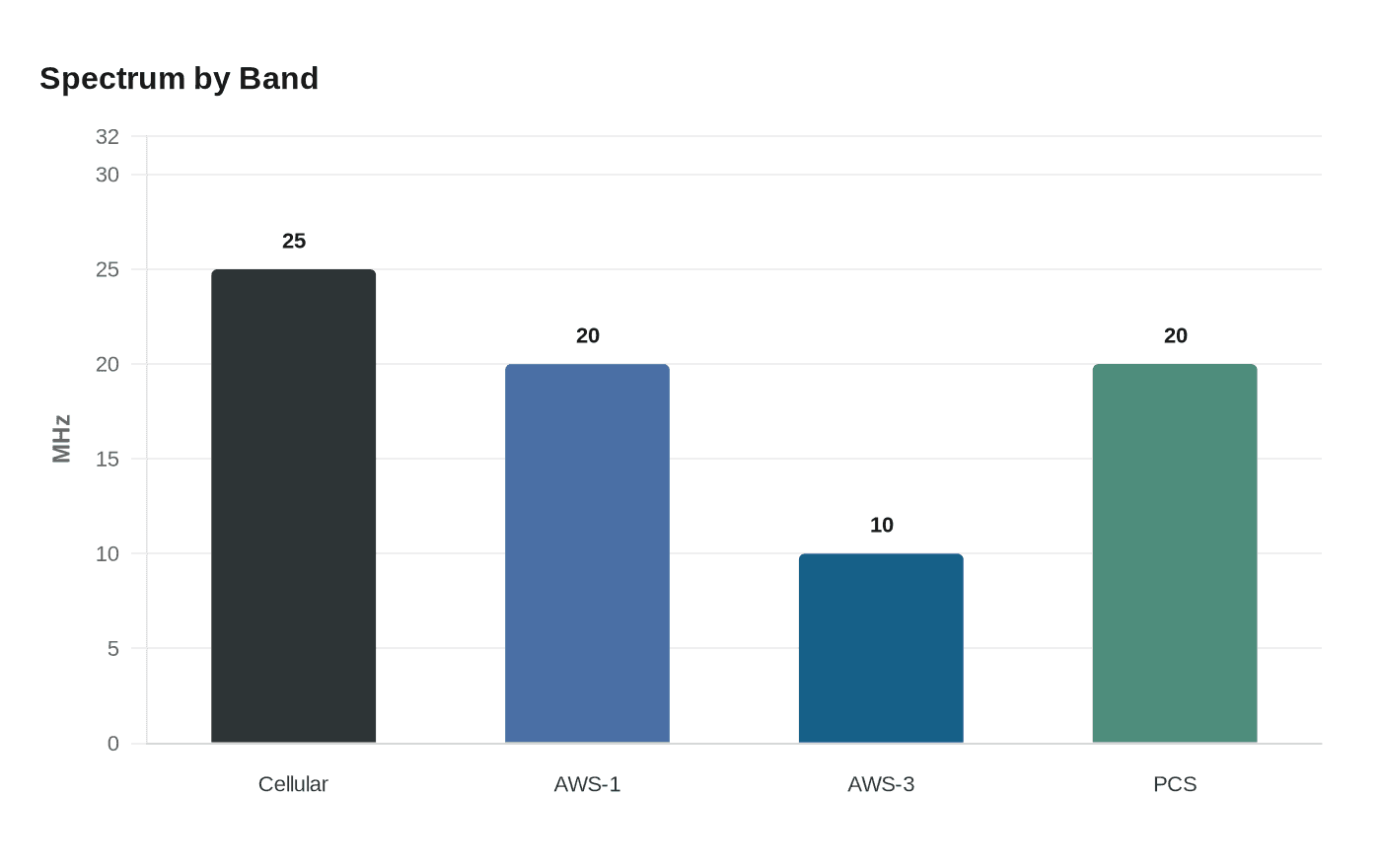
The transaction gives Verizon access to up to 25 MHz of cellular spectrum, up to 20 MHz of AWS-1, up to 10 MHz of AWS-3 and up to 20 MHz of PCS spectrum in the affected markets. In practical terms, that should help Verizon add breathing room in crowded parts of its network, where heavy mobile data use can slow speeds and create bottlenecks, while also giving the company more capacity to push service deeper into harder-to-reach communities. The benefits will not fall evenly, but in counties where traffic is already tight, the additional airwaves could make a difference in download speeds and call reliability.
The FCC’s public-interest review weighed both the upside and the competitive risks. The commission looked at market definitions, spectrum input markets and broader competitive effects before approving the license assignments involving Verizon Wireless and Array Digital Infrastructure Inc., the company formerly known as United States Cellular Corporation. That balance is central to the debate around today’s wireless market: the same spectrum that can strengthen service for customers can also make the industry more concentrated around a handful of large carriers.
Verizon has argued that it needs more spectrum to keep pace with demand, and Kathy Grillo, the company’s public-policy executive, welcomed the approval as a way to better serve customers while continuing to build out an already strong network. FCC Chairman Brendan Carr has said “scale matters” in the modern connectivity market, and the agency has been moving to facilitate transactions and auctions that put spectrum in the hands of companies deploying it quickly.
The Verizon deal is part of a broader breakup of U.S. Cellular’s wireless business. T-Mobile US, Inc. closed its own purchase of most of U.S. Cellular’s wireless operations and 30% of its spectrum in 2025, after which the remaining company renamed itself Array Digital Infrastructure. U.S. Cellular said the Verizon sale, announced on October 18, 2024, was part of a plan to monetize spectrum not included in the T-Mobile transaction. The company said at the time that Verizon would pay $1.0 billion in cash for 663 million MHz POPs of Cellular spectrum, plus 11 million MHz POPs of AWS spectrum and 19 million MHz POPs of PCS spectrum.
For consumers, the approval could mean stronger service where Verizon already has congestion and a deeper footprint in selected markets. For regulators, it is another test of whether the wireless industry’s ongoing consolidation will sharpen competition by making networks stronger, or weaken it by leaving even more spectrum in the hands of the biggest carriers.
This article was produced by Prism’s automated news system from verified source data, official records, and press releases, then run through automated quality and moderation checks before publishing. The system is built and supervised by the people who set the standards it runs under. Read our full AI policy.
Did this article answer your question?

%3Amax_bytes(150000)%3Astrip_icc()%2FCertificate-of-deposit-2301f2164ceb4e91b100cb92aa6f868a.jpg&w=1920&q=75)
