Federal charges follow Key Bridge collapse, accuse shipping firms of deception
Federal prosecutors say deception, not just disaster, followed the Key Bridge collapse, targeting two firms and a ship superintendent after six workers died.
Federal prosecutors have moved the Key Bridge collapse from catastrophe to criminal case, accusing two shipping companies and a senior ship official of hiding a hazardous condition after the Dali struck the span and killed six highway workers. The indictment says the crash caused at least $5 billion in economic loss, a toll that now includes criminal exposure, environmental counts and an allegation that the companies and one employee misled the United States.
The Justice Department charged Synergy Marine Pte Ltd. of Singapore, Synergy Maritime Pte Ltd. of Chennai, India, and Radhakrishnan Karthik Nair, 47, the Dali’s shoreside technical superintendent, with conspiracy to defraud the United States, willfully failing to immediately notify the U.S. Coast Guard of a known hazardous condition, obstruction of an agency proceeding and false statements. The corporate defendants also face misdemeanor charges under the Clean Water Act, the Oil Pollution Act and the Refuse Act over pollutant discharges into the Patapsco River, including shipping containers and their contents, oil and the bridge itself.
Acting Attorney General Todd Blanche called the collapse a “preventable tragedy” and said the case is about holding accountable those whose reckless disregard for maritime safety regulations caused the disaster. U.S. Attorney Kelly O. Hayes said the indictment was the first step toward accountability. Prosecutors say the collapse destroyed critical infrastructure, released pollutants into the Patapsco River and Chesapeake Bay, and shut shipping in and out of the Port of Baltimore to a standstill, rattling a regional economy built around a busy harbor.
The criminal case follows a separate civil resolution. In October 2024, Grace Ocean Private Limited and Synergy Marine Private Limited agreed to pay $101,980,000 to resolve the federal government’s claim, which had sought $103,078,056 under the Rivers and Harbors Act, the Oil Pollution Act and general maritime law. Those payments covered federal cleanup and response costs, but they did not end the broader scrutiny of how the ship came to lose control in a crowded channel.
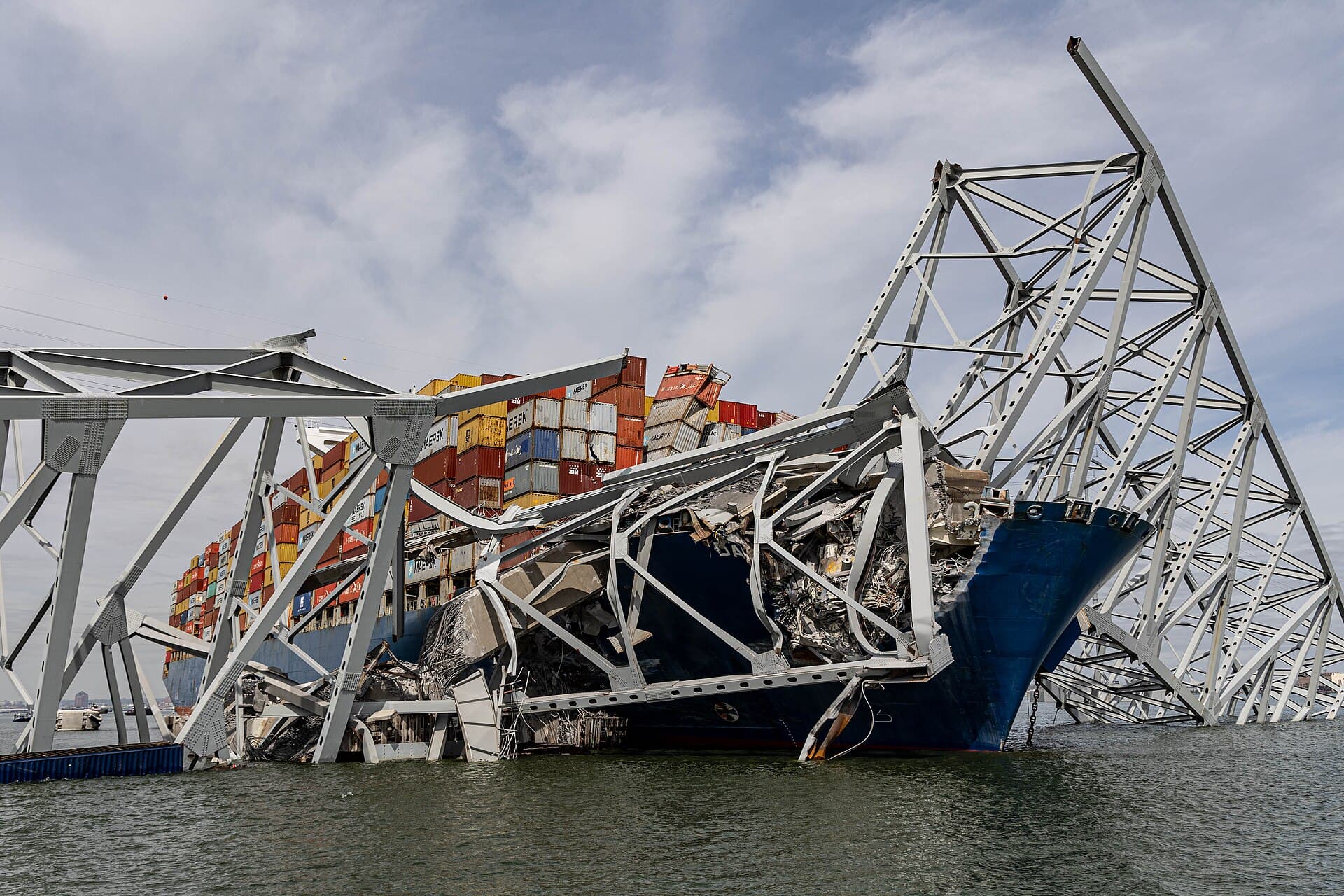
The National Transportation Safety Board later said a single loose wire in the Dali’s electrical system caused a breaker to open, setting off a blackout that left the vessel without propulsion or steering before it hit the bridge. The board said the 2.37-mile bridge, which opened in 1977, lacked countermeasures against impact by large ocean-going vessels. It also said seven road maintenance workers and one inspector were on the bridge when it was struck, even as pilots, dispatchers and the Maryland Transportation Authority moved quickly to stop bridge traffic and avert even greater loss of life.
The dead were Alejandro Hernandez Fuentes, Dorlian Ronial Castillo Cabrera, Maynor Yassir Suazo Sandoval, Miguel Luna Ramos, Jose Mynor Lopez and Carlos Daniel Hernandez. The last missing worker’s body was recovered more than a month after the collapse, a grim marker of how fast the disaster became both a human tragedy and a test of whether maritime operators can be held criminally responsible when a bridge fails.
This article was produced by Prism’s automated news system from verified source data, official records, and press releases, then run through automated quality and moderation checks before publishing. The system is built and supervised by the people who set the standards it runs under. Read our full AI policy.
Did this article answer your question?