Fertilizer Prices Surge Up to 50% as Iran War Disrupts Global Supply
Virginia farmer John Boyd Jr. can't get fertilizer shipments due to the Iran war; urea prices are up 50% as the Strait of Hormuz blocks a third of global supply.

John Boyd Jr. has farmed Virginia soil for a lifetime, growing soybeans, corn and wheat the way four generations of his family did before him. This spring, his fertilizer dealer delivered an unusual warning: the shipments might not come. "The dealers are telling me we can't get the fertilizer," Boyd said. "Due to the war and the bombing through that area, the fertilizer isn't moving."
Boyd's predicament stretches far beyond his Virginia fields. Since the war in Iran began on Feb. 28, thousands of cargo ships have been blocked from transiting the Strait of Hormuz, a narrow waterway that normally handles about 20% of the world's oil shipments and roughly a third of global fertilizer trade. The price of urea, one of the most widely used nitrogen fertilizers, has climbed about 50% since the start of the war, while ammonia is up around 20%. Across a broader basket of products, some fertilizer prices have surged more than 70% in the last 90 days.
The disruption follows a straightforward mechanism. The Middle East's vast natural gas reserves are the primary input used to produce ammonia, the core building block for nitrogen fertilizers like urea. Countries in the region, including Egypt, Iran, Qatar, Saudi Arabia and the United Arab Emirates, account for about 49% of global urea exports and roughly 30% of ammonia exports, according to the American Farm Bureau Federation. With cargo ships unable to move freely through the strait, that supply is effectively frozen. About 20% of the fertilizer used by American farmers comes from a single Qatari facility that cannot ship its product as long as the strait remains closed.
"Fertilizer markets are globally integrated, so supply disruptions in one region can influence prices and availability elsewhere," wrote Faith Parum, a Farm Bureau economist.
The timing is punishing. Spring planting, which can start as early as March, is already underway across much of the country, and fertilizer must go down before crops go in the ground. Boyd was blunt about what a missed application means: "If I don't apply fertilizer, that means I won't have the yields to make my crop."
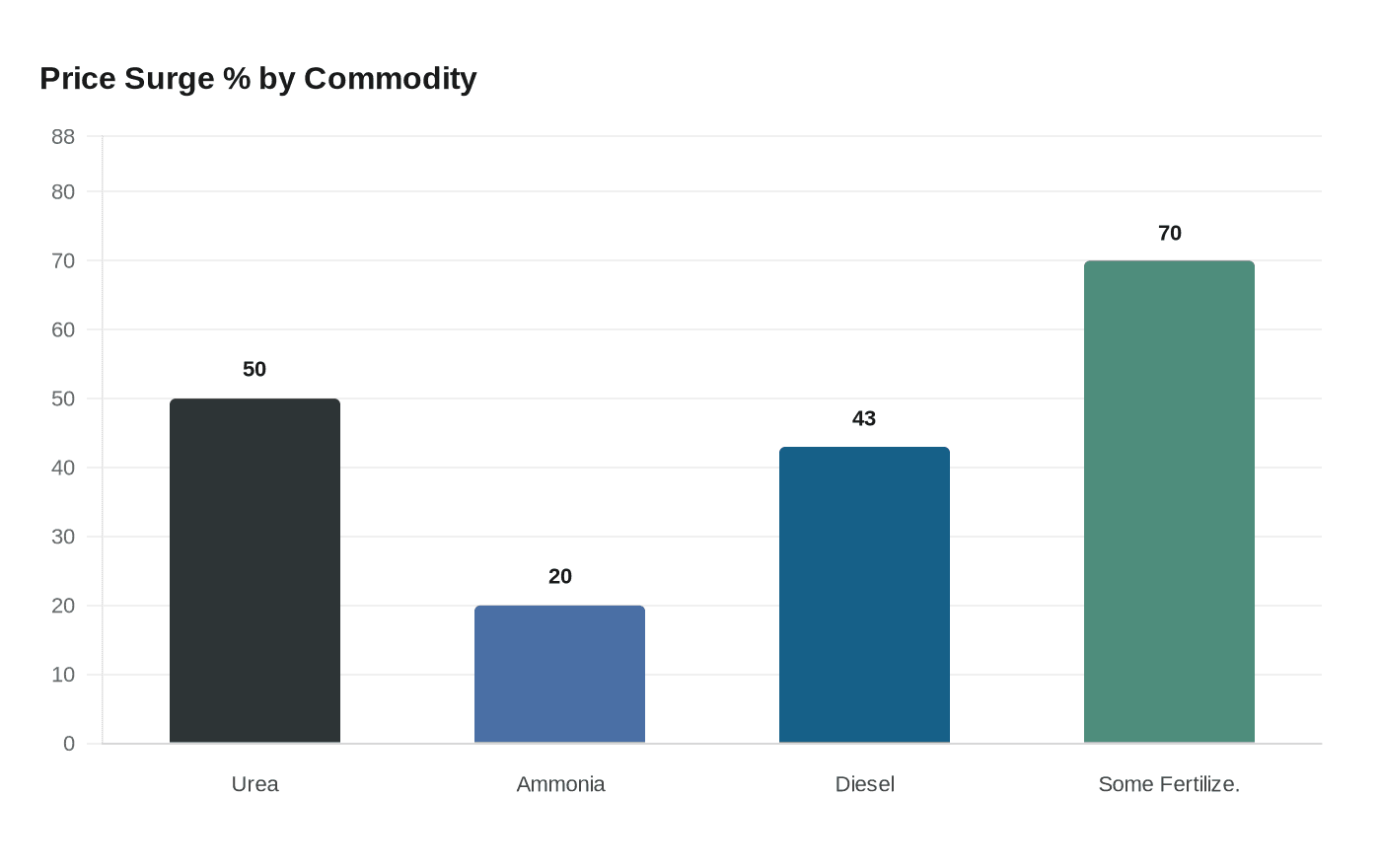
Jason Lewis, a farmer in the American heartland, has been rationing his remaining nitrogen supplies to protect his spring corn crop. Some growers have begun switching to manure and other natural fertilizers, a shift that is itself pushing up those prices. There is no comparable workaround for diesel, which powers every tractor and piece of farm equipment in the country. National average diesel prices soared to $5.37 a gallon, a jump of more than 43% over the past month, according to AAA.
The blow lands on farmers who were already financially stretched. Farm debt and bankruptcies are projected to rise for the third year in a row, and more than half of American farmers reported feeling worse off than a year ago, according to Farm Journal's January economic survey. Fertilizer costs had remained elevated since Russia's 2022 invasion of Ukraine choked key export routes; unlike that earlier shock, there is no offsetting surge in corn, wheat or grain prices to cushion the damage this time.
A coalition that includes the National Corn Growers Association has urged the president and Republican leaders in Congress to embed economic relief for farmers in any additional war funding package, warning that without intervention, crop production losses would cause "significant consequences for the food supply chain in America and around the world." About half the world's food is grown using fertilizer, and whether yields hold through this planting season will be the first clear measure of how deeply the Hormuz blockade has fractured the agricultural supply chain.
Know something we missed? Have a correction or additional information?
Submit a Tip