First-time homebuyers sink to record low 21% of housing market
First-time buyers fell to 21% of sales, the lowest share since 1981, as 40-year-old newcomers face 10% down payments and a market tilted toward cash-rich boomers.

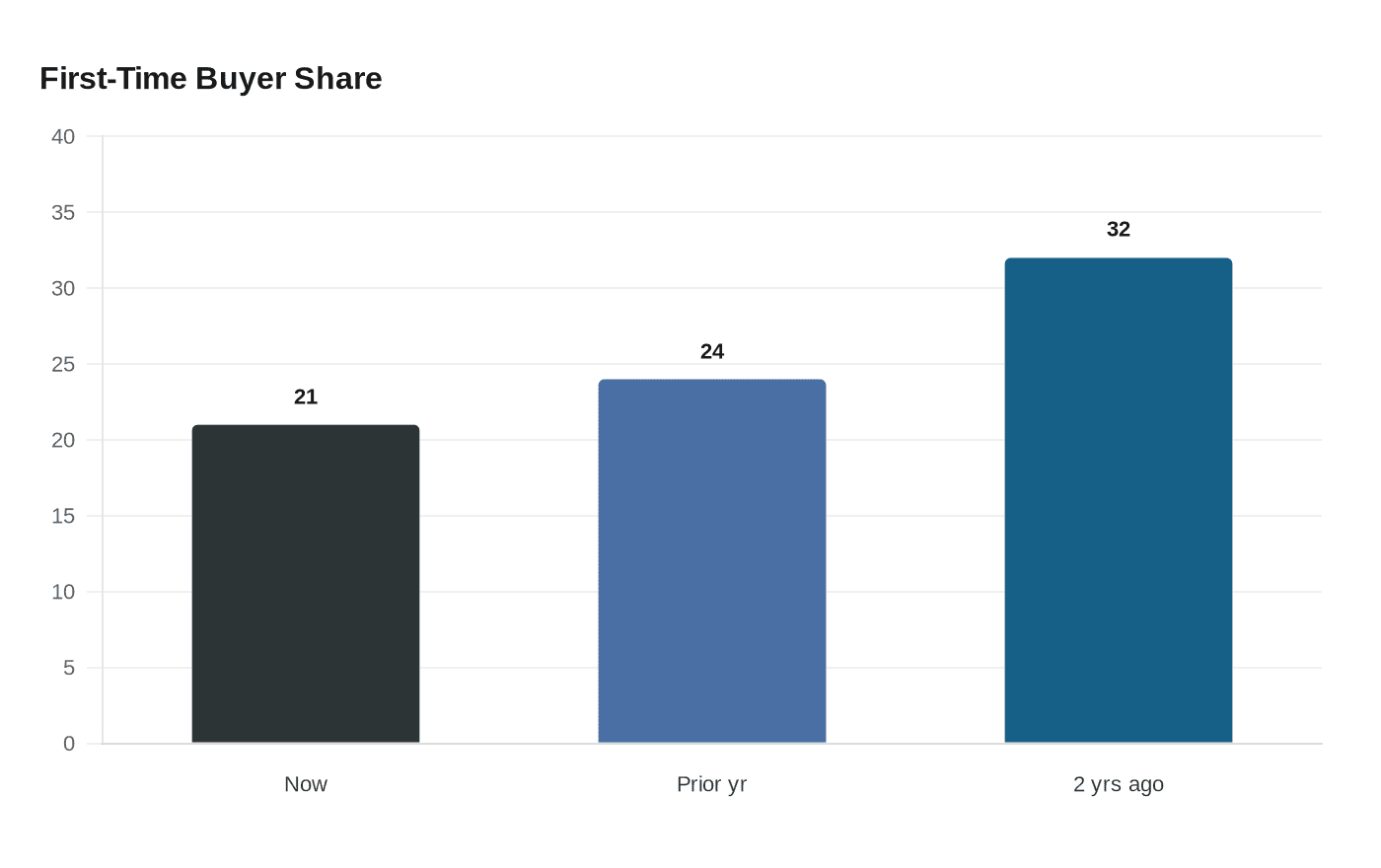
First-time buyers have been pushed to the margins of the U.S. housing market. They accounted for just 21% of home purchases, the lowest share since the National Association of Realtors began tracking the figure in 1981, down from 24% in the prior year and 32% the year before that.
The shift is stark when measured against where the market stood only five years ago. The typical first-time buyer is now 40 years old, a record high and up from 38 in 2024 and 33 in 2020. The median down payment for first-time buyers rose to 10%, the highest since 1989, while Freddie Mac said the average 30-year fixed mortgage rate was 6.30% on April 16, adding another layer of strain to a market already constrained by extremely limited inventory.
The annual profile, which covered transactions completed from July 2024 through June 2025, shows a housing market split between buyers with equity and cash and newcomers trying to assemble enough savings to compete. Cash buyers made up 26% of sales, also a record high. Baby boomers accounted for 42% of all homebuyers and 55% of all sellers, the widest generational gap on record, underscoring how much of the market is now being driven by older owners trading in accumulated wealth rather than younger households entering from scratch.
That divide has widened as years of pandemic-era low rates and rapid home-price gains helped repeat buyers build equity while first-time buyers lost ground. Those older owners could often offer larger down payments or pay all cash, giving them an edge in bidding wars that younger households, many still burdened by rising rents and limited savings, could not match. The result is a national market increasingly shaped by age and balance-sheet strength as much as by interest rates.
For younger millennials and other would-be buyers, the barrier is no longer just monthly payments. It is the size of the upfront check, the speed of the competition and the fact that the market is being set by households that already own. That combination has turned first-time ownership into a later-life milestone and left the housing ladder harder to climb than it has been in decades.
This article was produced by Prism’s automated news system from verified source data, official records, and press releases, then run through automated quality and moderation checks before publishing. The system is built and supervised by the people who set the standards it runs under. Read our full AI policy.
Did this article answer your question?