Flour Choice and Feeding Schedule Shape Sourdough Starter Microbiomes
A recent scientific study found that the types of flour used and how often starters are fed significantly influence the mix of yeasts and lactic acid bacteria in sourdough starters. For home bakers, those microbial shifts can affect flavor, fermentation behavior and the long term stability of a starter.

Bakers often sense that flour matters. New research confirms that intuition by showing clear links between flour type, feeding schedule and the microbial communities that develop in sourdough starters. The study compared starters created with whole-grain flours, bread flours, rye and other common bases and tracked which yeast and lactic acid bacteria taxa became dominant. The results matter for anyone who cares about flavor, fermentation timing or maintaining a reliable starter.
Across many starters a few yeast groups repeatedly dominated, with Kazachstania among the commonly observed genera. Lactic acid bacteria varied more with flour type. Whole-grain flours tended to enrich taxa such as Companilactobacillus, while bread flours favored other groups including Levilactobacillus. Feeding schedules also influenced which microbes prevailed, so both ingredient choice and how you feed your starter shape its ecology.
That pattern has practical consequences. The lactic acid bacteria present in a starter drive acidity and many flavor components, and different taxa ferment sugars and produce metabolites at different rates. Flour choice is therefore a lever bakers can use to nudge a starter’s behavior and taste profile. Consistent feeding supports a stable community, while changes in flour or feeding cadence can shift dominance over time. The study also frames starters as accessible model systems for experimental evolution and microbial ecology, reinforcing their value beyond the kitchen for scientists interested in how communities form and adapt.
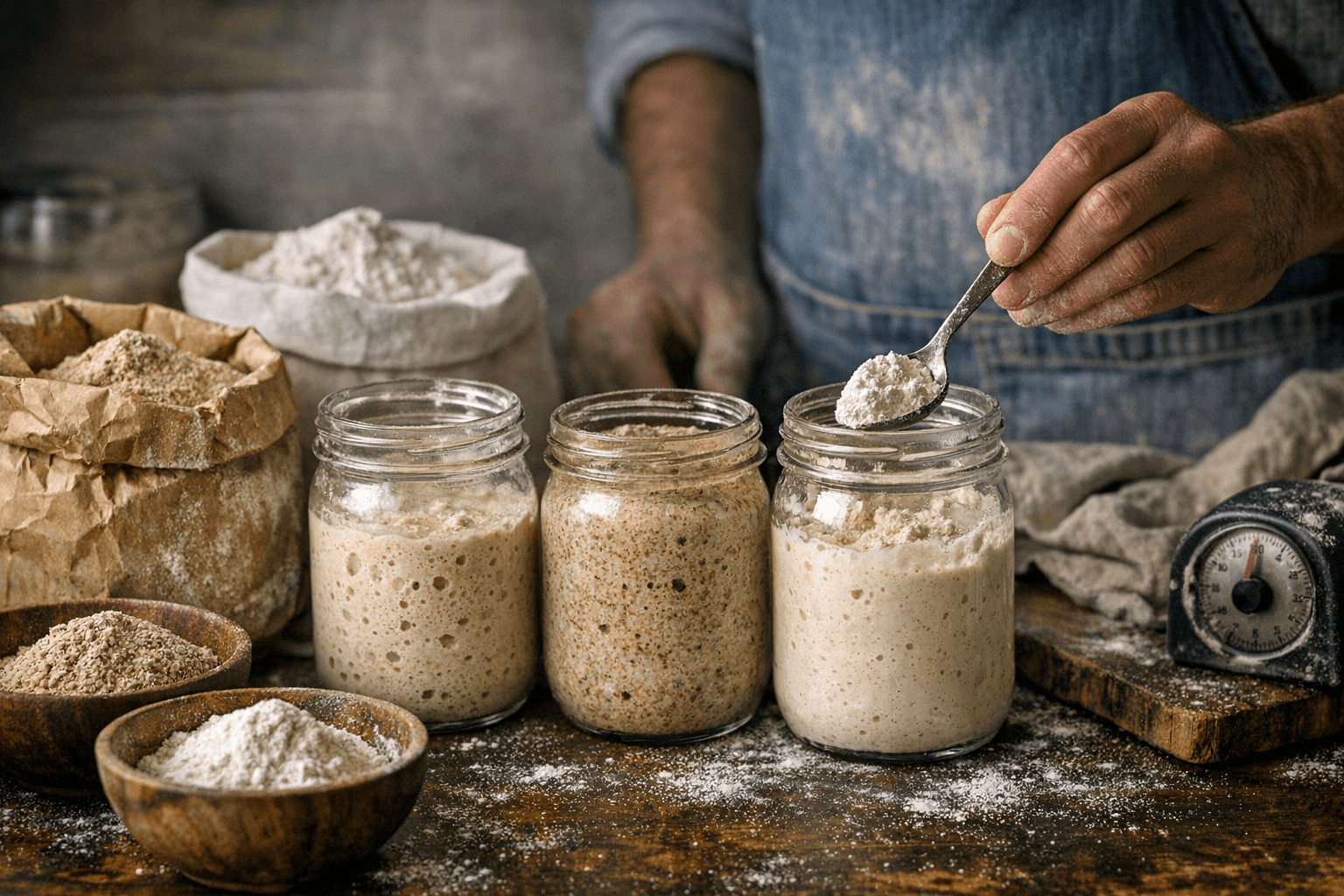
For bakers wanting to experiment, gradual changes work best. Introduce a new flour over several feedings rather than switching abruptly, and keep a backup of your established starter while you test variations. Monitor activity by rise times and smell, and note how changes affect dough handling and fermentation windows. If a goal is a stronger tang or different acid balance, incorporating more whole-grain flour can promote lactic acid bacteria associated with those profiles. If a milder, bread-flour driven fermentation is desired, staying with refined bread flours tends to favor different bacterial taxa and fermentation characteristics.
The study gives bakers a clearer explanation for outcomes they already see: flour and feeding decisions do more than alter texture and color, they shape the living community that makes sourdough unique. Armed with that knowledge, you can make informed tweaks to starter maintenance and recipe planning to reach the flavor and performance you want.
Know something we missed? Have a correction or additional information?
Submit a Tip