France and Kenya host summit signaling new Africa partnership shift
France brought its Africa reset to Nairobi, but African leaders arrived with leverage, demanding more than a rebrand of old influence.
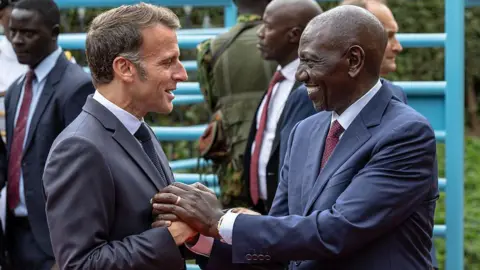
France and Kenya opened the Africa Forward Summit in Nairobi with a clear political test: whether Paris is truly moving beyond the old France-Africa order or simply dressing it up in new language. President Emmanuel Macron joined Kenyan President William Ruto and other African heads of state and government at the Kenyatta International Convention Centre and the University of Nairobi for the May 11-12 meeting, which France says is the first of its kind to be hosted and co-chaired with an English-speaking country.
That distinction matters. The summit was announced by Ruto and Macron at the 79th UN General Assembly and is being framed as a “partnership of equals,” with investment, innovation and growth at the center. The agenda stretches from youth employment and training to sovereignty, competitiveness, peace and security, development finance, health-system strengthening, food sovereignty, digital competitiveness, energy access and connectivity. For African leaders, that breadth gives them room to press for concrete financing and market access, not just another round of diplomatic promises.
Kenya’s role as host is itself part of the shift. For decades, the Africa-France summit tradition was built around Francophone capitals and French influence in former colonies. It began in Paris in 1973 under Georges Pompidou, then the 1975 Bangui meeting set the pattern for annual gatherings alternating between France and Africa. Nairobi breaks that mold, placing an English-speaking African country at the center of a forum once defined by France’s postcolonial network.
The timing also reflects France’s losses in the Sahel. Since 2020, coups across the region have brought military rulers who expelled French troops and turned toward Russia. France handed over its last major military facility in Senegal in July 2025, underscoring how far its security footprint has shrunk. Emmanuel Macron’s 2017 pledge to end “Françafrique” now collides with that retreat, as African governments push harder for partnerships that are less hierarchical and more transactional.

Analysts in coverage described the Nairobi summit as a rebranding of France’s position on the continent, and the economic numbers help explain why Paris is trying. France increased its imports from Africa by a quarter between 2021 and 2024, according to International Trade Centre data cited in coverage, suggesting commerce is becoming a bigger part of the relationship even as military influence fades.
France says the summit builds on the 2021 Summit on Financing African Economies, the 2023 New Global Financing Pact, the 2023 Africa Climate Summit in Nairobi and the EU-AU summit in Luanda in November 2025. It is also meant to feed into the G7 summit France will host in Evian in June. Whether Nairobi marks a real break or a polished continuation of old habits will be measured by what African leaders extract from it: money, technology, infrastructure and terms they can actually shape.
This article was produced by Prism’s automated news system from verified source data, official records, and press releases, then run through automated quality and moderation checks before publishing. The system is built and supervised by the people who set the standards it runs under. Read our full AI policy.
Did this article answer your question?


