German business morale falls to five-year low as Iran crisis bites
Germany’s business climate dropped to its weakest since May 2020, signaling how Iran-driven energy shocks are souring outlooks across Europe’s biggest economy.

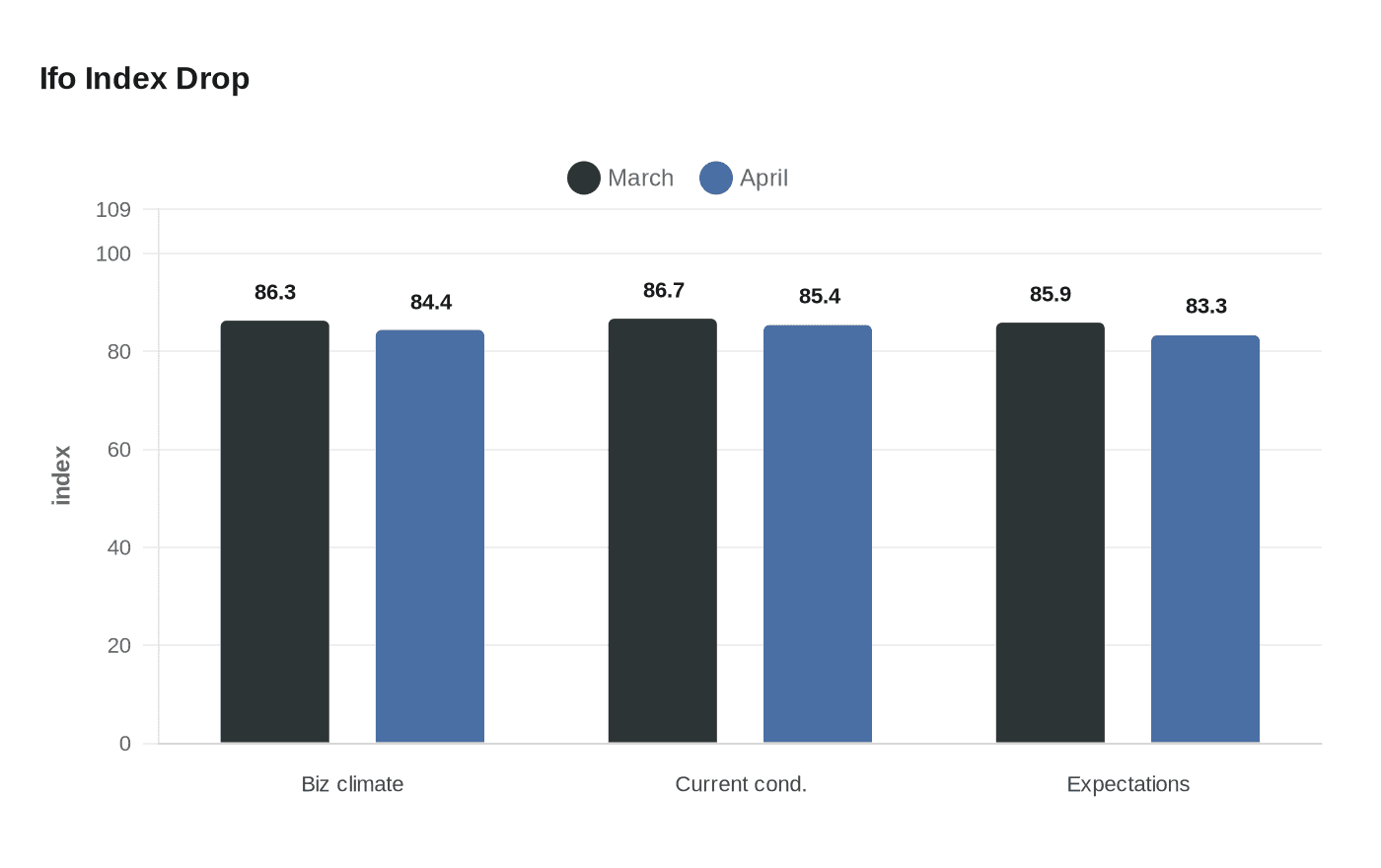
Germany’s weakening business mood matters far beyond Europe because it often arrives before slower exports, softer industrial orders and a chill in global risk sentiment. The Ifo business climate index fell to 84.4 in April from 86.3 in March, below economists’ 85.5 forecast and at its lowest level since May 2020, suggesting that companies entered the second quarter with little confidence in a rebound.
The decline was broad-based. Firms’ assessment of current conditions slipped to 85.4 from 86.7, while expectations for the months ahead dropped to 83.3 from 85.9. Clemens Fuest, president of Ifo, said the result showed the Iran crisis was hitting the German economy hard, as higher energy prices and wider uncertainty weighed on planning, investment and industrial confidence.
That is a problem for a country that still depends heavily on manufacturing and exports. Germany’s energy-intensive producers account for a large share of output, which makes them especially exposed when oil and gas markets turn volatile. Any sustained disruption feeds quickly into production costs, consumer prices and the competitiveness of German goods in overseas markets, with effects that can spread through supply chains well beyond the country’s borders.
The latest deterioration also added to concerns that Germany’s long-running weakness is not yet over. Business confidence has already been subdued for an extended period, and another drop increases the risk that the hoped-for recovery will be pushed back again. Market economists have warned that prolonged disruption around the Strait of Hormuz could shave growth and keep inflation elevated, and some have said an extended shock could even drag the economy toward recession.
For policymakers in Berlin and in the euro zone, the April reading was a reminder that external shocks are colliding with fragile domestic momentum. The Ifo survey is closely watched because it tends to give an early read on future activity, and this month’s drop in both current conditions and expectations points to a second quarter shaped more by caution than expansion.
This article was produced by Prism’s automated news system from verified source data, official records, and press releases, then run through automated quality and moderation checks before publishing. The system is built and supervised by the people who set the standards it runs under. Read our full AI policy.
Did this article answer your question?