Germany cuts 2026, 2027 growth forecasts as energy costs rise
Germany’s growth now looks stuck at 0.5% for 2026 as Iran war-driven energy costs push inflation back to 2.7%.
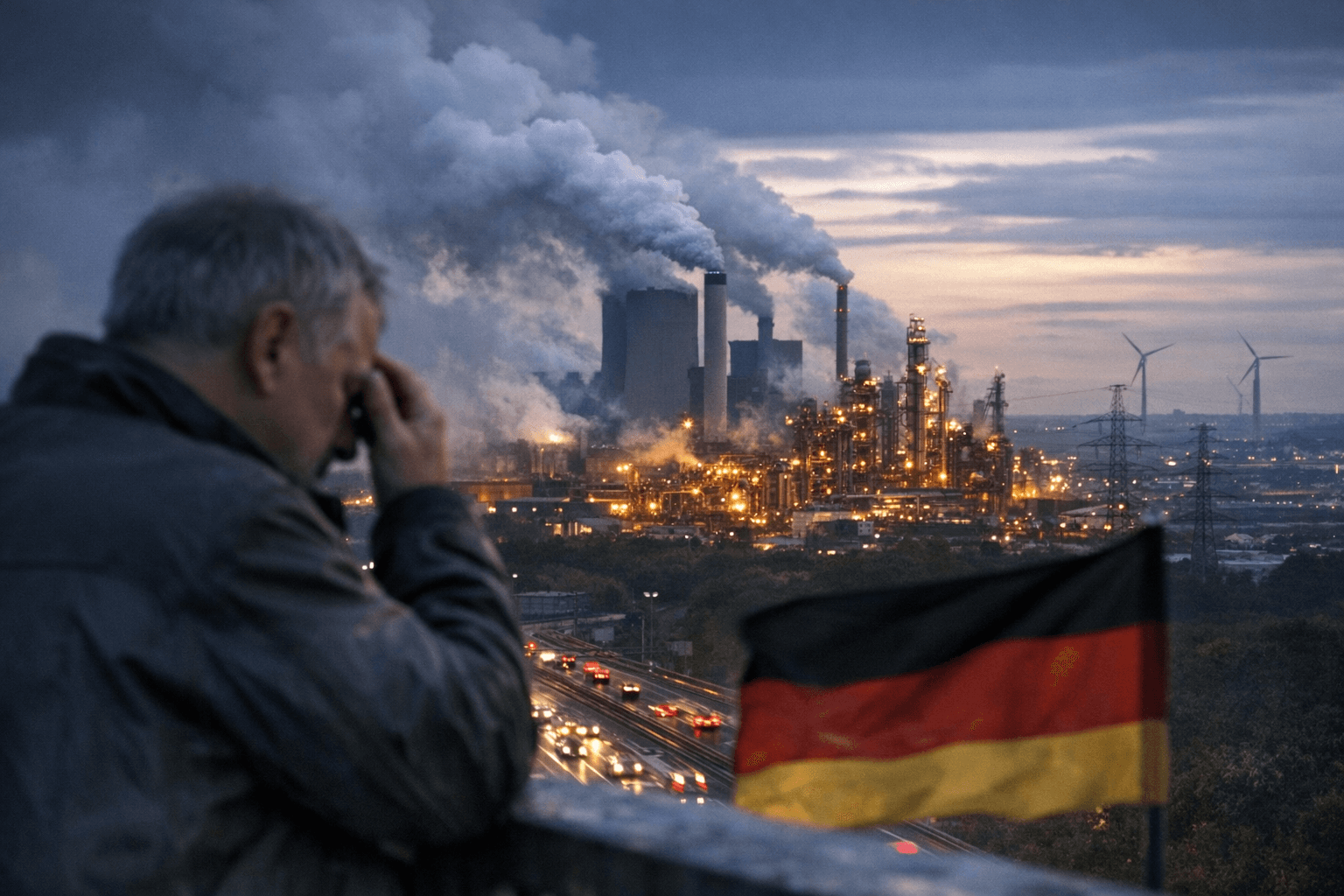
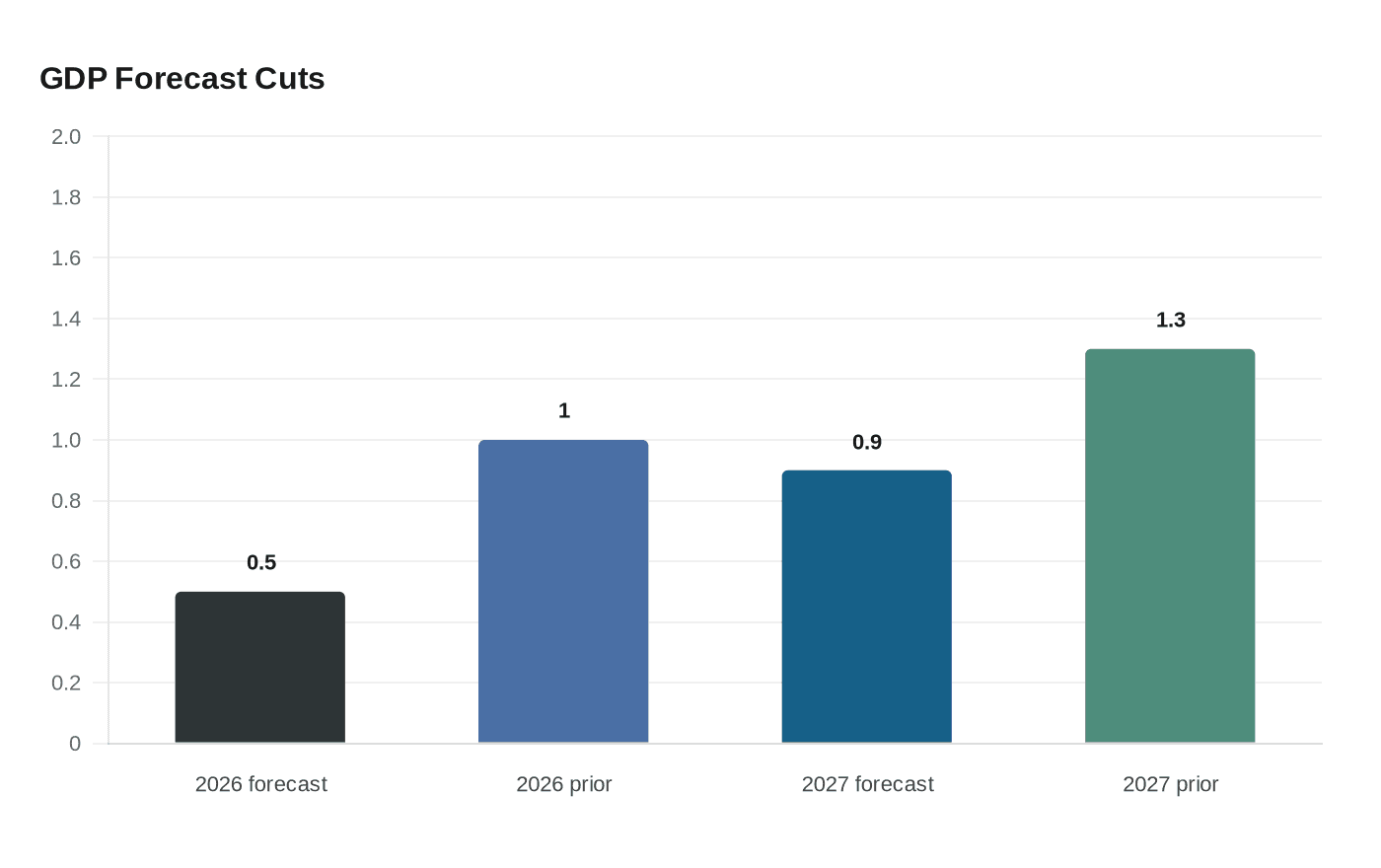
Germany’s economy ministry has sharply reduced its outlook for the next two years, a warning sign that the Iran war is spilling beyond the Middle East and into Europe’s largest economy. The government now expects GDP growth of just 0.5% in 2026, down from 1.0%, and 0.9% in 2027, down from 1.3%, while lifting its inflation forecast to 2.7% this year and 2.8% in 2027 as oil and gas prices rise.
The damage is already showing up in the price data. Germany’s statistical office said consumer inflation reached 2.7% in March 2026, the highest since January 2024, driven in part by higher motor fuel and heating oil costs since the start of the Iran war. Energy prices were up 7.2% from a year earlier, a move that hits German households directly and leaves manufacturers paying more for power, transport and raw materials just as demand is weakening.
The ministry’s April update said Germany’s economic developments will depend largely on the outlook for the Iran war, with external demand expected to lose momentum because of higher energy and commodity prices. Exports are not expected to rise year over year again until 2027, when they are forecast to grow 1.3%, while imports are set to grow faster at 1.8%, narrowing the trade surplus. That is a sharp problem for an economy built on selling machinery, cars and industrial goods abroad, especially when China remains a fierce competitor and global trade is fragmenting.
The labor market is also flashing warning signs. The ministry said no upturn is currently in sight, and the IWH Insolvency Trend showed German insolvencies rising 17% in March from February and 18% from March 2025. For an industrial economy already under pressure from weak exports and high power costs, a wave of business failures can feed back into hiring, investment and credit conditions.
There is one fiscal consequence of the weaker outlook: Germany can borrow an extra 2.7 billion euros for its 2027 budget under the cyclical component of its debt brake. The constitutional rule normally limits structural borrowing to 0.35% of GDP, but downturns allow more room. Economy Minister Katherina Reiche is also preparing to travel to China in May for closed-door talks, a sign that Berlin is trying to contain the damage through diplomacy even as the energy shock continues to hit prices, growth and industrial competitiveness.
This article was produced by Prism’s automated news system from verified source data, official records, and press releases, then run through automated quality and moderation checks before publishing. The system is built and supervised by the people who set the standards it runs under. Read our full AI policy.
Did this article answer your question?

