Germany tax revenue rises 3.6% in March, underlying trend weakens
March tax receipts rose 3.6% to 89.3 billion euros, but the ministry said one-off effects likely hid a slight underlying decline. The headline offers Berlin only limited fiscal breathing room.

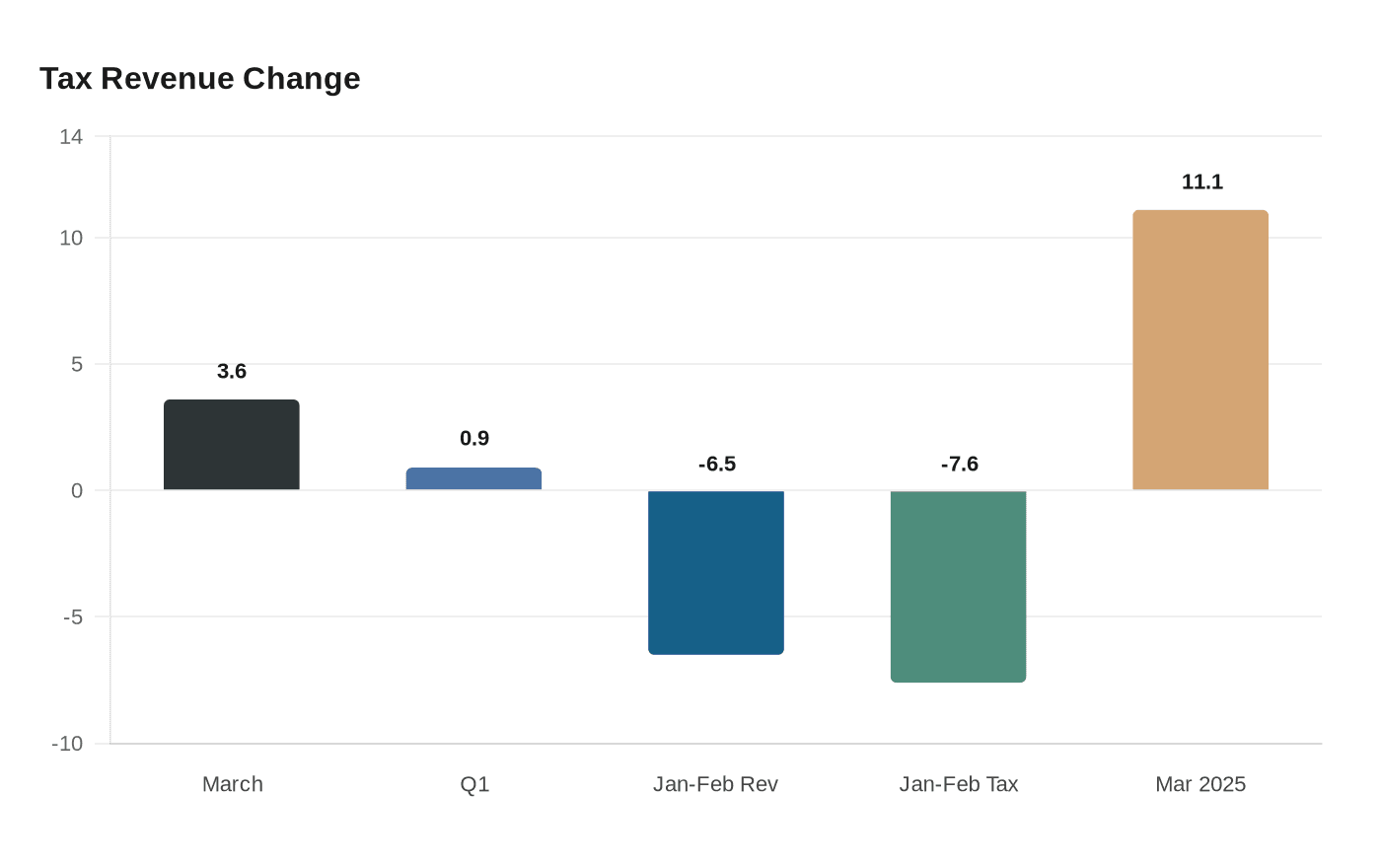
Germany’s tax take looked firmer in March, but the finance ministry’s own warning cut through the optimism: the 3.6% rise in federal and state tax revenue to 89.3 billion euros was flattered by one-off effects, and without them revenue would likely have slipped slightly. That makes the latest figures less a sign of broad strength than a reality check on how much tax collections can still be distorted by volatility in import VAT and non-assessed taxes on earnings.
For the first quarter, tax revenue rose just 0.9% from a year earlier to 224.2 billion euros. That is a modest gain for Europe’s largest economy, especially after a much stronger comparison base a year earlier, when March 2025 tax revenue jumped 11.1% to 86.16 billion euros. The ministry’s January-February update was even softer: federal revenue totaled 59.4 billion euros, down 6.5% year on year, while federal tax revenue fell 7.6% to 54.0 billion euros.
The mix matters. Higher energy prices can lift VAT receipts, but they can also reduce consumption and shift the tax base in ways that make month-to-month readings hard to read. That warning is important because tax revenue feeds directly into Berlin’s room to spend on infrastructure, defense, industrial support and any future fiscal reform. A modestly positive headline may help near-term budget planning, but it does not by itself show that Germany’s economy has regained momentum.
The broader backdrop remains weak. The European Commission has said Germany’s real GDP in 2024 was roughly at its 2019 level, underlining how little ground the economy had regained after years of stagnation. Germany’s economy ministry said on April 16 that activity lost noticeable momentum in the first quarter of 2026 and that no upturn in the labor market was in sight, while the IWH Insolvency Trend showed a 17% increase in insolvencies in March from February and an 18% rise from March 2025. Against that backdrop, the tax data suggest a large and resilient revenue base, but one that is still tracking a fragile economy rather than a convincing rebound.
This article was produced by Prism’s automated news system from verified source data, official records, and press releases, then run through automated quality and moderation checks before publishing. The system is built and supervised by the people who set the standards it runs under. Read our full AI policy.
Did this article answer your question?

