Germany town vote could elect far-right mayor for first time
Aue-Bad Schlema’s runoff could put Stefan Hartung, a Freie Sachsen candidate with NPD roots, in a mayor’s office for the first time in postwar Germany.
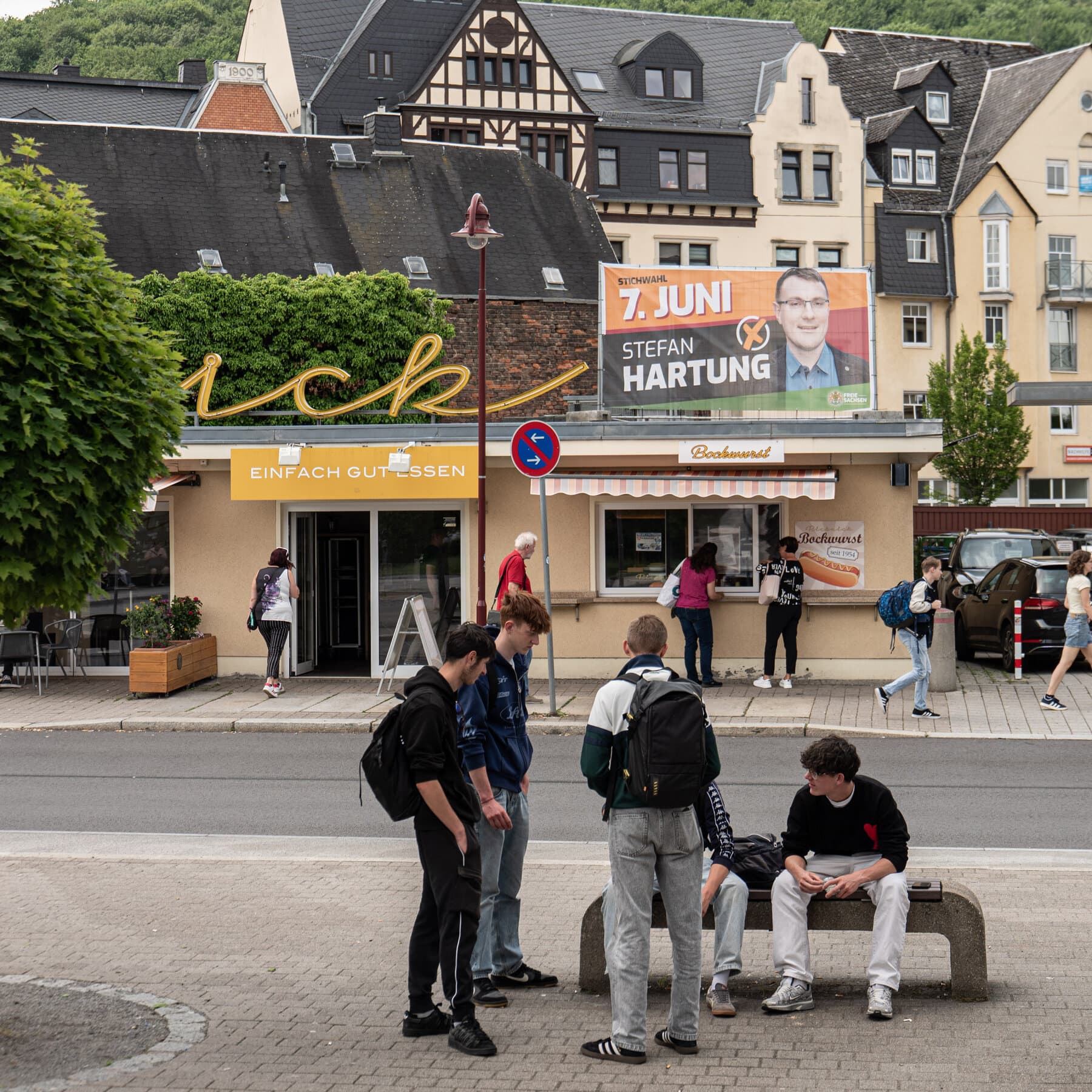
Aue-Bad Schlema’s runoff was more than a small-town contest: it tested how far far-right normalization had advanced in local German politics and whether a postwar taboo could finally break in public office. In the Erzgebirge town of about 19,000 people, Stefan Hartung of the Freie Sachsen faced CDU candidate Marcus Hoffmann in a race that required only a simple majority after no one cleared 50 percent in the first round.
Hartung had led the May 10 vote with 29.0 percent, ahead of Hoffmann’s 23.6 percent in a five-candidate field. About 14,700 eligible voters were called back to the polls for the runoff, turning a municipal race into a national marker for the strength of the far right in eastern Germany. The contest drew unusual attention, including coverage from The New York Times and national television crews, because a Hartung victory would have handed the far right a mayoralty in postwar Germany for the first time.
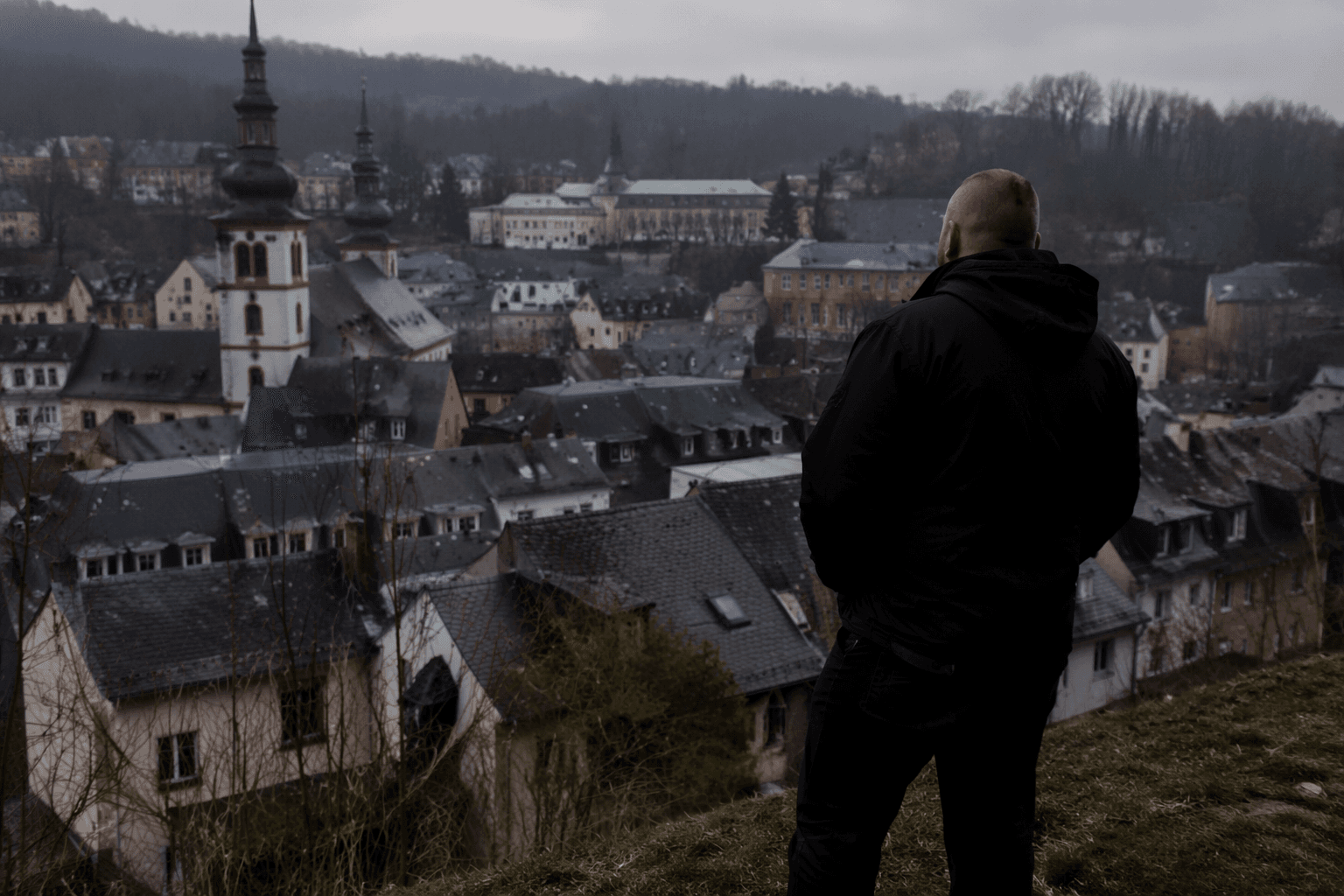
Hartung’s path to that moment was rooted in years of local organizing. He had been active in town politics since 2009, organized torchlight marches against an asylum seekers’ home in 2013, and had sat on the district council since 2014. He was also previously active in the NPD, now called Die Heimat, placing him firmly in the orbit of a movement that has spent years trying to shift from street protest into town halls.
Freie Sachsen, founded in 2021, has pushed Saxon autonomy and the idea of a “Säxit.” Saxony’s constitutional protection agency describes the party as a grouping of neo-national socialists, Die-Heimat functionaries and other scene members or sympathizers. That background has made the Aue-Bad Schlema runoff a test not just of one candidate’s local reach, but of whether extremist politics can be repackaged as municipal power.
The race came amid a broader rise in far-right influence in eastern Germany, where local elections often serve as warning lights before state votes. The contest in Aue-Bad Schlema was being watched closely ahead of elections in Saxony-Anhalt on September 6, 2026, and Mecklenburg-Western Pomerania on September 20, 2026. With the Alternative for Germany polling around 29 percent nationally, compared with 21 percent for Chancellor Friedrich Merz’s conservative alliance, the runoff looked less like an isolated shock than a measure of how much democratic norms had already shifted. Germany’s crackdown on young right-wing extremist networks only sharpened that sense of urgency.
This article was produced by Prism’s automated news system from verified source data, official records, and press releases, then run through automated quality and moderation checks before publishing. The system is built and supervised by the people who set the standards it runs under. Read our full AI policy.
Know something we missed? Have a correction or additional information?
Submit a Tip