Global Leaders Praise Iran Ceasefire, Push for Strait of Hormuz Reopening
France is leading more than 15 nations in a coordinated push to physically reopen Hormuz, as Brent crude plunged 16% hours after Trump's ceasefire deal with Iran.
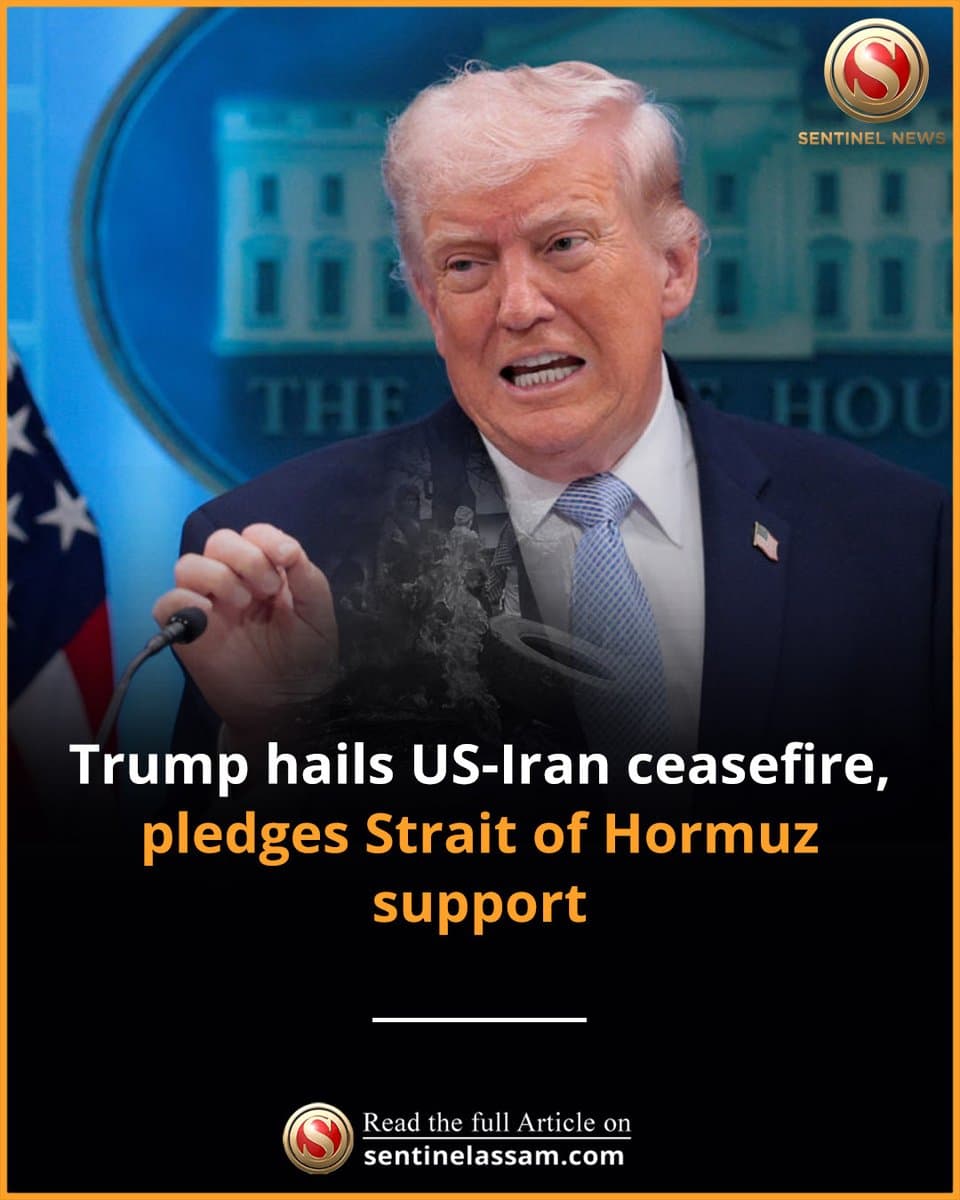
With Brent crude down 16% and S&P 500 futures surging past 2%, global financial markets rendered an immediate verdict on the ceasefire Trump announced April 7 between the United States and Iran. But the unanimous message from world capitals Wednesday was the same: political relief will matter little if the Strait of Hormuz, closed for weeks and bleeding roughly 20% of global seaborne oil trade, does not reopen.
The deal, announced at 6:32 p.m. ET on April 7, arrived less than two hours before Trump's self-imposed 8 p.m. ET deadline, after which he had threatened to order strikes destroying all of Iran's power plants and bridges. Trump posted on Truth Social that the two-week ceasefire was "based on conversations" with Pakistani Prime Minister Shehbaz Sharif and Pakistani General Asim Munir, who mediated the agreement around Iran's 10-point proposal. "This will be a double sided CEASEFIRE," Trump wrote, calling it "a big day for world peace" and stating the U.S. had "already met and exceeded all Military objectives." He said he would help ease the "traffic buildup" in the Strait.
White House Press Secretary Leavitt put the administration's position plainly: "The truth is that President Trump and our powerful military got Iran to agree to reopening the Strait of Hormuz, and negotiations will continue."
European leaders swiftly welcomed the deal while making clear reopening the strait is the operative test. European Commission President Ursula von der Leyen said it "brings much needed de-escalation" but added pointedly: "The Strait of Hormuz must be open for passage again." European Council President Antonio Costa urged all parties to continue toward lasting peace. UK Prime Minister Keir Starmer, who said the ceasefire "will bring a moment of relief to the region and the world," announced he would travel to the Gulf on Wednesday to meet with regional leaders and reinforce the agreement.
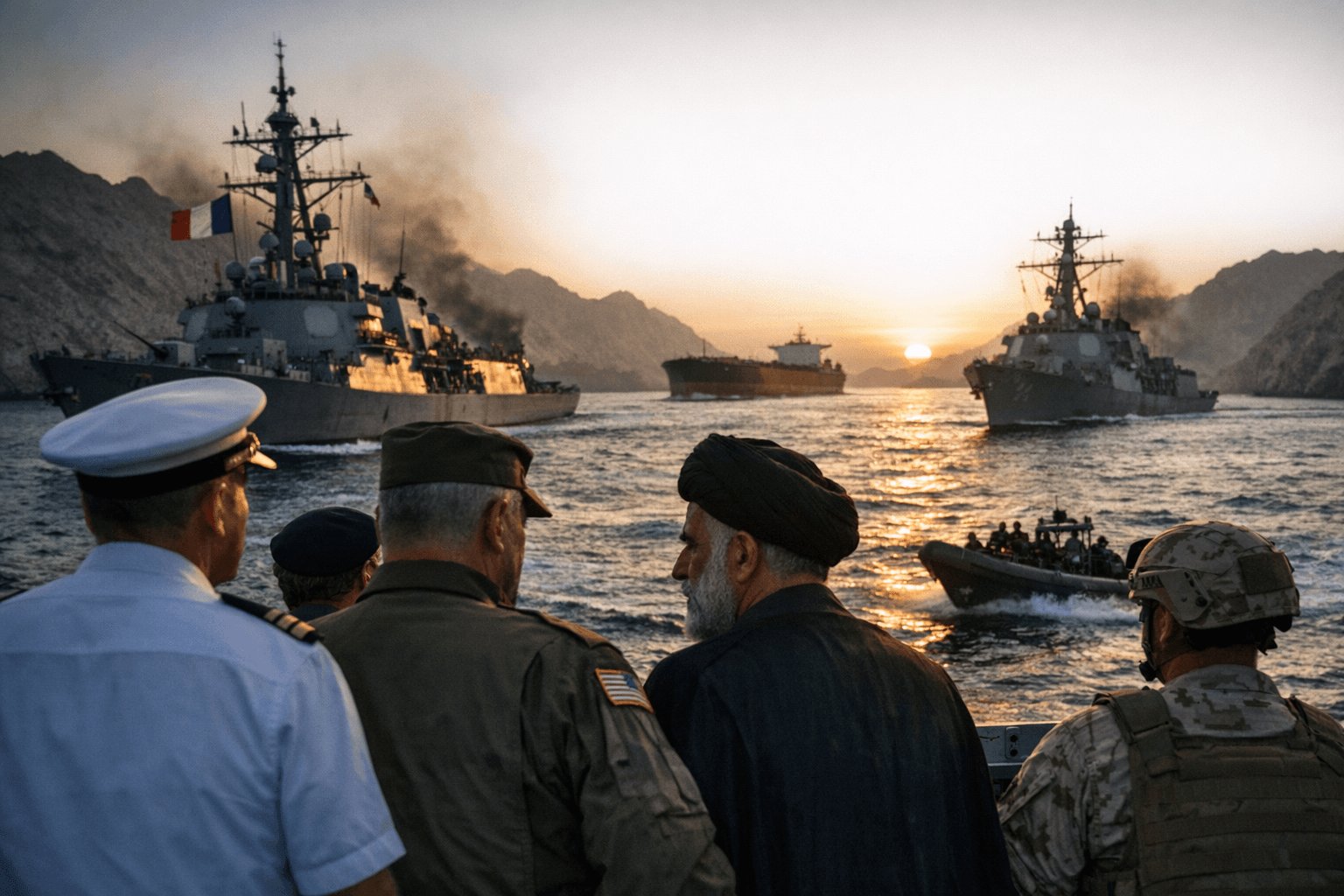
French President Emmanuel Macron moved beyond diplomatic statements to operational planning. More than 15 nations spanning Asia, Europe, and the Middle East are "currently mobilized and participating in the planning, led by France, to enable the implementation of a strictly defensive mission in coordination with Iran, when the conditions are right, to facilitate the resumption of maritime traffic," Macron said. China's Foreign Ministry spokesperson Mao Ning stressed that "the top priority is to bring an end to this war that should not have happened in the first place," while Australia welcomed the deal and noted it had been calling for de-escalation throughout the conflict.
The economic stakes behind that diplomatic pressure are enormous. At its narrowest, the Strait of Hormuz is only 21 miles wide, yet it carries approximately 20 million barrels of oil per day, serving as the primary export route for Saudi Arabia, the UAE, Kuwait, Qatar, Iraq, Bahrain, and Iran. Roughly 82% of that crude flows to Asian markets. The strait also handles 93% of Qatar's and 96% of the UAE's liquefied natural gas exports, representing 19% of global LNG trade. A Dallas Fed analysis estimated that a complete cessation of Gulf oil exports would remove close to 20% of global oil supply from the market.
The closure had already forced emergency action: on March 11, all 32 IEA member states unanimously released 400 million barrels from strategic reserves, and the Trump administration temporarily eased sanctions on 30 Russia-connected petroleum tankers carrying 19 million barrels. California gasoline prices had exceeded $5 per gallon.
Oil markets reacted to the ceasefire news with Brent crude falling to around $94 a barrel while West Texas Intermediate posted its steepest single-day decline in nearly six years. Analysts at Bank of America cautioned, however, that the market remains "extremely tight" regardless of futures movements.
Uncertainty runs deep beneath the market optimism. Iran's Supreme National Security Council confirmed acceptance of the ceasefire while declaring "victory" in winning U.S. acceptance of its 10-point plan. But a senior former IRGC commander warned that "the hands of Iran's armed forces remain on the trigger despite the ceasefire until the country's interests are secured." With former Supreme Leader Ali Khamenei killed in the opening U.S.-Israeli strikes on February 28, his son Mojtaba Khamenei has assumed the role of supreme leader; an intelligence assessment reviewed by The Times described him as reportedly incapable of running the country, leaving Iran's decision-making chain deeply uncertain.
Israel separately confirmed that Lebanon is not covered by the ceasefire, and both Tehran and Washington have claimed victory in the deal's terms, a divergence that complicates the permanent peace negotiations still ahead, including the unresolved question of Iran's uranium enrichment program.
This article was produced by Prism’s automated news system from verified source data, official records, and press releases, then run through automated quality and moderation checks before publishing. The system is built and supervised by the people who set the standards it runs under. Read our full AI policy.
Did this article answer your question?


