Hegseth Warns Iran: Surrender Enriched Uranium or Face Forced Removal
Hegseth demanded Iran surrender 972 pounds of enriched uranium or face a U.S. commando raid, just one day into a fragile two-week ceasefire.

Iran has two weeks and one choice, according to Defense Secretary Pete Hegseth: surrender its 972-pound stockpile of highly enriched uranium, or face the United States removing it by force.
Hegseth issued the ultimatum at the Pentagon on April 8, one day after the U.S. and Iran agreed to a ceasefire that paused Operation Epic Fury, the U.S.-Israeli military campaign that began February 28, 2026, and reopened the Strait of Hormuz. He framed the pause not as compromise but as Iranian defeat. "Iran begged for this ceasefire, and we all know it," he said, noting the U.S. deployed less than 10% of its military capabilities during an operation that killed Iranian Supreme Leader Ali Khamenei in its opening hours and cost 13 American lives.
At stake is 440.9 kilograms of uranium enriched to 60% purity, a short technical step from weapons-grade 90%. IAEA Director General Rafael Grossi has estimated the stockpile could yield as many as 10 nuclear bombs if further processed. Nuclear power generation requires enrichment below 4%; Iran has exceeded that threshold since Trump withdrew from the 2015 JCPOA in 2018.
Grossi identified the Isfahan underground tunnel complex as the primary storage site, where at least 200 kilograms are believed to remain. Analysis by the Bulletin of the Atomic Scientists, in collaboration with the French newspaper Le Monde, suggested Iran may have moved as much as 540 kilograms there before Operation Midnight Hammer, the June 2025 strikes that destroyed or damaged enrichment plants at Natanz and Fordow. Satellite imagery from June 9, 2025, showed a truck with 18 containers near the Isfahan south tunnel entrance. Iran has since refused IAEA access to its bombed facilities and has not disclosed the uranium's current location.
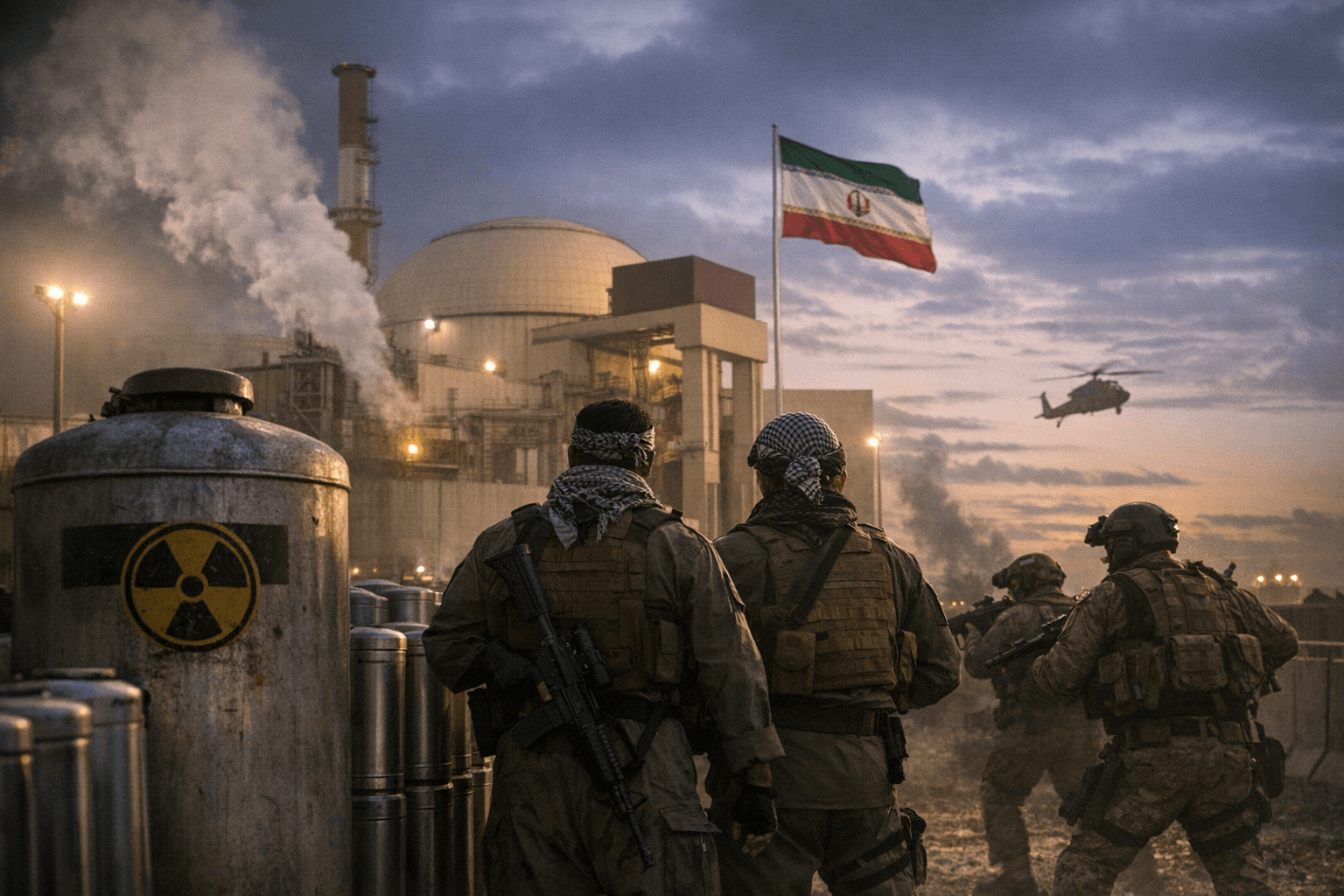
Hegseth called the handover "non-negotiable" and cited Midnight Hammer as proof of what force remains available. "We know exactly what they have, and they know that," he said. Gen. Dan Caine, chairman of the Joint Chiefs of Staff, confirmed forces remain ready to resume strikes "if called upon." A plan briefed to President Trump envisions inserting up to 1,000 specially trained forces into Iran to remove the stockpile physically, an option described in the briefing as "a very difficult endeavor of a type never before attempted in wartime."
The precedents for rapid, verifiable nuclear disarmament offer little comfort within a two-week window. Libya's 2003 surrender of its weapons program and the JCPOA's inspection regime both required sustained IAEA access, defined chains of custody, and agreed destinations for removed material; a framework Iran has effectively dismantled by expelling inspectors after the June 2025 strikes. Tehran's foreign ministry spokesperson Ismail Baghaei rejected the U.S.'s 15-point proposal as "excessively demanding," and Iran accused Washington of using a pilot rescue operation as cover to "steal enriched uranium" near Isfahan.
Before the war, Foreign Minister Abbas Araghchi had offered to dilute the stockpile, calling it "a big offer, a big concession in order to prove that Iran has never wanted nuclear weapons." That proposal collapsed when strikes began on February 28. Trump has since threatened 50% tariffs on countries that sell weapons to Iran and vowed to remove what he called "Nuclear Dust" from Iran's bombed sites. Nuclear security experts warned that dismantling enrichment infrastructure has not resolved the core problem: "Iran can still create a nuclear weapon, it's just a matter of political will.
This article was produced by Prism’s automated news system from verified source data, official records, and press releases, then run through automated quality and moderation checks before publishing. The system is built and supervised by the people who set the standards it runs under. Read our full AI policy.
Did this article answer your question?