Herpes virus pioneer Alexander Roizman dies at 96
Bernard Roizman, who mapped herpes simplex virus and exposed how it hijacks cells, died at 96. His work helped open paths to vaccines, gene therapies and cancer viruses.

Bernard Roizman, the scientist who turned herpes simplex virus into one of virology’s clearest models for how a virus invades and controls a host cell, died on April 13 at age 96. Over seven decades, his work helped explain HSV gene regulation, identified key viral genes and proteins, and laid groundwork that reached far beyond the disease he studied.
Roizman was born on April 17, 1929, earned his Sc.D. from Johns Hopkins University in 1956, and remained on the Hopkins faculty until 1965 before moving to the University of Chicago. There, he became the Joseph Regenstein Distinguished Service Professor Emeritus of Microbiology and Molecular Genetics and Cell Biology. The University of Chicago said his research reshaped virology by mapping the herpes simplex virus genome and defining how the virus infects host cells.
That work mattered because herpes simplex is not a narrow clinical curiosity. Johns Hopkins says the infection is caused by HSV-1 and HSV-2 and can produce cold sores, genital herpes and herpes meningoencephalitis. Genital herpes can also be asymptomatic, allowing the virus to spread quietly. Roizman’s laboratory work helped show, at a molecular level, how those viruses operate, from the structure of viral DNA to the roles of specific genes during infection and replication.
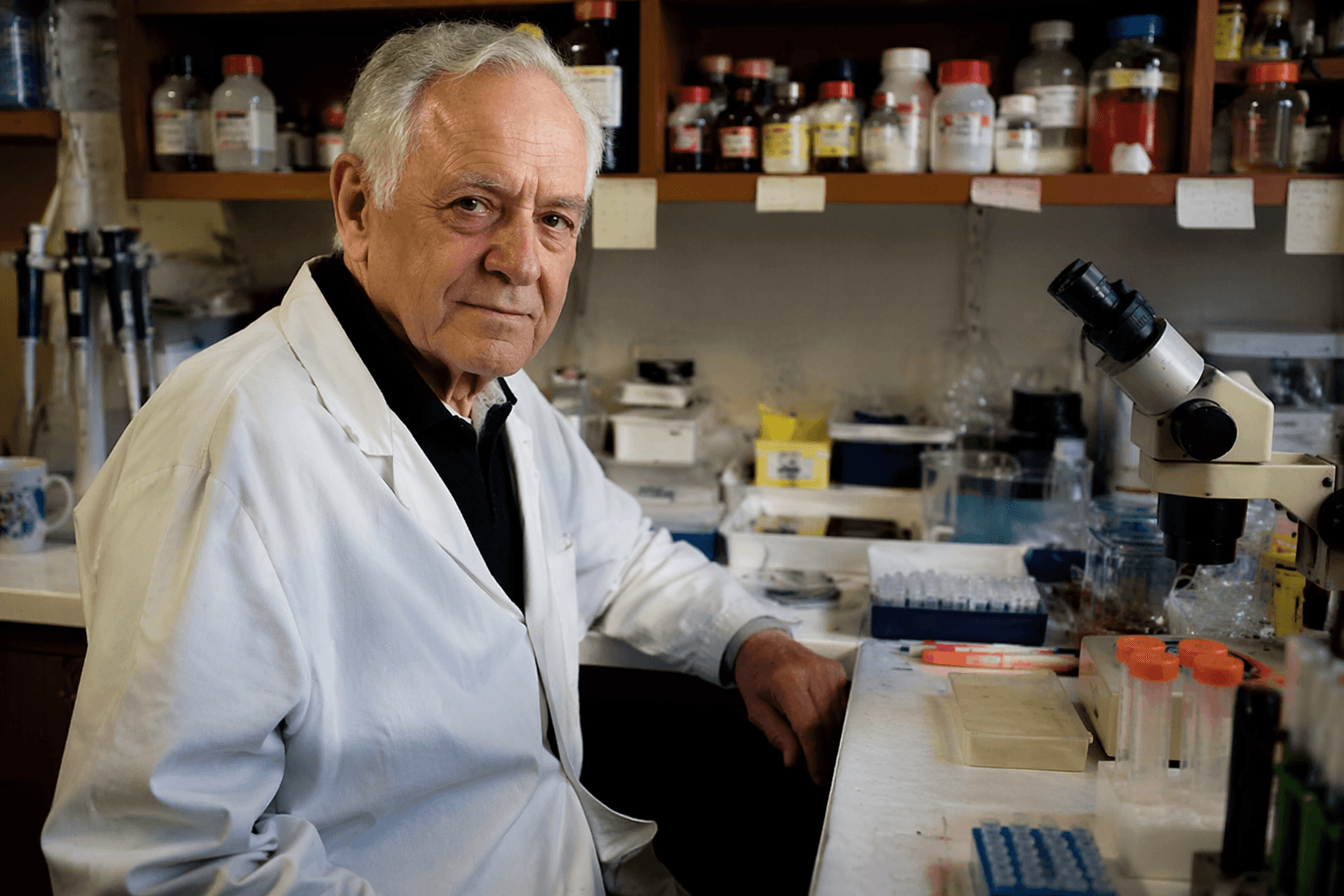
His influence reached into applied medicine as well. Johns Hopkins says his research led to a genetically engineered herpes simplex virus vaccine, and the University of Chicago said his findings laid the groundwork for vaccine development and other therapies. Around 2000, Roizman’s research shifted again, this time toward engineering novel herpes viruses for the treatment of human cancer, reflecting how a basic-science program on a common lifelong infection became a platform for therapeutic design.
Roizman was elected to the National Academy of Sciences, the National Academy of Medicine, the National Academy of Inventors and the American Academy of Arts and Sciences. His career left herpes simplex virus far better understood than when he began, and it left modern virology with tools that continue to shape vaccine research, gene therapy and cancer treatment.
This article was produced by Prism’s automated news system from verified source data, official records, and press releases, then run through automated quality and moderation checks before publishing. The system is built and supervised by the people who set the standards it runs under. Read our full AI policy.
Know something we missed? Have a correction or additional information?
Submit a Tip