Light pollution lengthens pollen season, raising allergy risks in cities
Brighter nights were tied to longer, harsher pollen seasons, with severe exposure on 27% of pollen days in lit areas versus 17% in dark ones.
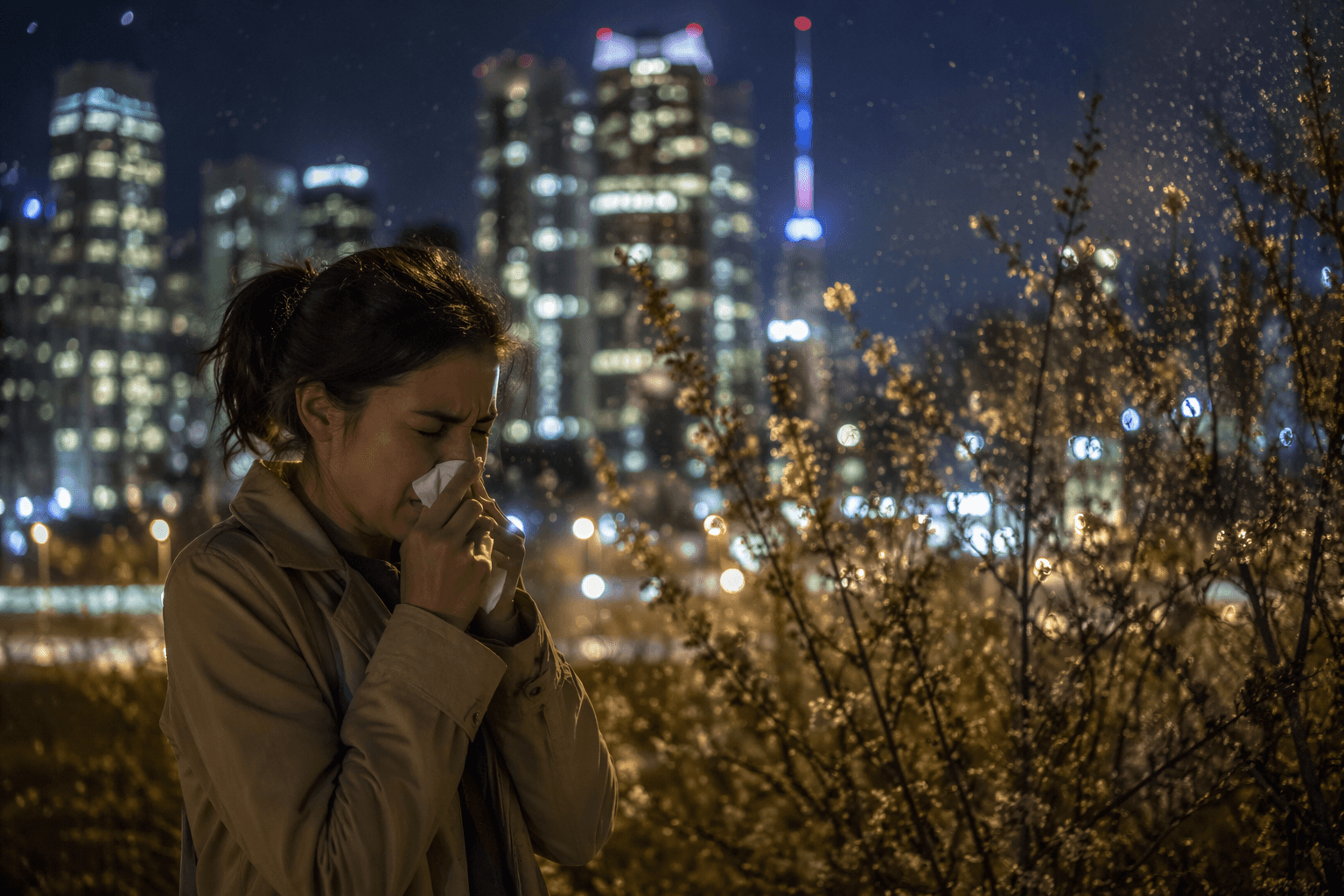
Artificial light is doing more than brightening city streets after dark. New research found it was linked to earlier pollen-season starts, later endings and longer allergy seasons, with the biggest effect showing up at the tail end of the season, when pollen lingered longest.
The study, published Jan. 20, 2026 in PNAS Nexus, analyzed 12 years of pollen data from 12 National Allergy Bureau monitoring stations across the Northeastern United States. Researchers paired those records with satellite measurements of artificial light at night from NASA’s Visible Infrared Imaging Radiometer Suite, along with Daymet climate data, to isolate the effect of nighttime lighting from temperature and precipitation. Higher artificial light at night was associated with a longer pollen season even after those weather factors were taken into account.
The difference was not abstract. In brightly lit areas, 27% of pollen-season days reached severe levels, compared with 17% in places with little or no artificial lighting. NASA’s analysis found that pollen counts in low- or no-light areas were significant for about 170 to 210 days a year, while brightly lit places such as New York City could see significant pollen counts for as many as 300 days annually.
That has direct implications for city planning, where light pollution is often treated as a nuisance rather than a public-health exposure. The authors said artificial light at night should be folded into environmental public health and urban planning strategies, alongside familiar concerns such as air quality and heat. The findings suggest that fixture design, light intensity and spectrum may matter for residents who already live with prolonged seasonal allergies.
The risk lands on a large share of the country. CDC data released in 2026 said roughly 3 in 10 U.S. adults and children had at least one allergy, a burden that already touches families, schools and workplaces. Researchers and outside experts warned that climate change, which is also lengthening pollen seasons, may compound the problem, making the role of nighttime lighting even harder for cities to ignore.
The authors pointed to practical fixes: reduce light levels where possible, shield fixtures so light does not spill upward, use motion sensors, and limit blue-rich lighting. For cities trying to cut costs and protect public health at the same time, the message is straightforward: brighter nights may be buying longer allergy season.
This article was produced by Prism’s automated news system from verified source data, official records, and press releases, then run through automated quality and moderation checks before publishing. The system is built and supervised by the people who set the standards it runs under. Read our full AI policy.
Know something we missed? Have a correction or additional information?
Submit a Tip