How much student loan forgiveness really saves borrowers now
A $20,000 balance can vanish for some borrowers, but only certain federal paths deliver real net savings, and tax bills, SAVE litigation and interest can shrink the payoff.
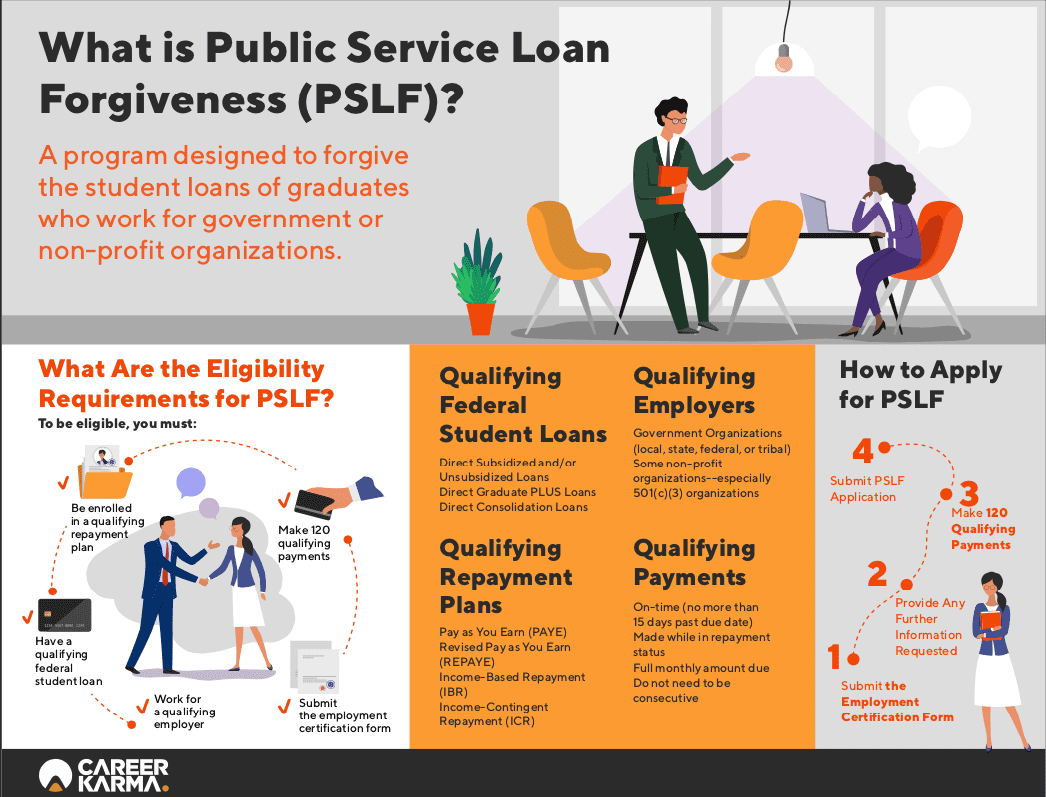
Public Service Loan Forgiveness can wipe out a $20,000 remaining federal student loan balance without triggering federal income tax on the forgiven amount. Whether that happens depends on loan type, repayment plan, forgiveness route, and whether your account has been caught in the SAVE fallout or the coming federal rule changes.
Where a $20,000 balance can disappear completely
Public Service Loan Forgiveness is the clearest case for a borrower with $20,000 in remaining federal debt. StudentAid.gov limits PSLF to eligible federal student loans and qualifying public service employment. Some or all remaining federal loans can be canceled after ten years of public service work while making required payments.
The IRS does not consider student loan amounts forgiven under PSLF or TEPSLF income for tax purposes, which means the borrower does not trade a $20,000 balance for a new federal tax bill.
Where savings exist, but are less certain
Income-driven repayment can still produce meaningful relief, especially if a borrower has been in repayment for a long time. The one-time income-driven repayment adjustment is designed to fix past payment-count problems and help some borrowers move closer to cancellation.
In its 2024 Annual Report of the Student Loan Ombudsman, the CFPB said Department of Education reforms led to billions of dollars in loan cancellation for almost 5 million borrowers, but servicing failures and legal challenges have interfered with relief.
A borrower who gets $20,000 forgiven through a taxable IDR route may still owe federal income tax on the cancelled amount, so the real savings depend on the tax hit, not just the balance erased.
Who will not see the promised payoff
Private student loans are the clearest case where forgiveness headlines do not apply. A borrower with a $20,000 private balance does not get PSLF, the one-time IDR adjustment, or the same federal cancellation options.
Borrowers who relied on SAVE face a separate problem. Student Loan Borrower Assistance called the SAVE plan, created in 2023, the most affordable student loan repayment option, but it is currently blocked by the courts, and Congress decided to eliminate the plan by July 2028. That means borrowers who expected the lowest monthly payment and the quickest route to forgiveness under SAVE may not see those benefits hold up.
Major changes to the federal student loan repayment system start July 1, 2026, and borrowers with only loans taken out before July 1, 2026 will keep access to the current array of plans until July 1, 2028, with SAVE as an exception because of the court cases, the Institute for College Access & Success says. In a July 18, 2025 Dear Colleague Letter, the U.S. Department of Education outlined numerous student-loan provisions in the One Big Beautiful Bill Act, signed into law on July 4, 2025, with several changes effective upon enactment and many more to be implemented on July 1, 2026 and later.
Taxes and interest can erase part of the win
Interest rates matter even when a borrower is chasing forgiveness. On July 1, 2024, the CFPB put undergraduate federal student loan interest rates at 6.53 percent, nearly 19 percent above the prior year and 44 percent above five years earlier. On a $20,000 balance, that rate means about $1,306 in interest a year if the balance is not shrinking, which is one reason the cost of waiting can grow quickly.
The CFPB estimated higher interest rates could cost students over $3 billion in additional interest for loans taken out in that year alone. Even when forgiveness is available, a higher rate slows down the point at which the remaining balance is actually worth canceling.
Servicing failures have also made the savings harder to reach. CFPB complaints from student loan borrowers have driven actions that produced more than $750 million in relief, and a separate CFPB report found 18,000 borrower complaints involving payment processing errors, inaccurate bills and repayment information, and unhelpful customer service. When account records are wrong, payment counts can be wrong too, which can delay or distort the savings borrowers expect from forgiveness.
The practical test for a $20,000 balance
The fastest way to tell whether the savings are real is to check four things: whether the loan is federal or private, whether the repayment plan is PSLF-eligible or IDR-based, whether the forgiveness will be taxed, and whether SAVE is part of the plan you were counting on. Borrowers never have to pay a fee to access federal relief, so any company asking for money to deliver forgiveness, cancellation or debt relief deserves a hard stop.
- If you have eligible federal loans, work in public service, and can reach 10 years of qualifying payments, a $20,000 remaining balance can be fully canceled with no federal tax on the forgiven amount.
- If you are in an income-driven plan, a $20,000 balance may still be canceled, but the 2026 tax treatment can cut into the net benefit.
- If you were counting on SAVE, do not assume the old monthly payment or forgiveness timeline still applies.
- If your balance is private, federal forgiveness promises do not apply.
This article was produced by Prism’s automated news system from verified source data, official records, and press releases, then run through automated quality and moderation checks before publishing. The system is built and supervised by the people who set the standards it runs under. Read our full AI policy.
Did this article answer your question?