Humanoid robot wins Beijing half marathon, outruns human runners
A robot built by Honor finished Beijing’s half marathon in 50:26, faster than the human world record. The race showed how far China’s humanoid machines have come.
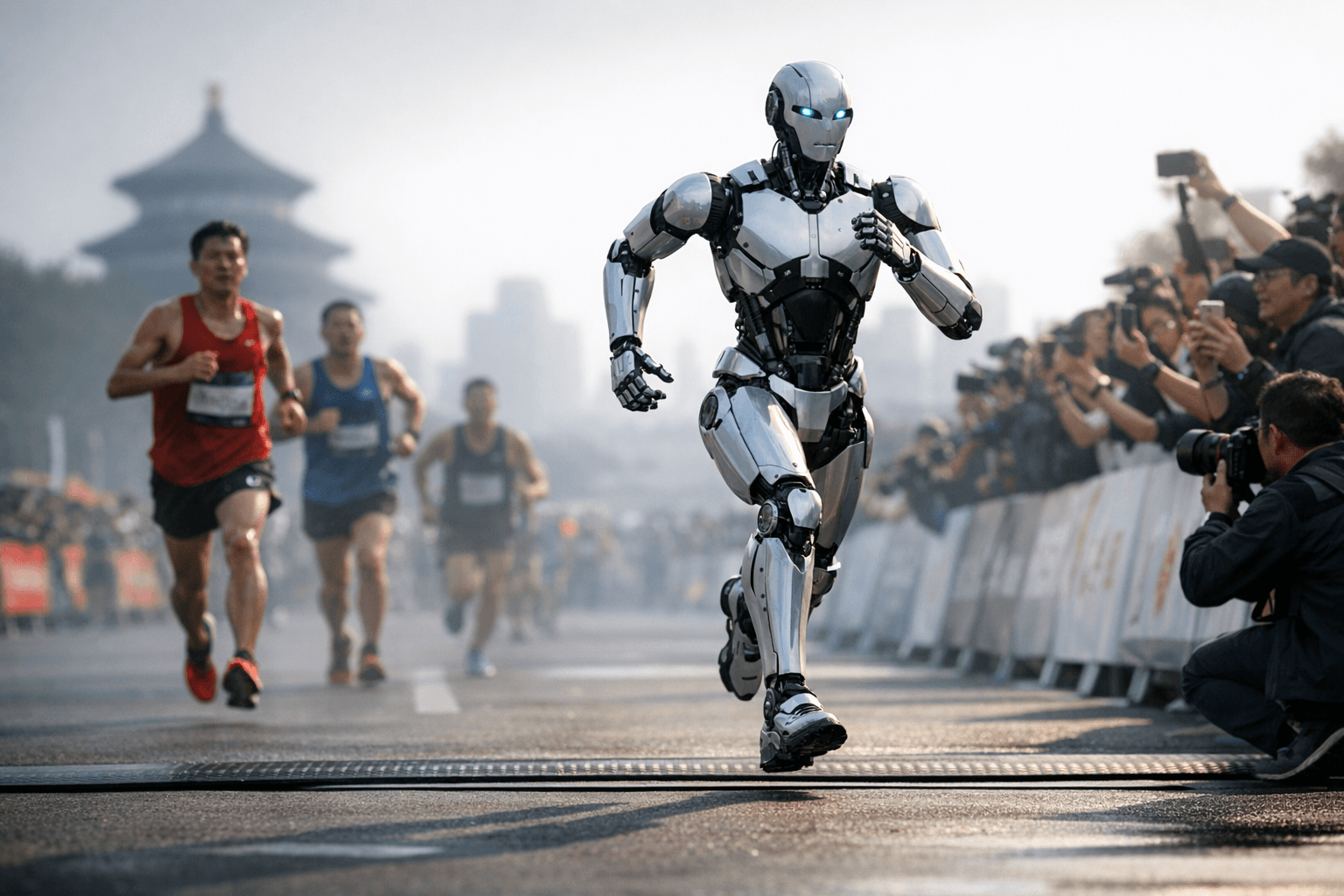
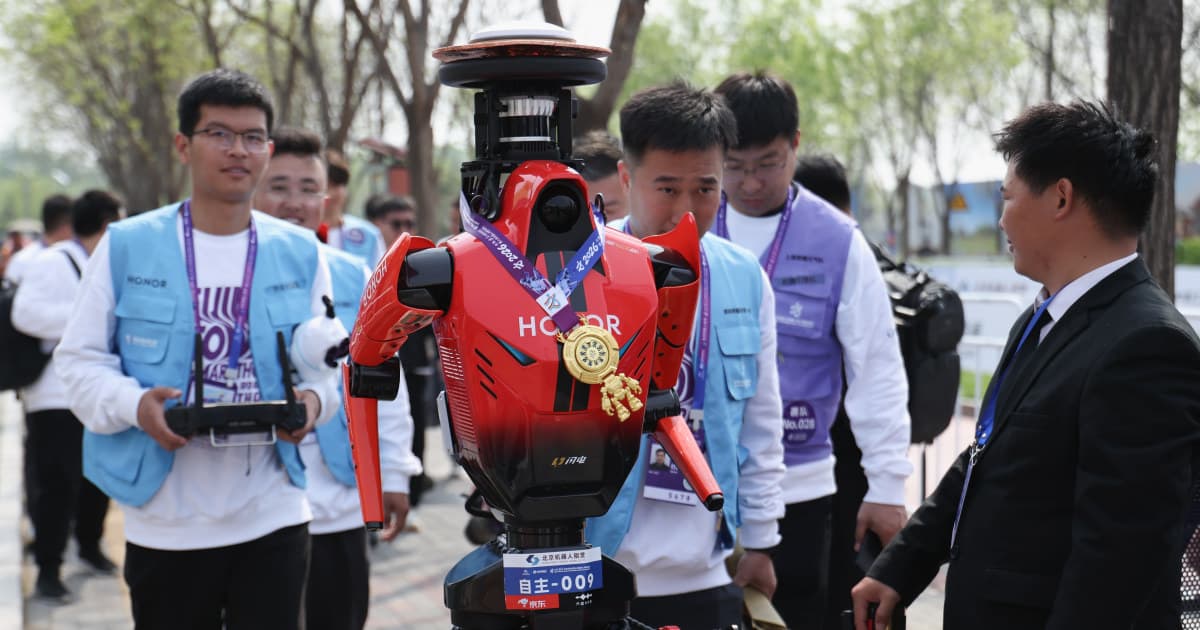
A humanoid robot built by Honor crossed the finish line in 50 minutes and 26 seconds in Beijing’s Yizhuang district, winning a half marathon and beating a mark set by the human world record holder. The result turned a city road race into a sharp test of how far China’s robots have moved beyond exhibition.
More than 300 humanoid robots took part in the second Beijing E-Town Half Marathon and Humanoid Robot Half Marathon on April 19, 2026, with machines from dozens of Chinese makers lining up for a 21-kilometer run. The Beijing Economic-Technological Development Area, also known as Beijing E-Town, said the robots followed the same route as the human runners but used separate tracks.
The race was designed as a direct measure of endurance, balance, battery life, autonomous navigation and mechanical durability. Organizers had already put the field through full-scale testing on April 11 and 12 to simulate race conditions, a sign that this was meant to be more than a publicity stunt. Reuters reported that several robot frontrunners finished more than 10 minutes faster than the human winners, a striking gap in a contest meant to expose both progress and limits.
The winning time was faster than the human half-marathon world record set by Uganda’s Jacob Kiplimo in Lisbon in March 2026. Even so, the race also showed how much the event has changed in just one year. The inaugural robot half-marathon in 2025 was the world’s first, but many entries struggled to get off the starting line and most failed to finish. Tiangong Ultra won that race in 2 hours, 40 minutes and 42 seconds, with 20 teams competing.
This year’s field included 20 robot teams from Beijing, Shanghai, Jiangsu, Guangdong and other regions, according to the Beijing municipal government. Tiangong Ultra crossed the finish line again, but Honor’s winning machine made the bigger statement: China’s humanoid-robot sector is no longer being judged only by polished demos, but by whether its machines can hold up under real distance, real time and real scrutiny.
Know something we missed? Have a correction or additional information?
Submit a Tip