Hungary's 2026 Election Pits Orbán Against Rising Challenger Magyar
Péter Magyar's TISZA party leads Orbán's Fidesz by up to 19 points in polls, but a gerrymandered map means even that gap may not deliver a parliamentary majority.
Six days before Hungarians vote on April 12, independent polling has put Péter Magyar's TISZA party ahead of Viktor Orbán's Fidesz by margins that would have been unthinkable a year ago, setting up what analysts call the most genuinely competitive parliamentary election Hungary has seen since Orbán consolidated long-term power. Yet the numbers that show Magyar winning may not translate into a government, because Orbán's party has spent years reengineering the rules of the game.
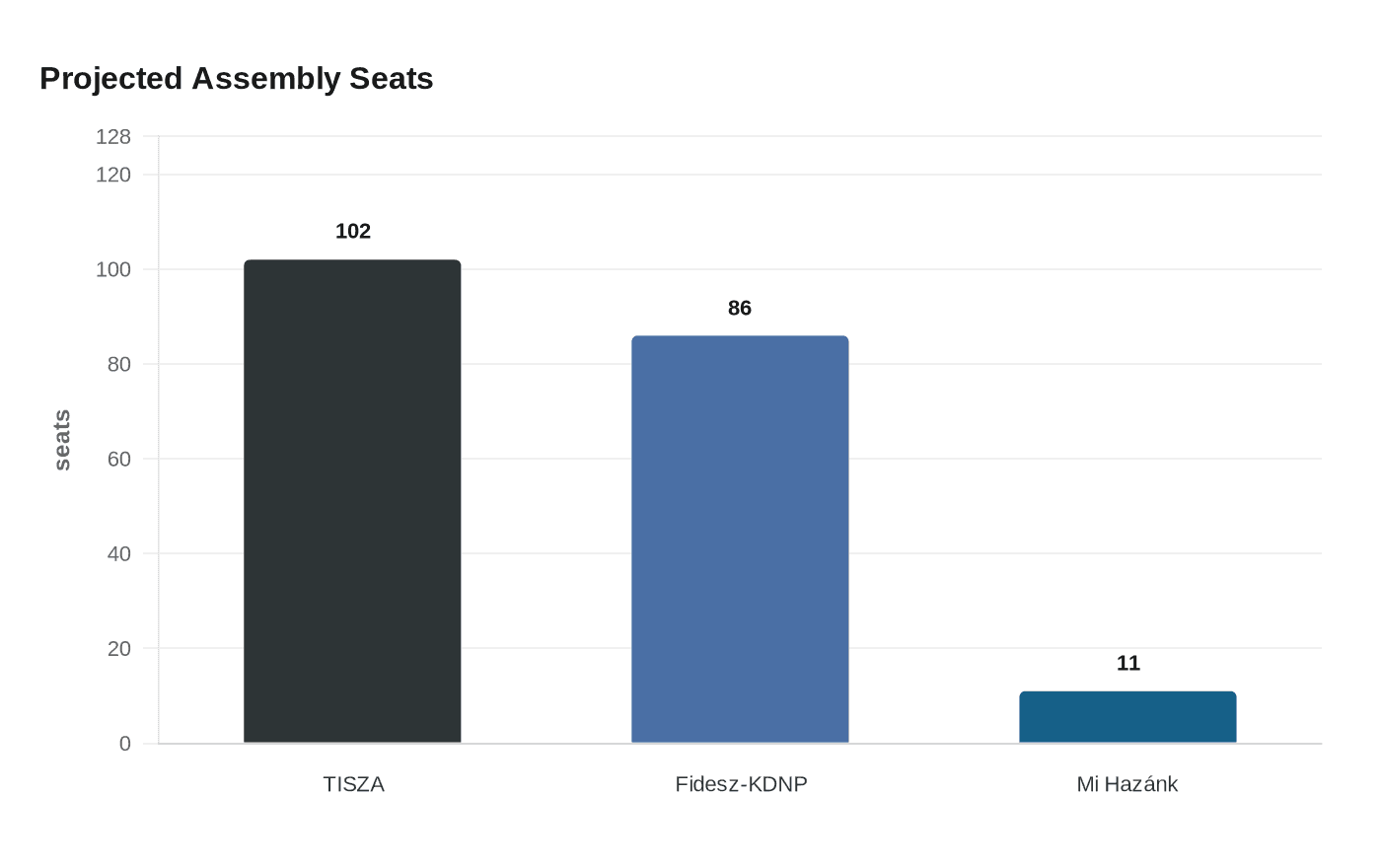
A survey by the 21 Research Institute, commissioned by the news portal 24.hu and published in early April, put TISZA at 56 percent support among Hungarians who had already decided their vote, against 37 percent for Fidesz, a gap of 19 percentage points. The PolitPro poll trend aggregate placed TISZA at 48.7 percent and Fidesz-KDNP at 40.8 percent, with the far-right Mi Hazánk at 5.5 percent. Translated into the 199-seat National Assembly, those numbers would yield roughly 102 seats for TISZA, 86 for Fidesz-KDNP, and 11 for Mi Hazánk, with 100 seats required for a majority.
The structural catch is built into the electoral architecture. In December 2024, the Fidesz-controlled National Assembly redrew constituency boundaries, cutting Budapest's electoral districts from 18 to 16 while adding two new districts in Pest County. Critics called the move gerrymandering; Fidesz cited 2022 census data. The result, according to analysts, is that TISZA must win the national vote by roughly 3 to 5 percentage points simply to secure a parliamentary majority, a threshold that creates a meaningful buffer for Orbán even as his approval fades. Hungary's system elects 106 of its 199 members through single-member constituencies by simple majority, with the remaining 93 seats allocated via national party lists, a framework Fidesz redesigned in 2011 after returning to power the previous year.

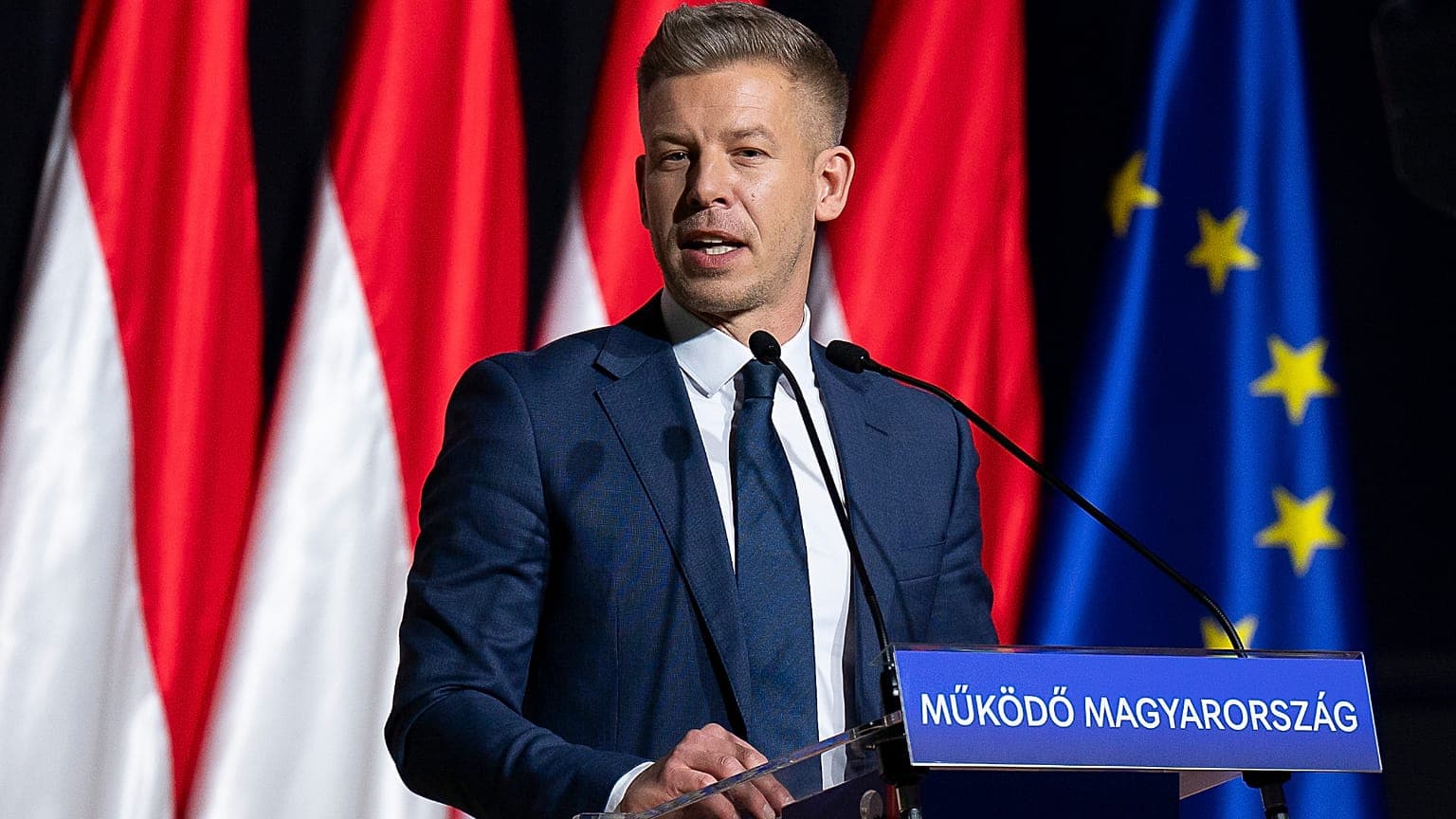
Magyar, a former Fidesz insider whose public profile rose sharply after he broke with the ruling party, has described the election as a "referendum" on Hungary's place in Europe and the world. He has positioned TISZA as conservative on social questions but clearly aligned with EU norms on rule-of-law and media plurality, a pitch that appears to have peeled off voters worn down by economic pressure and what critics describe as systemic state capture of public institutions.
The stakes extend well beyond Budapest. Orbán has governed for 16 years on an "illiberal" model that has strained relations with Brussels, drawn repeated censure over press freedom, and placed Hungary at odds with EU majorities on support for Ukraine and policy toward Russia. A Magyar victory could unlock stalled EU cooperation on trade, defense, and funding transfers that Brussels froze partly over rule-of-law concerns. Analysts at the Center for Strategic and International Studies have noted the outcome will shape the EU's capacity to address economic competitiveness and support for Ukraine in coming years. A third Orbán term, conversely, would reinforce the viability of his governance model and hand other Euroskeptic movements a powerful proof of concept.
Pro-Fidesz officials have already attempted to undermine confidence in the opposition's poll numbers. Tamás Lánczi, head of the government's Sovereignty Protection Office, accused multiple independent polling firms of publishing fabricated results and carrying out what he called "foreign assignments," a charge the pollsters denied. The accusation fits a pattern: Hungarian state media, which Orbán's allies have systematically expanded their control over during his tenure, has given Magyar's campaign markedly less favorable coverage than Fidesz receives.
When the polls close on April 12, the critical variables will be turnout in regional constituencies where single-member seats are decided by thin margins, whether smaller opposition parties clear the threshold needed to enter parliament, and how quickly international observers signal whether the campaign met basic fairness standards. What the count will not resolve immediately is the deeper question the Carnegie Endowment framed bluntly in an April analysis: whether Hungary's democratic institutions have been sufficiently hollowed out that no election result, however decisive, can fully restore them.
This article was produced by Prism’s automated news system from verified source data, official records, and press releases, then run through automated quality and moderation checks before publishing. The system is built and supervised by the people who set the standards it runs under. Read our full AI policy.
Did this article answer your question?