IAEA Warns of Reddest Line After Fourth Attack Near Iran's Bushehr Nuclear Plant
IAEA chief Grossi says the fourth strike near Bushehr's reactor crossed "the reddest line," killing a guard and forcing Russia to evacuate 198 workers from the site.
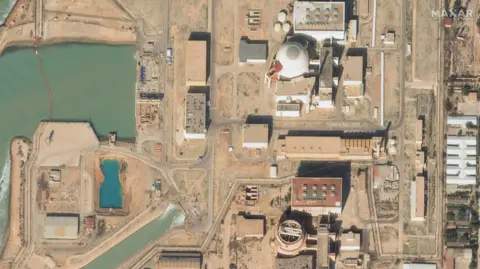
A projectile struck a structure just 350 metres from the reactor at Iran's Bushehr Nuclear Power Plant on Friday, killing one security staff member and destroying the building in the fourth such attack since the U.S.-Israeli military campaign against Iran began on February 28. IAEA Director General Rafael Mariano Grossi expressed "deep concern about the reported incident," warning that the strike risks crossing "the reddest line" and reiterating that nuclear plants must never be targeted under any circumstances.
The projectile fragment killed a member of the site's physical protection staff and sent shockwaves and debris into an auxiliary building on the premises. The IAEA confirmed it detected no increase in radiation levels following the strike, a finding echoed by Russia's state nuclear corporation Rosatom, which stated that "the radiation situation at the site is normal" and reported "no casualties among Rosatom State Corporation personnel."
Russia, which built the plant and helps operate it, announced the evacuation of 198 workers in the aftermath. Approximately 480 Russian nationals remain at the facility, and Rosatom said authorities are preparing a third round of evacuations. The scale of the personnel drawdown underscores how untenable conditions at the site have become. Rosatom chief Alexei Likhachev has previously warned that any deliberate attack on the plant could cause a Chernobyl-style nuclear disaster, and Russian President Vladimir Putin reportedly engaged directly with Israeli leadership as far back as June 2025 to secure the safety of more than 200 Russian specialists working there.
Grossi's alarm carries the weight of prior warnings he delivered to the UN Security Council in June 2025, when he cautioned that a direct hit on Bushehr "could result in a very high release of radioactivity to the environment" and that "the risk is real." Those words now read as a roadmap to the current crisis, with Friday's strike coming only 350 metres from the reactor itself.
Iran's Foreign Minister Abbas Araghchi said the facility had been "bombed" four times since the war erupted, criticising what he described as international indifference to the danger. He drew a pointed comparison to Europe's Zaporizhzhia Nuclear Power Plant, where the international community repeatedly raised alarms during the Russia-Ukraine war: "Remember the Western outrage about hostilities near Zaporizhzhia Nuclear Power Plant in Ukraine?" Araghchi warned that radioactive fallout from a serious strike on Bushehr would be catastrophic for the surrounding region, stating it "will end life in GCC capitals, not Tehran."
Bushehr is Iran's only operational commercial nuclear power station, situated on the Persian Gulf coast roughly 12 kilometres southeast of Bushehr city and approximately 1,200 kilometres south of Tehran. Its single 915-MW pressurised water reactor, a Russian-supplied VVER-1000, operates under IAEA safeguards and carries no link to Iran's military nuclear program. A second 974-MW unit is under construction at the site, and Rosatom has confirmed work has begun on a third. The plant has a long and turbulent history: construction began in 1975 under West German firm Siemens KWU, was halted by the 1979 Islamic Revolution, bombed repeatedly during the Iran-Iraq War in the 1980s, and only restarted after Russia contracted to complete it in 1995 for approximately $800 million. It reached criticality in May 2011.
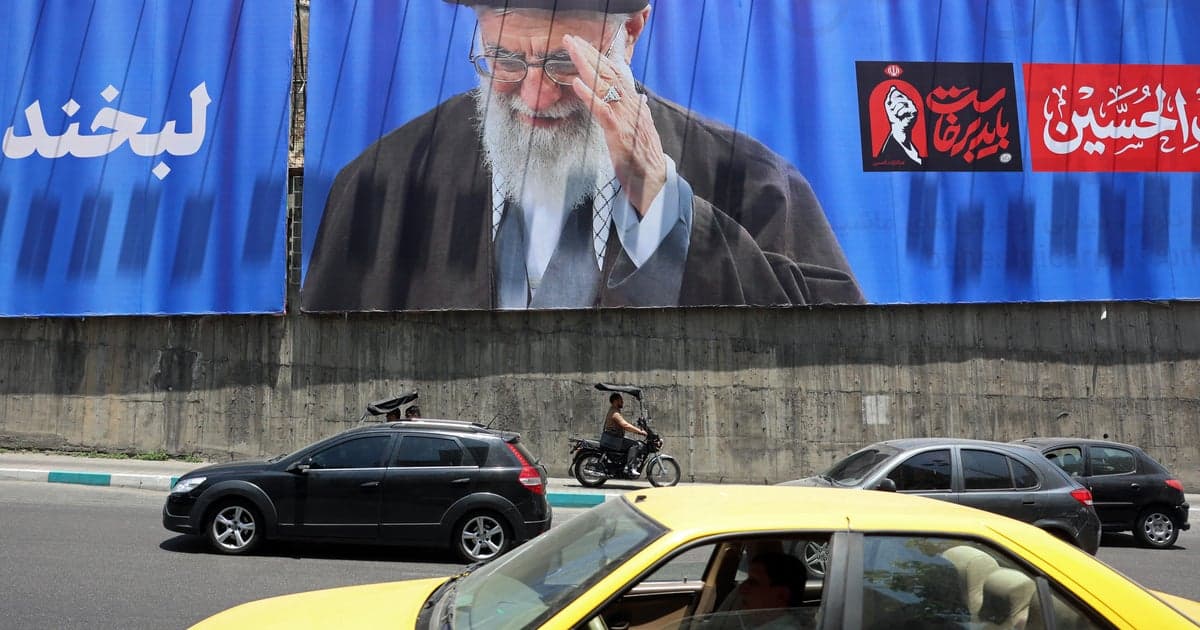
The current conflict began with the assassination of Supreme Leader Ali Khamenei in an Israeli air strike on February 28, triggering rounds of U.S.-Israeli strikes on Iranian military, nuclear, and industrial infrastructure. Earlier strikes hit the Khondab Heavy Water Research Reactor in Arak and a facility at the Tehran Research Center; limited radiological impact in those cases was attributed partly to underground positioning. Bushehr, sitting above ground on an open coastline facing the Persian Gulf, offers no such buffer.
This article was produced by Prism’s automated news system from verified source data, official records, and press releases, then run through automated quality and moderation checks before publishing. The system is built and supervised by the people who set the standards it runs under. Read our full AI policy.
Did this article answer your question?