Idaho primary puts Senate, House incumbents on the ballot
Idaho’s closed primary again put Republicans in control of the decisive ballot, testing whether any cracks remain for Jim Risch, Russ Fulcher and Mike Simpson.

Idaho’s May 19 primary put all three of the state’s federal GOP incumbents in front of a Republican electorate that often decides the general election before November arrives. The race for the U.S. Senate Class II seat held by Jim Risch, first elected in 2009, joined House contests for Russ Fulcher in Idaho’s 1st Congressional District and Mike Simpson in the 2nd, with all three incumbents seeking another term.
The broader question was not just who advanced, but whether the margins would show any real vulnerability inside one of the country’s most reliably Republican states. Idaho’s closed-primary rules, in place since a 2011 law, limited most voters to the contest for the party they were registered with unless a party opened its primary to others. In practice, that meant the voters most likely to shape the outcome were the most committed partisans, a structure that tends to reward incumbents while also exposing any regional dissent inside the GOP.
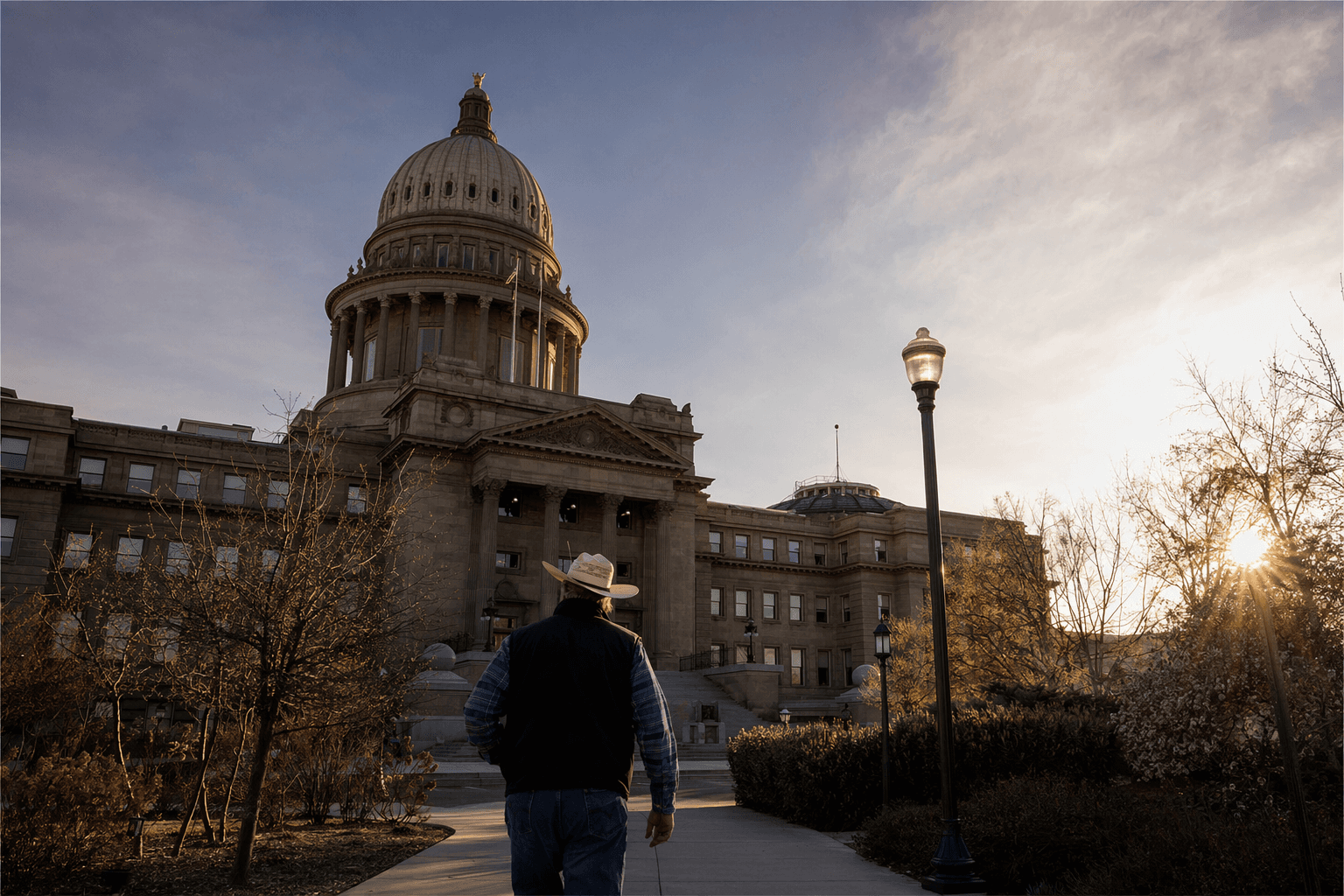
That tension mattered because Idaho’s primary turnout has long been a warning sign for civic participation. AP noted that turnout had been stagnant or declining for years and had reached its high point in 1972, when more than 58% of registered voters cast ballots. By February 2, 2026, Idaho had 1,021,711 registered voters, but the state’s Republican-heavy electorate continued to make primary day the main contest that mattered in many races. Polls were open from 8 a.m. to 8 p.m., and the general election was set for November 3, 2026.
The 1st Congressional District was the clearest place to watch for any sign of intraparty unease. Fulcher faced Republican challengers Andy Briner and Joseph Morrison, giving voters in that district a chance to register whether they wanted continuity or a sharper ideological break. Simpson, a long-serving incumbent in the 2nd District, also stood on the ballot as Idaho’s House delegation remained firmly in GOP hands.
The primary’s real significance was institutional as much as electoral. In a state where Republican nominees usually start with a major advantage, the size and geography of support can tell the party where its center of gravity sits heading into November. AP launched live results coverage for the Idaho primary, and the numbers were set to show whether incumbency still carried the day or whether pockets of dissent were beginning to show through the state’s red political map.
Know something we missed? Have a correction or additional information?
Submit a Tip