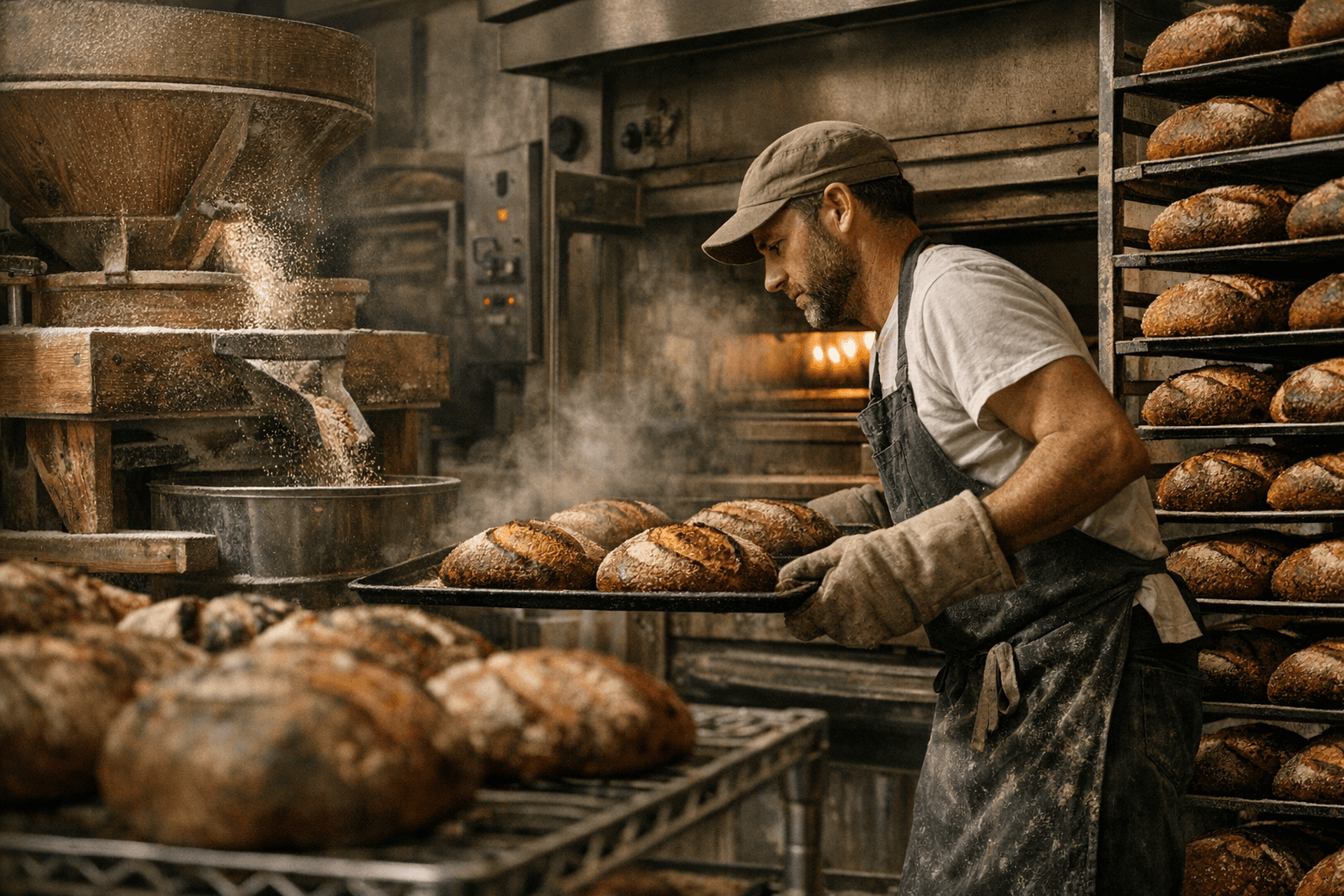
Independent and Which? taste test supermarket sourdoughs, name 2026 best buys
Which?’s 71‑person blind test puts supermarket loaves at the top: Co‑op crowned best buy, Tesco close behind, while IndyBest’s editor reaches different picks in a separate taste round‑up.
1. Co‑op Irresistible Hand‑Finished white sourdough, Which? Best Buy, 73%
Co‑op’s Irresistible took the top spot in Which?’s lab taste test with a 73% score and a listed price of £2.65 for a 500g half loaf. Which? testers praised the crust and crumb, saying, “Most testers said the crust was just right – neither too soft nor too hard – while the bread itself was the perfect balance of airy firmness. It had a pleasant flavour with a good level of tanginess, and most felt it had the right amount of chew.” Which? also notes this is the priciest loaf in the set and that, uniquely among the samples, it contains yoghurt, yeast and semolina. IndyBest’s packaging notes are echoed on shelf: the loaf reportedly “takes ‘around’ 39 hours to make … made from a 15‑year‑old starter,” a claim IndyBest called hard to corroborate but still referenced.
2. Tesco Finest white sourdough loaf, Which? Best Buy, 72%
Tesco’s Finest finished a whisker behind Co‑op on 72%, selling as a 400g half loaf at £1.95 in Which?’s table. Which? reported strong panel approval for its texture: “An excellent texture made it stand out from those lower in the table. More than three quarters of tasters said the bread had the right firmness and airiness, and nearly as many liked the crust. It also had an excellent chewy texture. Most tasters enjoyed its strength of flavour and tanginess.” For shoppers chasing chew and tang at sub‑£2 prices, Tesco’s Finest was a clear crowd‑pleaser in the blind test.
3. Morrisons The Best white sourdough sliced half boule, Which? third place, 67% (Mirror reported 63%)
Morrisons’ The Best half boule appears as Which?’s third placer with a 67% score and a 500g pack priced at £1.95. Which? described it as a “light‑coloured loaf” that “makes for a good compromise between quality and price,” with more than half of tasters enjoying the flavour and tang. Note that Mirror’s coverage reproduced a slightly different figure, reporting Morrisons at 63%, so the press accounts diverge; the Which? excerpt supplied gives 67%.
4. The Which? lab test itself: 71 volunteers, nearly 800 half‑slices, 11 loaves
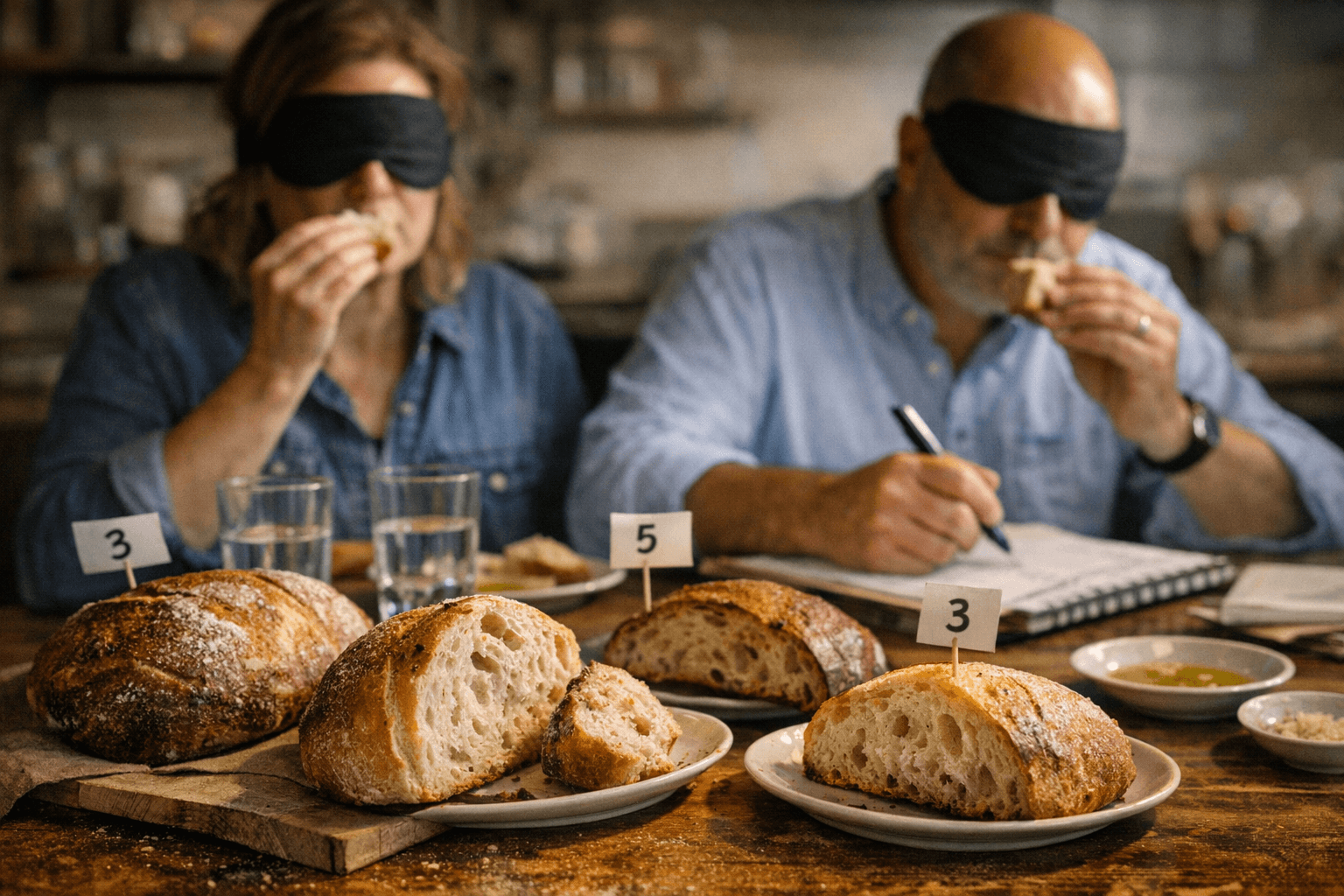
Which? ran the core blind lab test behind these rankings, recruiting 71 people and serving “nearly 800 half‑slices” across 11 supermarket sourdough loaves. Which? summed up the mood: “Our testers weren't especially impressed with any of the brands. Our two Best Buys are both supermarket loaves, and another supermarket claimed third place with a decent and cheap all‑rounder.” The panel format and sample count explain why texture and consistency — not artisan credentials — dominated results.
5. Jason’s sourdough loaf, Mirror/Which? reporting: 62% (Mirror), 450g, £2.20
Jason’s branded loaf was flagged by Mirror’s write‑up using Which?’s data as registering 62% approval; the loaf weighs 450g and was reported at £2.20. Mirror captured the chief complaint succinctly: “The chief grumble about this loaf was its overly soft texture.” Which? lists Jason’s among the 11 test entries and records the 450g weight, which likely nudged perceptions of structure versus the heavier 500g competitors.
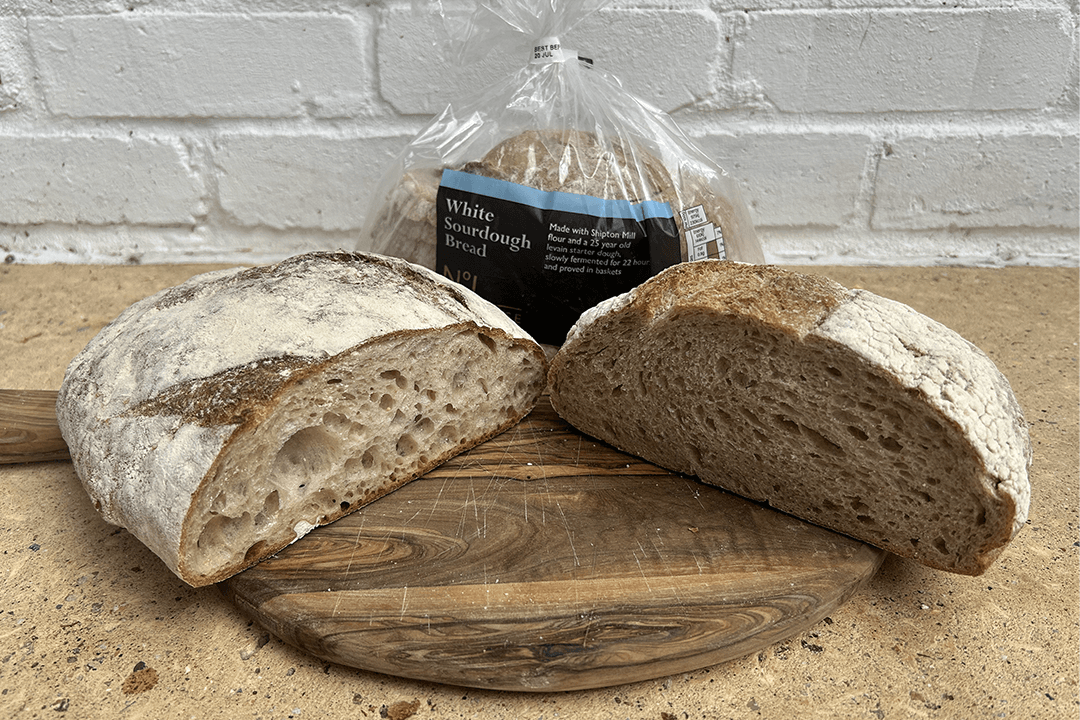
6. Waitrose No.1 white sourdough bread, contradictory verdicts: Mirror 59% vs IndyBest praise
Waitrose No.1 lands harshly in the Mirror summary of the Which? panel, placed bottom with a 59% score and tasters saying “lacklustre flavour” and that “the texture proved too hard and heavy.” That stance sits in direct contrast with IndyBest’s editor, who wrote, “With an intense depth to its tang, it's the best‑tasting bread I tried for this review.” Those two opposing takes underline the difference between a 71‑person blind lab exercise and a single‑editor tasting.
7. Sainsbury’s Taste The Difference white sourdough half bloomer, 400g, IndyBest 3.5/5
IndyBest rated Sainsbury’s Taste The Difference half bloomer 3.5 out of 5 and listed it at 400g, roughly “less than £2” in price with a specific “Buy now £2, Sainsburys.co.uk” line in aggregator copy. IndyBest observed: “Despite it saying on the packaging it's made with a slow‑fermented starter, it tasted and looked more like a usual white bread than a sourdough, albeit a more high‑end loaf of white bread. The entire loaf was quite soft and lacked any sort of crustiness, but I thought the crumb was fairly good and springy. … I’d recommend eating it toasted.” That assessment frames Sainsbury’s as a budget everyday option rather than a sourdough purist pick.
8. Bertinet Bakery rustic country white sourdough, IndyBest #3, brand background
Bertinet Bakery’s rustic country white sourdough appears in IndyBest’s ranked list at #3. IndyBest highlights provenance: Bertinet was co‑founded by Richard and Jo Bertinet in 2012, operates from Bath, has supplied supermarkets for years and holds several Great Taste awards while also running bakery classes. IndyBest included it as a recognisable artisanal option stocked through mainstream retailers.
9. Good Grain Bakery gluten free seeded sourdough, IndyBest inclusion
Good Grain Bakery’s gluten free seeded sourdough is part of IndyBest’s line‑up as a listed option, appearing at #7 in the excerpted list. The supplied material does not include a numeric score, price or weight for this entry, but its inclusion signals attention to gluten‑free supermarket sourdough variants in the wider round‑up.
10. Wildfarmed and Gail’s supermarket offerings, Newsbreak praise and Ocado price note
Newsbreak singled out Wildfarmed’s white sourdough and Gail’s San Francisco white sourdough as supermarket lines that “really up the supermarket's offerings thanks to a commitment to regenerative agriculture, using heritage grains and consistently creating loaves with great crumbs and crusts.” Newsbreak also shows a “Buy now £6.2, Ocado.com” line that aligns with premium pricing for some of these in‑store or Ocado‑distributed artisan loaves.
11. Lidl large white sourdough bloomer and Asda exceptional white sourdough loaf, budget surprises
Both Lidl and Asda earned praise in aggregator and IndyBest copy, with Lidl’s large white bloomer and “Asda’s exceptional white sourdough loaf” called out as surprising value performers. Newsbreak carried a “Buy now £2, Asda.com” line, underscoring the price advantage of some supermarket own‑label sourdoughs that impressed reviewers despite low cost.
12. Celtic Bakers and other branded entries, present but outgunned
Which? and Mirror named branded bakers such as Celtic Bakers among the 11 loaves tested, but those branded entries were outperformed by supermarket own‑label ranges in the blind panel. The specifics for Celtic Bakers’ score are not present in the supplied excerpts, illustrating that several craft names were included yet failed to top the group scorewise.
13. Price notes and reporting discrepancies to watch
Prices recorded across outlets vary slightly: Co‑op appears as £2.65 in Which? and Mirror while Newsbreak lists “Buy now £2.5”; Tesco and Morrisons are shown at £1.95; Jason’s at £2.20 for 450g in Mirror. Morrisons’ score is another divergence point, shown as 67% in the Which? copy but 63% in Mirror. These small mismatches merit live price checks and a peek at Which?’s full table if you need definitive, current shelf prices.
14. U.S. context, Uproxx blind tasting and the ingredient rule: “the fewer ingredients, the better”
For context, Uproxx ran a separate U.S. blind test of eight supermarket sourdoughs and opened with the principle, “With sourdough bread, the fewer ingredients, the better.” Its top pick, San Luis Sourdough — Sourdough Cracked Wheat, was praised as “by far the best grocery store sourdough bread I’ve tried” and priced at $4.74 in that piece. Uproxx’s exercise is a separate geography and methodology case, but it echoes the broader point that clarity of ingredient lists and proper texture matter more than brand name.
15. Bottom line and what it means for shopping
Which?’s lab test crowned supermarket own‑label loaves — Co‑op then Tesco then Morrisons — because a big panel prioritised texture, crust and a balanced tang over artisan provenance. IndyBest’s editor reached different conclusions in a smaller, editorial tasting, notably praising Waitrose No.1 for its “intense depth to its tang.” The practical takeaway is straightforward: if you prize consistent texture and value in a blind, crowd‑tested setting, reach for the Co‑op or Tesco finds; if you prefer an editor’s palate or premium ingredient stories, the IndyBest picks and supermarket artisan lines are worth the extra spend.
Know something we missed? Have a correction or additional information?
Submit a Tip