India, South Korea seek bigger trade ties as growth lags goals
India and South Korea renewed a $50 billion trade goal, but bilateral trade reached only $26.89 billion in FY25 as regulation and policy delays slowed execution.
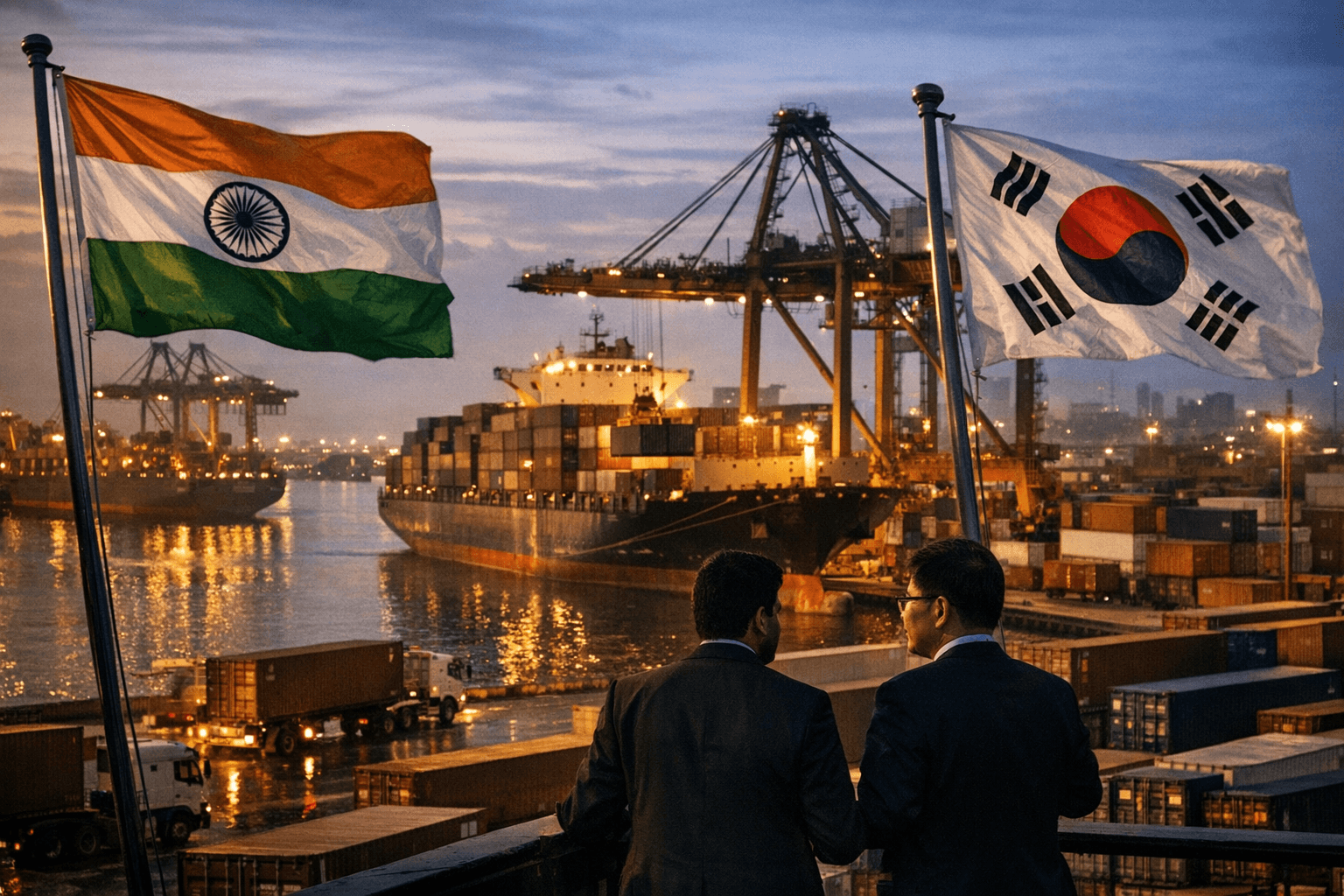
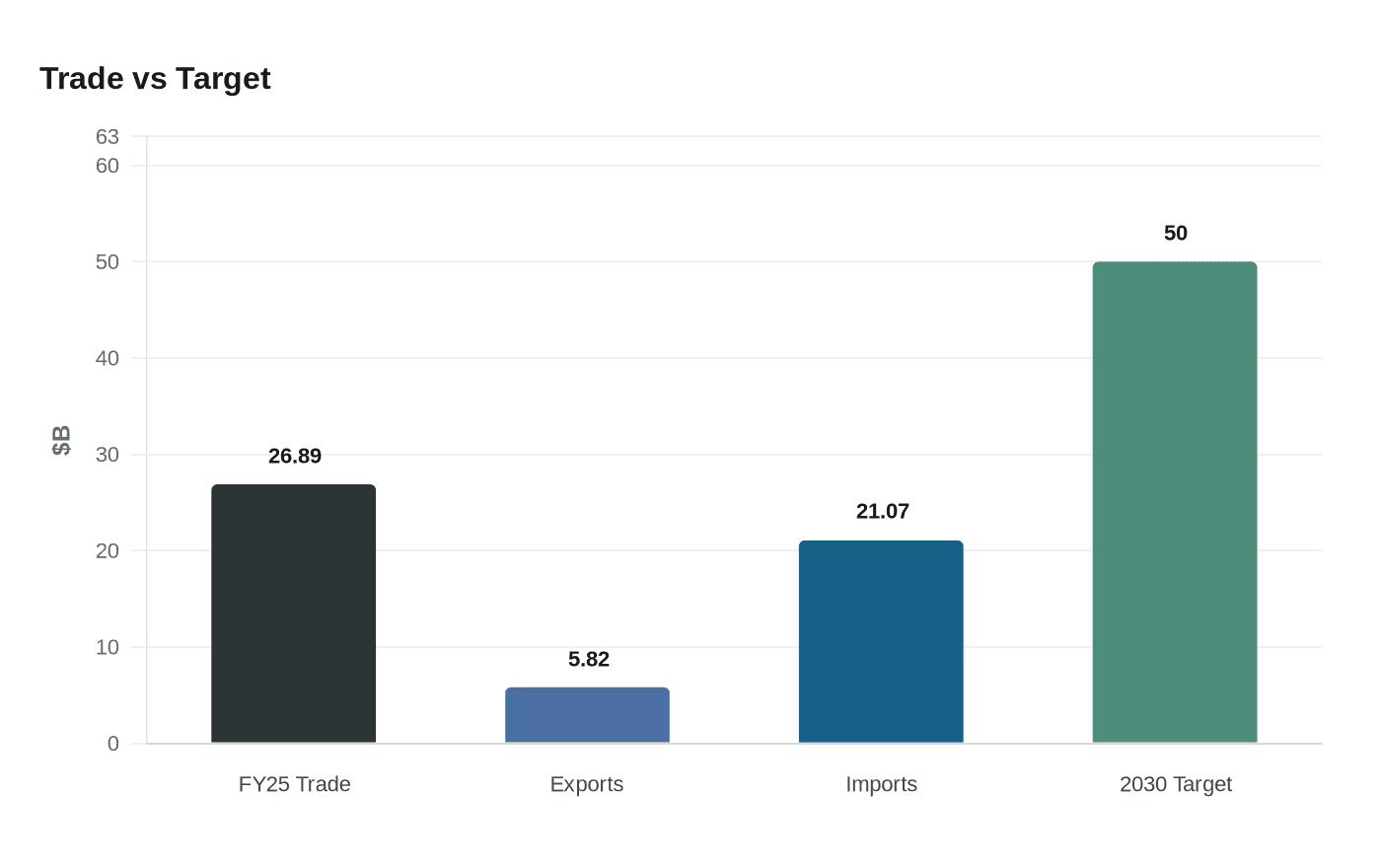
India and South Korea have set their sights on a much bigger economic partnership, but the numbers still show a stubborn implementation gap. The two countries reaffirmed a target of lifting bilateral trade to $50 billion by 2030, yet trade grew at only a 3% compound annual rate from 2018 to 2025 and reached $26.89 billion in the fiscal year ending March 2025.
Prime Minister Narendra Modi and South Korean President Lee Jae Myung wrapped that message in upbeat language after their talks in New Delhi, calling the relationship a "trusted partnership" moving toward something more "futuristic" across chips, ships, technology, defense, energy and supply chains. Lee, the first South Korean president to visit India in eight years, described the global moment as one of "hyper uncertainty" and said the two countries were ideal partners for comprehensive cooperation.
That diplomatic reset, however, collided with the practical problems that have slowed the relationship for years. CNBC’s reporting pointed to regulatory delays and policy unpredictability in India as recurring complaints from Korean companies trying to expand. Those bottlenecks matter because the two governments have been trying, in fits and starts, to convert strategy into trade. In 2022, ministers agreed to give fresh momentum to CEPA-upgradation negotiations and address industry difficulties. By December 2023, the two sides had launched Electronic Origin Data Exchange Systems to help verify CEPA claims, and by January 2024 they had held the 10th round of CEPA-upgradation talks.
The economic imbalance is still hard to ignore. India exported $5.82 billion to South Korea in FY25 and imported $21.07 billion, leaving New Delhi with a wide trade deficit. South Korea was India’s 13th-largest foreign direct investor, with cumulative investment of $6.69 billion from April 2000 through March 2025, but the presence of Korean capital has not yet translated into the kind of broad-based industrial integration both sides keep promising. Korean investment has concentrated in metallurgy, automobiles, electronics, machine tools, hospitals and diagnostics.
The relationship has deep roots. India and South Korea established diplomatic relations on December 10, 1973, upgraded ties to a Strategic Partnership in 2010 and a Special Strategic Partnership in 2015. Their 2018 vision statement called for a "future oriented partnership for People, Prosperity and Peace," tied India’s Act East policy to South Korea’s New Southern Policy and promised regular leadership exchanges and simpler visa procedures.
The latest visit produced more than symbolism. India and South Korea agreed on a Comprehensive Framework for Partnership in Shipbuilding, Shipping and Maritime Logistics, and Reuters reported additional cooperation pacts in steel, shipbuilding and energy. For India, the push fits its goal of becoming a top-10 global shipbuilder by 2030. For South Korea, it offers a way to widen markets as companies look beyond China-centered supply chains. The question now is whether both governments can finally turn strategic convergence into the regulatory clarity, market access and industrial follow-through that the trade numbers still lack.
This article was produced by Prism’s automated news system from verified source data, official records, and press releases, then run through automated quality and moderation checks before publishing. The system is built and supervised by the people who set the standards it runs under. Read our full AI policy.
Did this article answer your question?


