Israel Approves Repatriation of 5,800 B’nei Menashe by 2030
Israel will bring 5,800 B’nei Menashe from Manipur and Mizoram home by 2030, after a 2005 rabbinic recognition that still required conversion.
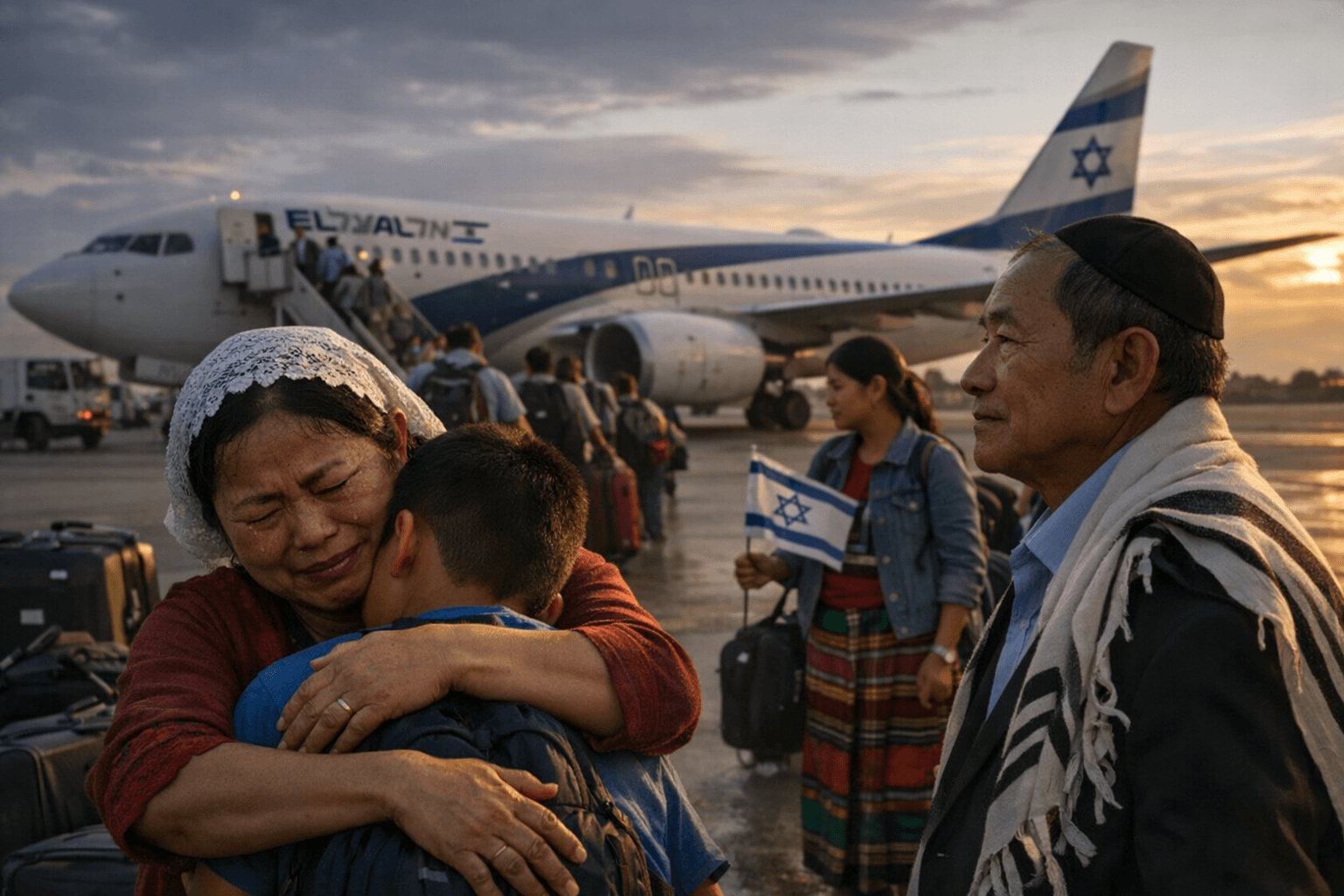
Israel has approved a plan to bring the remaining 5,800 members of the B’nei Menashe from northeastern India to Israel by 2030, turning a disputed ancestral claim into a state-backed migration program. The first 1,200 are slated to arrive by the end of 2026, a timetable that gives institutional shape to a belief that stretches back to the ancient story of the lost tribes.
The B’nei Menashe say they descend from the tribe of Manasseh, one of the Israelites exiled by the Assyrians in the eighth century BCE. Their case has long rested on faith, memory and communal practice rather than hard historical proof. Israel’s Chief Rabbinate formally recognized the community as descendants of Israel in 2005, but individual migrants were still required to undergo formal conversion. That distinction captures the core of the policy: the state has accepted the story enough to open the door, while still demanding a legal and religious rite of passage before arrival becomes belonging.
The latest plan gives that recognition a practical endpoint. Prime Minister Benjamin Netanyahu called it an “important and Zionist” decision, while the Jewish Agency framed the effort as a way to reunite families and support Aliyah. The move was approved in November 2025 and centers on people from Manipur and Mizoram, two northeastern Indian states where the B’nei Menashe are often described as part of the Kuki-Chin-Mizo or Zo tribal groups.
For families spread across India and Israel, the decision is more than symbolic. It links migration policy to kinship, faith and the question of who gets counted as returning home when the evidence is incomplete but the national and religious institutions are willing to grant acceptance. It also lands amid rising ethnic tensions in India’s northeast, where community identity has become increasingly fraught.
The timing matters. The Jewish Agency said it helped more than 32,000 Jews start new lives in Israel in 2024, and 22,270 olim from 105 countries in 2025, underscoring how the B’nei Menashe plan fits into a broader push for immigration after the October 7 attacks and the war that followed. Against that backdrop, the repatriation of the B’nei Menashe is not an isolated gesture. It is part of a larger national effort to turn ancient claims of belonging into modern state policy, one family at a time.
This article was produced by Prism’s automated news system from verified source data, official records, and press releases, then run through automated quality and moderation checks before publishing. The system is built and supervised by the people who set the standards it runs under. Read our full AI policy.
Did this article answer your question?


