India’s tech hubs surge beyond outsourcing, reach $98.4 billion revenue
India’s offshore tech hubs were projected to generate $98.4 billion in FY2026, pulling a 2030 forecast into the present as AI work moved to Bengaluru and beyond.
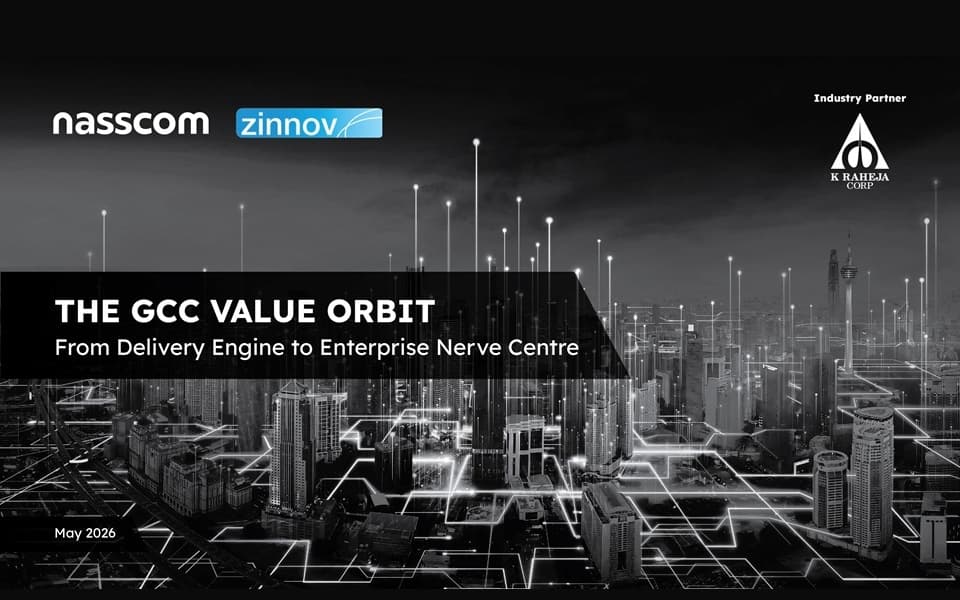
India’s offshore technology centers were projected to generate $98.4 billion in fiscal 2026, a scale that earlier Nasscom-Zinnov forecasts did not expect until 2030. The jump marked a shift from routine outsourcing to a more strategic model, with Global Capability Centres now handling finance, software development, research and development, and AI-related work for multinational companies.
The Nasscom-Zinnov report, titled GCC Value Orbit: From Delivery Engine to Enterprise Nerve Centre, said India was on track to host 2,117 GCCs across 3,728 units and employ 2.36 million professionals in FY2026. That represented 32% growth in the number of centers since FY2021. More than 1,200 GCCs in India were already using AI and machine learning, and India accounted for 28% of the global GCC AI talent pool, second only to the United States.
Bengaluru remained the core hub, but the list of operators showed how far the ecosystem had moved up the value chain. JPMorgan Chase, McDonald’s and Nvidia were among the large companies using Indian centers, while more than 100 GCCs were added or expanded in FY2026, including operations tied to Anthropic, Eli Lilly, FedEx, Marriott and Lufthansa. The report said more than 506 Forbes Global 2000 companies now operated GCCs in India.
North American firms accounted for two-thirds of new GCC setups, underscoring the role of U.S. corporations in driving the expansion. The report linked that momentum to higher U.S. visa costs, inflation tied to global conflicts and the pressure created by AI disruption, all of which pushed companies to move more strategic work into India rather than keep it in higher-cost markets.

Policy and operating conditions also helped. The report pointed to tax reforms, safe-harbour rules and clearer GST treatment as factors that made expansion more attractive. Combined with India’s large AI-ready workforce and the ability of GCCs to scale quickly, those changes have turned the country into a core operating base for global firms trying to manage technology, cost and geopolitical risk at the same time.
The pace of growth stood out against recent history. Nasscom-Zinnov had estimated in 2024 that India’s GCC sector generated $64.6 billion in FY2024 and employed more than 1.9 million people. By FY2026, the market had moved close to the $99 billion to $105 billion revenue range once expected only by 2030, showing how quickly India’s tech hubs have become central to corporate strategy.
This article was produced by Prism’s automated news system from verified source data, official records, and press releases, then run through automated quality and moderation checks before publishing. The system is built and supervised by the people who set the standards it runs under. Read our full AI policy.
Did this article answer your question?
%3Amax_bytes(150000)%3Astrip_icc()%2FCertificate-of-deposit-2301f2164ceb4e91b100cb92aa6f868a.jpg&w=1920&q=75)