Indonesia raises rates to defend rupiah amid global volatility
Indonesia’s central bank shocked markets with a 50-basis-point rate hike as the rupiah hit record lows and Middle East tensions fed global volatility.

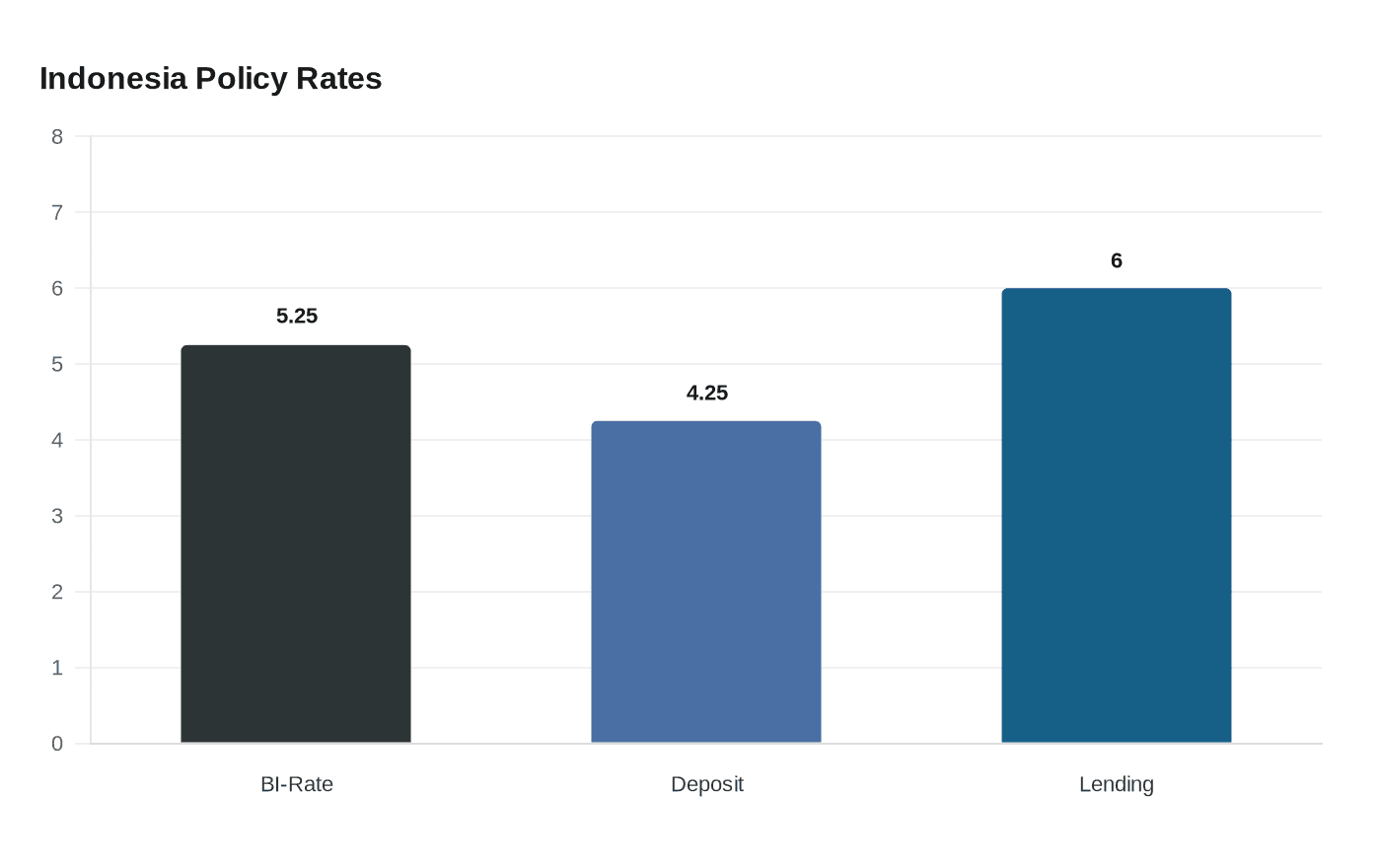
Indonesia’s central bank raised its benchmark BI-Rate by half a percentage point to 5.25 percent, stepping in aggressively to steady the rupiah after the currency slid to a series of record lows. The move underscored how quickly Bank Indonesia judged it had to act as Middle East tensions, higher energy costs and volatile global markets pushed pressure back onto emerging economies.
The decision, made at the Bank Indonesia Board of Governors meeting on May 19-20, 2026, was the first rate hike in two years. Bank Indonesia also lifted the Deposit Facility rate to 4.25 percent and the Lending Facility rate to 6.00 percent, signaling a broader tightening aimed at supporting the currency and containing imported price pressures.
The central bank said it wanted inflation to remain inside its 2026-2027 target corridor of 2.5 percent plus or minus 1 percentage point. That is a crucial distinction: Indonesia’s year-on-year inflation was only 2.42 percent in April 2026, suggesting the rate increase was driven less by overheating at home than by the need to defend the rupiah and protect the economy from external shocks.
Markets had not fully priced in such a large move. In a Bloomberg survey, only one economist expected a 50-basis-point increase, while most projected either a quarter-point hike or no change. The surprise size of the move highlighted the strain on policymakers as the rupiah weakened against the dollar and investor sentiment deteriorated across emerging markets.
For Indonesia, the stakes are immediate and practical. A weaker rupiah raises the local cost of imports, adds pressure to debt servicing and can feed through to fuel and food prices. At the same time, a higher policy rate lifts borrowing costs for households and businesses, which can slow credit growth, damp consumer demand and make the economy harder to support if the tightening lasts too long.
Bank Indonesia had held the BI-Rate at 4.75 percent at its April 21-22 meeting, and before that it had cut the rate by 25 basis points to 5.25 percent on July 15-16, 2025. The latest decision reversed that easing path, showing that stability concerns had become more urgent than the case for supporting growth. For one of Asia’s largest emerging markets, the message was clear: defending the currency now took priority, even if it came at the cost of slower domestic momentum.
Know something we missed? Have a correction or additional information?
Submit a Tip