UK inflation falls to 2.8% as energy prices ease
UK inflation cooled to 2.8% in April, but cheaper energy did much of the work. Sticky housing costs and transport swings could keep price pressure alive.

Britain’s inflation rate slipped to 2.8% in April, but the easing masks a more fragile picture: the drop was helped by lower energy costs, while housing, household services and transport still kept pressure on family budgets.
The Office for National Statistics said consumer prices rose 2.8% in the 12 months to April 2026, down from 3.3% in March. On a monthly basis, the Consumer Prices Index increased 0.7%, slower than the 1.2% rise recorded in April 2025. Even so, the reading remained above the government’s 2% target, underlining how far prices still have to fall before inflation is back under control.
A key part of the decline came from energy. The Bank of England has said the near-term fall in inflation reflects a lower contribution from energy prices, including the Budget 2025 energy bills package and lower wholesale gas prices. That support is temporary, and the central bank expects CPI inflation to fall back around target from April before rising again, a warning that the latest reading may not mark a lasting break in price pressures.
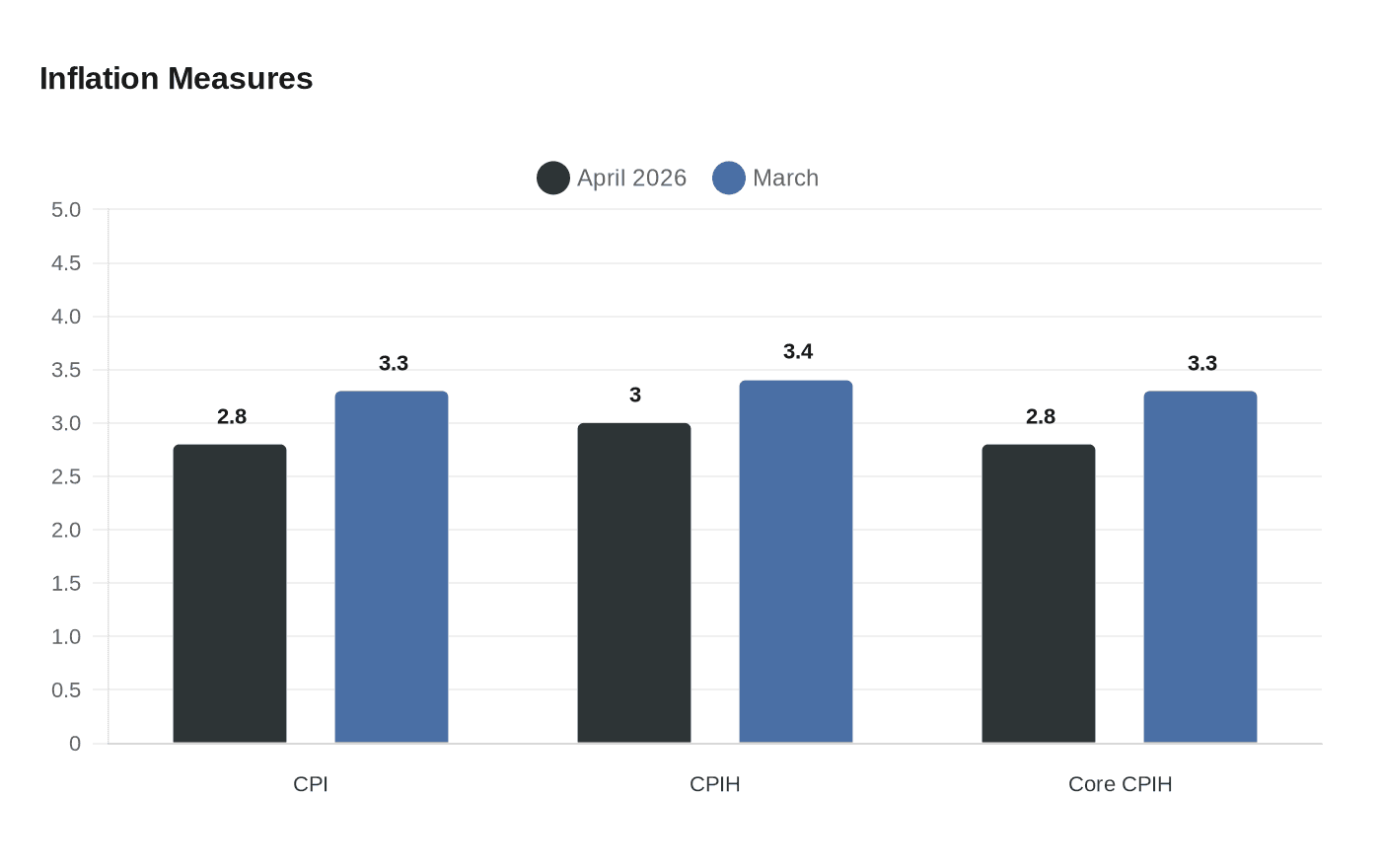
The pressure beneath the headline number remained visible in the details. Housing and household services made the largest downward contribution to the monthly change in both CPIH and CPI annual rates in April, while a sharp increase in motor fuel prices was partly offset by lower prices in other transport categories. CPIH, a broader measure that includes owner-occupiers’ housing costs, rose 3.0% in the year to April, down from 3.4% in March. Core CPIH, which strips out energy, food, alcohol and tobacco, rose 2.8%, also down from 3.3%.
That stickiness in household costs matters for the Bank of England, which has already cut Bank Rate six times since August 2024. After its 4 February 2026 meeting, Bank Rate stood at 3.75%. In its February Monetary Policy Report, the Bank said policy still had to balance the risk of persistent inflation against weaker demand and a loosening labour market.
The broader backdrop shows how uneven the path has been. Inflation reached 11.1% in October 2022, the highest rate in more than 40 years in the ONS series, before easing sharply and then flaring again through parts of 2025 and 2026. The ONS said the next CPI release is due on 17 June 2026, a date that will show whether April’s decline was the start of a steadier slowdown or just a temporary pause.
Know something we missed? Have a correction or additional information?
Submit a Tip