Treasury yields surge to 2007 highs as bond selloff deepens
Long-dated Treasury yields hit their highest level since 2007, with the 30-year near 5.20% and a weak auction adding fuel to the selloff.
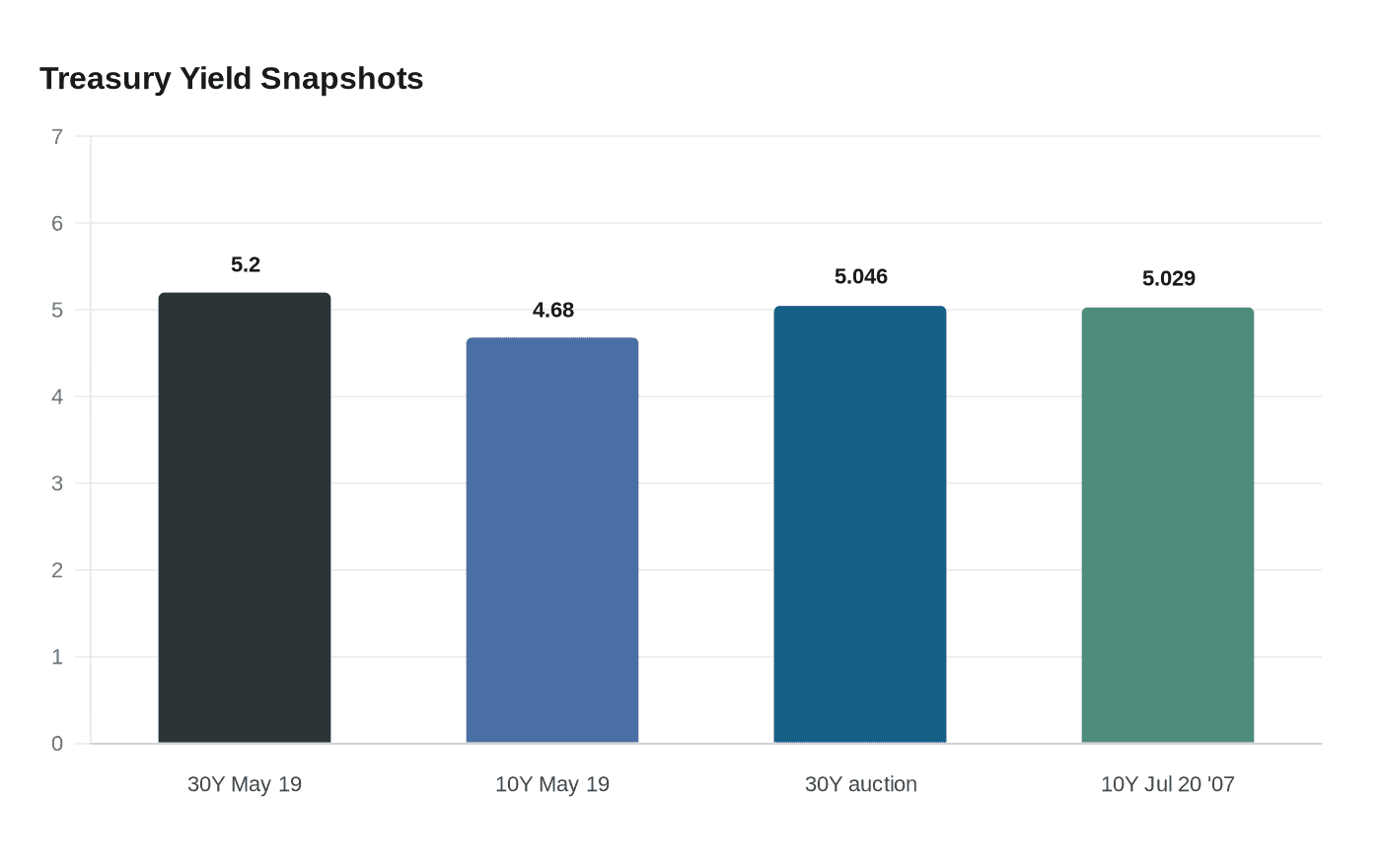
Long-term Treasury borrowing costs have jumped back to levels last seen in 2007, a move that now reaches far beyond bond traders and into mortgages, corporate lending and federal financing. The 30-year U.S. Treasury yield climbed to about 5.19% to 5.20% on May 19, its highest level since June 2007, while the 10-year Treasury rose to around 4.68%, the highest since January 2025.
The selling pressure has been broad. The 30-year bond jumped nearly 11 basis points to 5.121% in one session, while the 10-year Treasury surged almost 14 basis points to 4.595% in another measure. Bloomberg said the yield on the government’s longest-dated bond reached 5.20%, and bond markets in Europe and Japan weakened at the same time. Higher U.S. yields also spilled into equity markets, adding to the pressure on stocks.
Analysts have pointed to a familiar cluster of worries: inflation, federal fiscal policy and the amount of Treasury debt the market must absorb. A weak 30-year auction in May 2026 intensified the move, with the U.S. Treasury selling $25 billion of 30-year bonds at 5.046%, the first auction above 5% since 2007. In other words, investors are demanding more compensation to hold long-term U.S. debt just as Washington is issuing more of it.
The comparison with 2007 is real, but only up to a point. Reuters noted in October 2023 that the 10-year Treasury crossed 5% for the first time since July 20, 2007, when it reached as high as 5.029%, and the 30-year yield hit 4.871%, its highest since 2007. Then, the benchmark levels were tied to the final stretch before the global financial crisis. This time, the market is reacting not only to inflation and central bank caution but also to persistent concerns about debt supply and weak Treasury demand.
For borrowers, the message is immediate. The 10-year Treasury is a benchmark for mortgage rates and other consumer loans, so a move toward 4.68% can feed through to higher home-loan costs, auto loans and corporate credit. For the federal government, higher long-term yields mean a steeper bill to finance deficits. For pension portfolios, they cut both ways: existing bond holdings lose value, but new money can be invested at returns not seen in years. If yields stay above 5%, the bond market will be signaling not just stress, but a new and more expensive funding environment.
Know something we missed? Have a correction or additional information?
Submit a Tip