Investigation Finds Labor Abuses at Labubu Manufacturing Partner
An investigation found labor-rights violations at Shunjia Toys, which manufactures Labubu figures, raising supply-chain and ethical concerns for collectors and retailers.

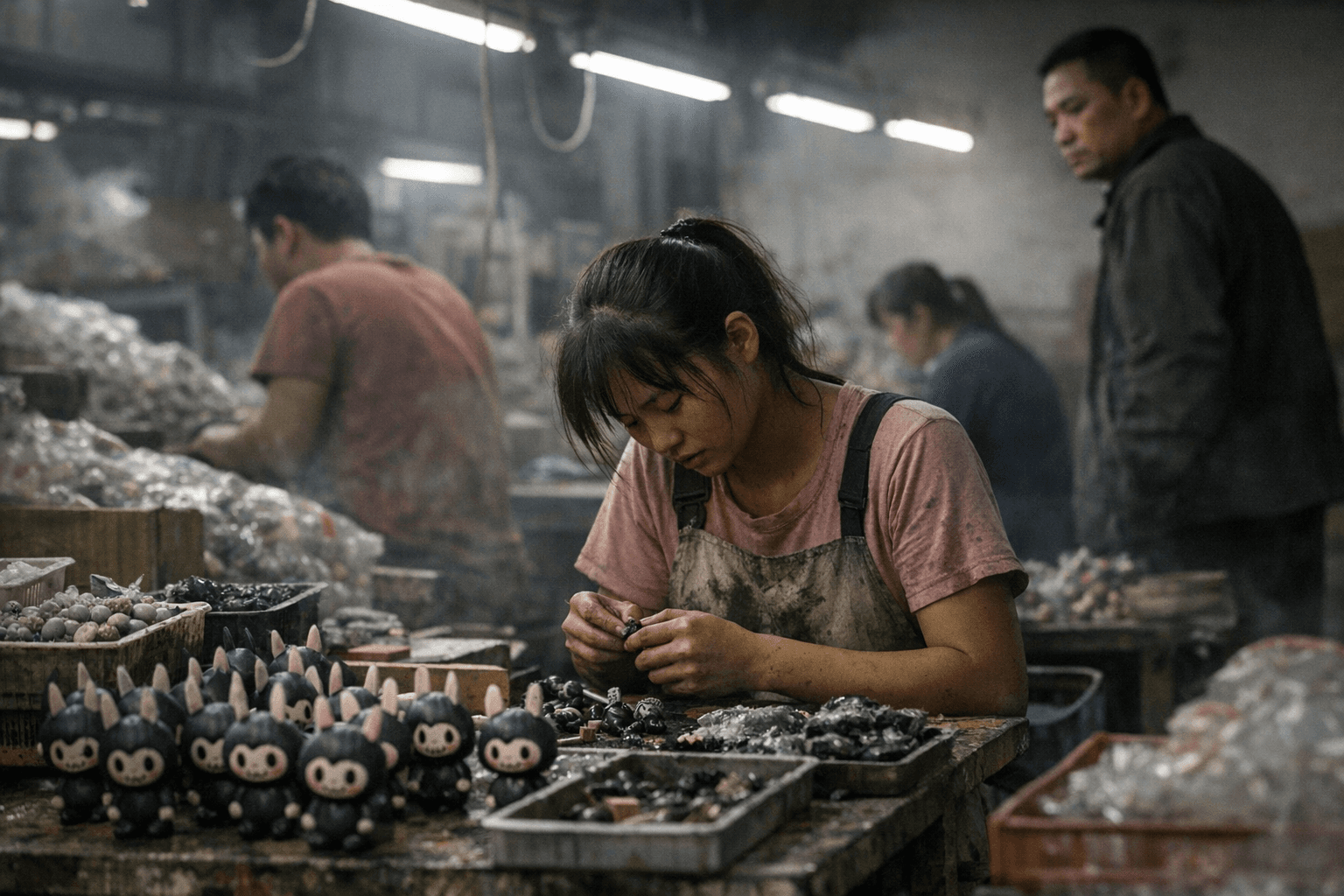
China Labor Watch investigators spent months looking into conditions at Shunjia Toys, a factory in Xinfeng county, Jiangxi province that produces Pop Mart’s Labubu line. Their inquiry, completed in mid-January, documented systemic labour-rights problems and interviewed more than 50 employees, including three workers aged 16–17.
Key findings included workers being required to sign largely blank contracts with only personal details filled in, while substantive terms were left unwritten. Investigators found under‑18 employees assigned the same production tasks and overtime schedules as adults, even though Chinese law requires special protections for young workers. Health-and-safety training was reported as lacking across production teams, and overtime levels were extreme: multiple workers said they regularly logged more than 100 hours of overtime each month, far above the legal cap of 36 hours.
The investigation also flagged very high daily quotas. Small assembly teams were described as having to put together thousands of figures per day, a pace that led investigators to conclude actual output at some lines far exceeded the factory’s official annual capacity of 12 million units. Those production pressures, combined with scant safety training and youth labor on line work, create clear compliance and reputational risks for brands tied to the facility.
Pop Mart provided a response saying it takes worker welfare seriously, that it conducts standardised audits of OEM partners, and that it will investigate the claims and require corrections if the allegations are substantiated. The situation underscores how rapid demand for Labubu and blind-box runs can stress OEMs and make oversight brittle when production ramps quickly.
For collectors and community members, the immediate impact is twofold: ethical concerns about how figures are made, and potential supply-chain wobble that could affect drops, restocks, or batch consistency. High run rates and intensive quotas heighten the chance of quality-control glitches—loose seams, paint apps, or assembly errors—and could influence secondary-market prices if releases are delayed or recalled.
Practical next steps you can take include asking Pop Mart publicly for clearer audit timelines, calling for on-site grievance mechanisms for workers, and watching batch codes and production marks if you track print runs. Support transparency by flagging questionable listings on resale platforms and prioritising sellers who can verify provenance.
The takeaway? Rapid demand driven by collector fever can create pressure points at factories. Our two cents? Keep collecting, but use your leverage—ask questions, favour transparent sellers, and push brands to show their supply chain checks so Labubu stays fun without costing people their rights.
Sources:
Know something we missed? Have a correction or additional information?
Submit a Tip