Investors Cheer US-Iran De-escalation Despite Confusion Over Deal Terms
Oil plunged more than 15% and the Dow surged over 1,000 points as a US-Iran ceasefire cut crude from $117 to $95, but Iran quickly accused Washington of violations.
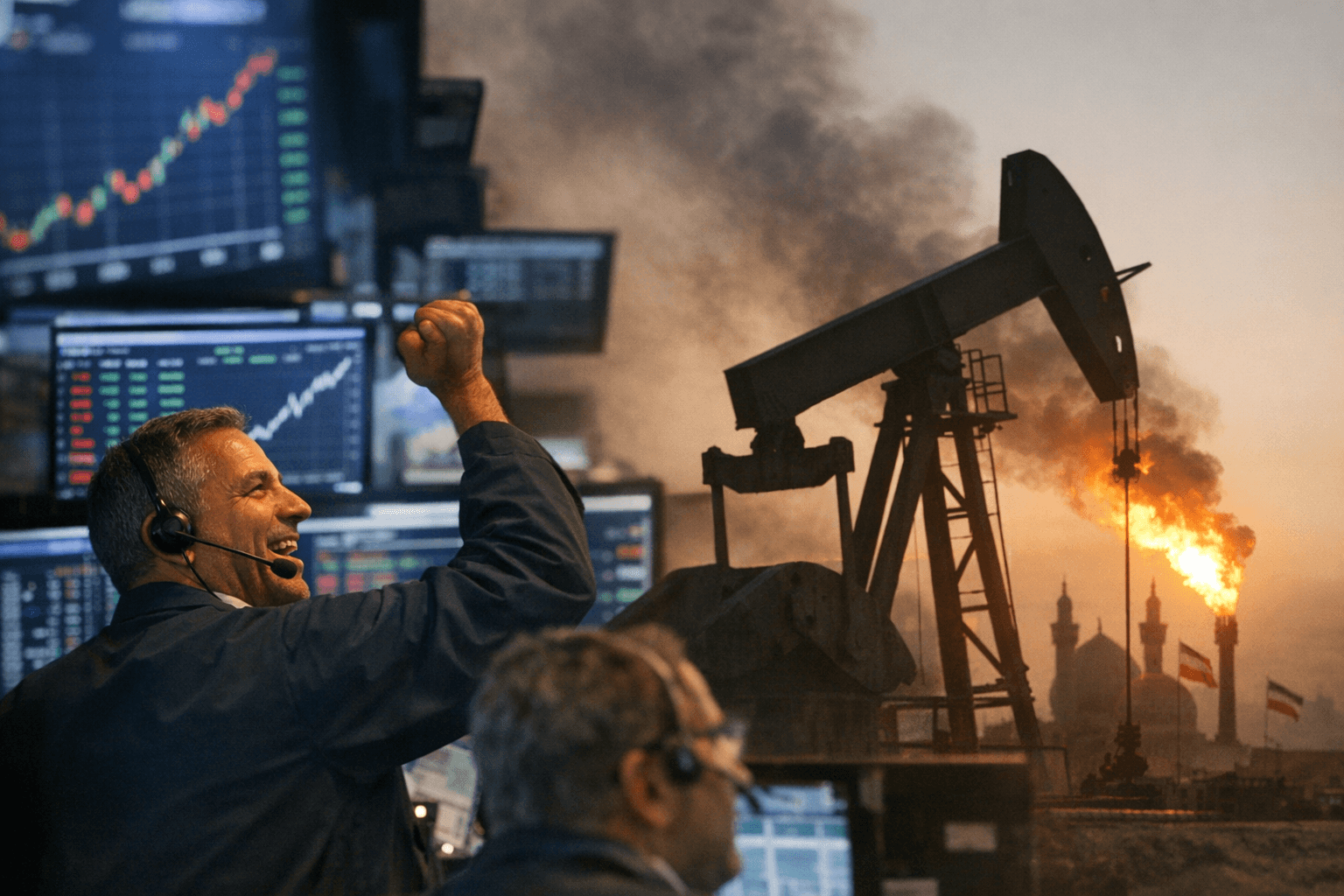
Crude oil plunged more than 15 percent and stocks surged globally on Wednesday after President Donald Trump announced a two-week ceasefire with Iran, delivering a potential reprieve for American drivers and businesses battered by months of energy-driven inflation. The relief, however, arrived with immediate contradictions that underscored just how fragile the truce may be.
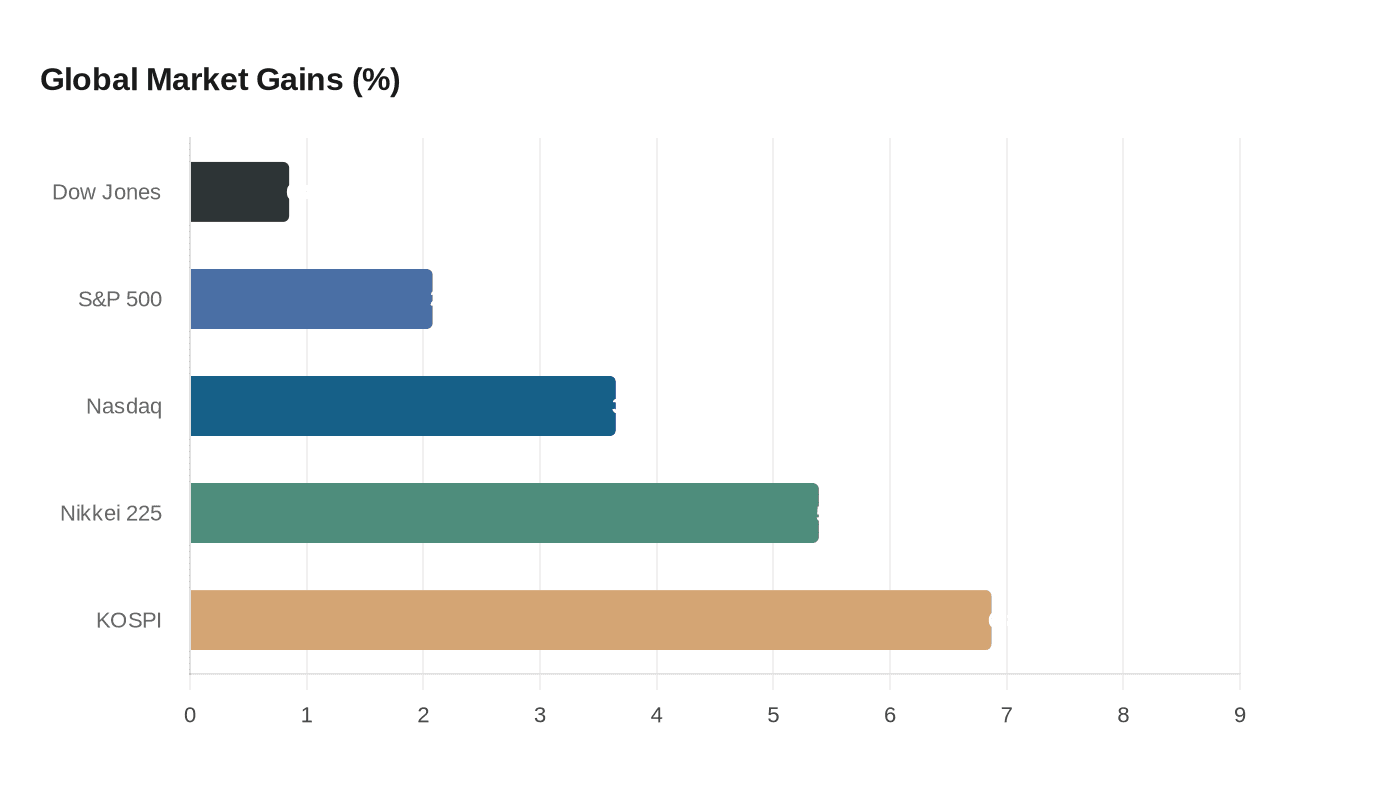
U.S. crude oil fell to about $95 per barrel, a stunning drop after it had traded as high as $117 on Tuesday. S&P 500 futures soared more than 2.7%, while Dow futures spiked by more than 1,100 points, or 2.5%. At the opening bell, the Dow Jones Industrial Average rose 393.7 points, or 0.85%, while the S&P 500 gained 137.5 points, or 2.08%, and the Nasdaq Composite advanced 803.4 points, or 3.65%. Overseas, the reaction was even more dramatic: South Korea's KOSPI climbed 6.87% and Japan's Nikkei 225 rose 5.39%.
The arithmetic of that oil drop matters directly to household budgets. Prices of crude oil, jet fuel, diesel and gasoline had surged during the war, and analysts and oil company executives warned that fuel shortages would ripple around the world if the Strait of Hormuz did not fully reopen. About 20% of global oil supplies passed through the strait before the U.S. and Israel attacked Iran on Feb. 28. California motorists had already felt the squeeze: in the second week of March, California's gasoline prices exceeded $5 per gallon. A sustained reopening of the strait could ease pressure on pump prices and airline fares tied to jet fuel costs, though economists caution the transmission from crude to the pump typically takes weeks.
The terms investors were betting on were straightforward: Trump said the ceasefire was conditional on Iran ensuring the safe and immediate reopening of the Strait of Hormuz. The ceasefire came after hastened diplomatic efforts led by Pakistan, arriving hours before Trump's threatened deadline for wiping out the entire Iranian civilization. VP JD Vance is set to lead U.S. negotiators to Pakistan by April 12 for talks on Iran's 10-point peace proposal, according to accounts of the diplomatic calendar.
What could reverse the rally came into view almost immediately. Iran's parliamentary speaker, Mohammad Bagher Ghalibaf, accused the U.S. on Wednesday of violating the two-week ceasefire agreement, saying three parts of Iran's 10-point ceasefire proposal had been violated. "The deep historical distrust we hold toward the United States stems from its repeated violations of all forms of commitments," Ghalibaf said in a statement posted on social media. Iran's state broadcaster IRIB underscored the ceiling on optimism with language that stopped well short of a peace declaration: "This is not the end of the war but all military branches should follow the Supreme Leader order and cease their fire."
Iran accused Israel of violating the conditional ceasefire by continuing its war with Hezbollah in Lebanon, and Iranian media outlets reported that Tehran was suspending tanker traffic through the strait and considering pulling out of the deal over Israel's actions. White House press secretary Karoline Leavitt said President Trump was aware of the reports saying the strait had been closed but said they "are false."
Josh Rubin, portfolio manager at Thornburg Investments, warned against reading the morning's market surge as a settled verdict. "There's still low visibility [and] limited predictability" on whether the truce will hold, Rubin said, cautioning that tail risks remain if the strait stays closed for another two to four months.
BCA Research's Gertken warned that energy and commodity markets are likely to remain on a structurally higher floor regardless of the ceasefire outcome, as governments hoard and restock in anticipation of renewed conflict, keeping oil and gas prices elevated well above pre-war levels even in a scenario where shipping resumes. Iran had also been charging some shipping companies a reported $2 million fee per tanker to guarantee safe passage through the strait; transit fees of that magnitude would add roughly $1 per barrel to the cost of oil transported through the strait, a cost that refiners pass along to consumers in gasoline and aviation fuel.
Mehran Kamrava, professor of government at Georgetown University of Qatar, said the two-week ceasefire shows that there is "tremendous willpower" from both Washington and Tehran to bring the war to an end, even if what each side agreed to on paper remains, for now, a matter of fierce dispute.
This article was produced by Prism’s automated news system from verified source data, official records, and press releases, then run through automated quality and moderation checks before publishing. The system is built and supervised by the people who set the standards it runs under. Read our full AI policy.
Did this article answer your question?

