U.S. Banks Could Unlock $320 Billion Under New Draft Capital Rules
Draft capital rule changes could free $320B at 36 large U.S. banks, a 20% jump from current excess, with Goldman Sachs and Citigroup among the biggest winners.
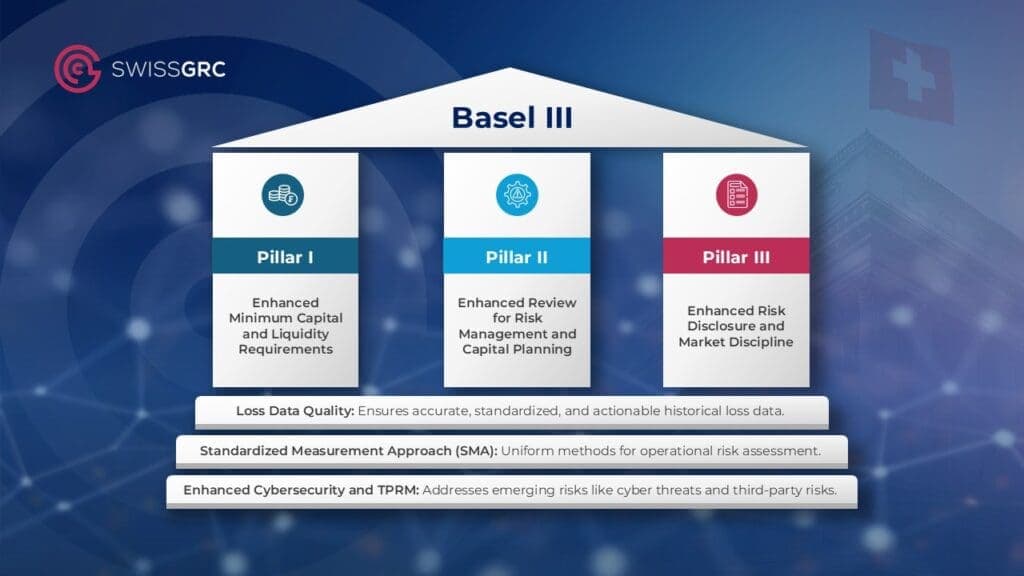
A Morgan Stanley analysis estimates that 36 large U.S. banks could collectively hold $320 billion in excess capital once proposed regulatory changes to the Basel framework and the Global Systemically Important Bank surcharge take effect, up roughly 20% from the estimated $266 billion already sitting idle in bank coffers.
The calculation, published in a note led by Morgan Stanley analyst Manan Gosalia, hinges on two draft proposals released by the Federal Reserve, the Federal Deposit Insurance Corporation and the Office of the Comptroller of the Currency on March 19, 2026. Those proposals would soften the final Basel III capital requirements and reduce the GSIB surcharge applied to the eight U.S. banks deemed most systemically critical. The Fed's own estimates project that required capital levels at large banks would fall between roughly 4.8% and 7.8% under the adjustments.
Translating $320 billion into outcomes sharpens the stakes considerably. Capital freed from regulatory buffers can flow in two directions: back to shareholders through buybacks and dividends, or outward into the economy through new lending. For households and small businesses, a meaningful shift toward credit expansion would lower borrowing costs and widen access to loans at a moment when credit conditions have remained tight. For bank investors, the alternative, accelerated capital return, would represent a substantial boost to earnings per share and yield. Which path banks favor will likely emerge on upcoming earnings calls, where executives are expected to offer preliminary ranges of deployable capital under the finalized rules.
The split in benefits falls along institutional lines. Morgan Stanley's analysis found that regional banks would be the primary winners from changes to risk-weighted asset calculations, because the draft rules reduce the capital charge attributed to credit risk. Goldman Sachs and Citigroup stand to gain most from the GSIB surcharge reduction specifically, given their current surcharge exposure relative to peers.

JPMorgan CEO Jamie Dimon acknowledged the stakes in his April 6 shareholder letter, writing that JPMorgan could hold roughly $40 billion in excess capital under the draft framework. But Dimon called the proposals "flawed," arguing the GSIB surcharge remains structurally broken and that JPMorgan would still be required to hold as much as 50% more capital than a comparable non-GSIB bank against the same consumer and business loans. He labeled that disparity "un-American."
The debate over the draft rules reprises a tension that has defined bank regulation since 2008: how much capital is enough to absorb the next shock without penalizing lending today. Proponents of the revisions argue the original post-crisis rules were calibrated too conservatively, leaving capital trapped unproductively while non-bank lenders face no equivalent constraints. Critics counter that reducing buffers at a time of elevated geopolitical and economic uncertainty compresses exactly the cushion that prevented a cascade of failures during the last crisis. The Fed's own dissent on the March 19 vote, cast by Governor Michael Barr, signaled that the debate within the institution itself is not settled.
Final rules are expected later in 2026, though implementation could extend into 2027. Regulators will advance the proposals through a public comment period, and the market will scrutinize the final text for grandfathering provisions, phase-in timelines and any last-minute tightening. For a banking sector that spent the better part of two years accumulating capital in anticipation of harsher rules, the direction of travel is now clearly reversed; the argument is only over how fast to move.
This article was produced by Prism’s automated news system from verified source data, official records, and press releases, then run through automated quality and moderation checks before publishing. The system is built and supervised by the people who set the standards it runs under. Read our full AI policy.
Did this article answer your question?

