Stocks Surge, Oil Plunges as U.S. and Iran Agree to Ceasefire
The Dow surged 1,325 points and oil plunged 16% after Trump announced a two-week ceasefire with Iran, but strikes across the Gulf region cast doubt on the deal within hours.
The announcement came Tuesday evening on Truth & Social, roughly 40 days after U.S. and Israeli warplanes launched the strikes that started what has been informally called the Third Gulf War. "I agree to suspend the bombing and attack of Iran for a period of two weeks," President Donald Trump wrote, adding that Washington had received "a 10-point proposal from Iran" it considered "a workable basis on which to negotiate." Trump called it a "double-sided ceasefire," contingent on one condition: Iran must reopen the Strait of Hormuz to commercial shipping.
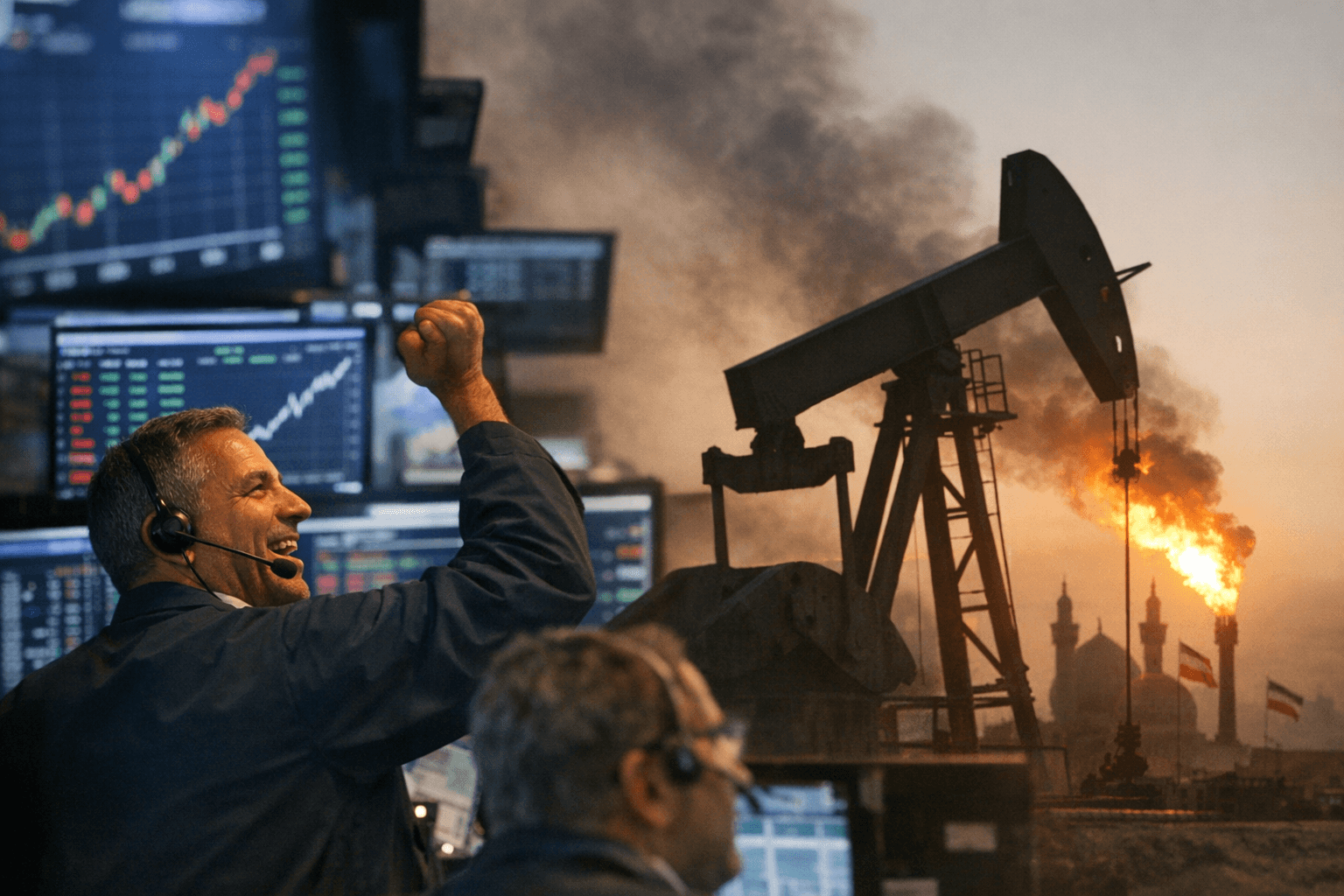
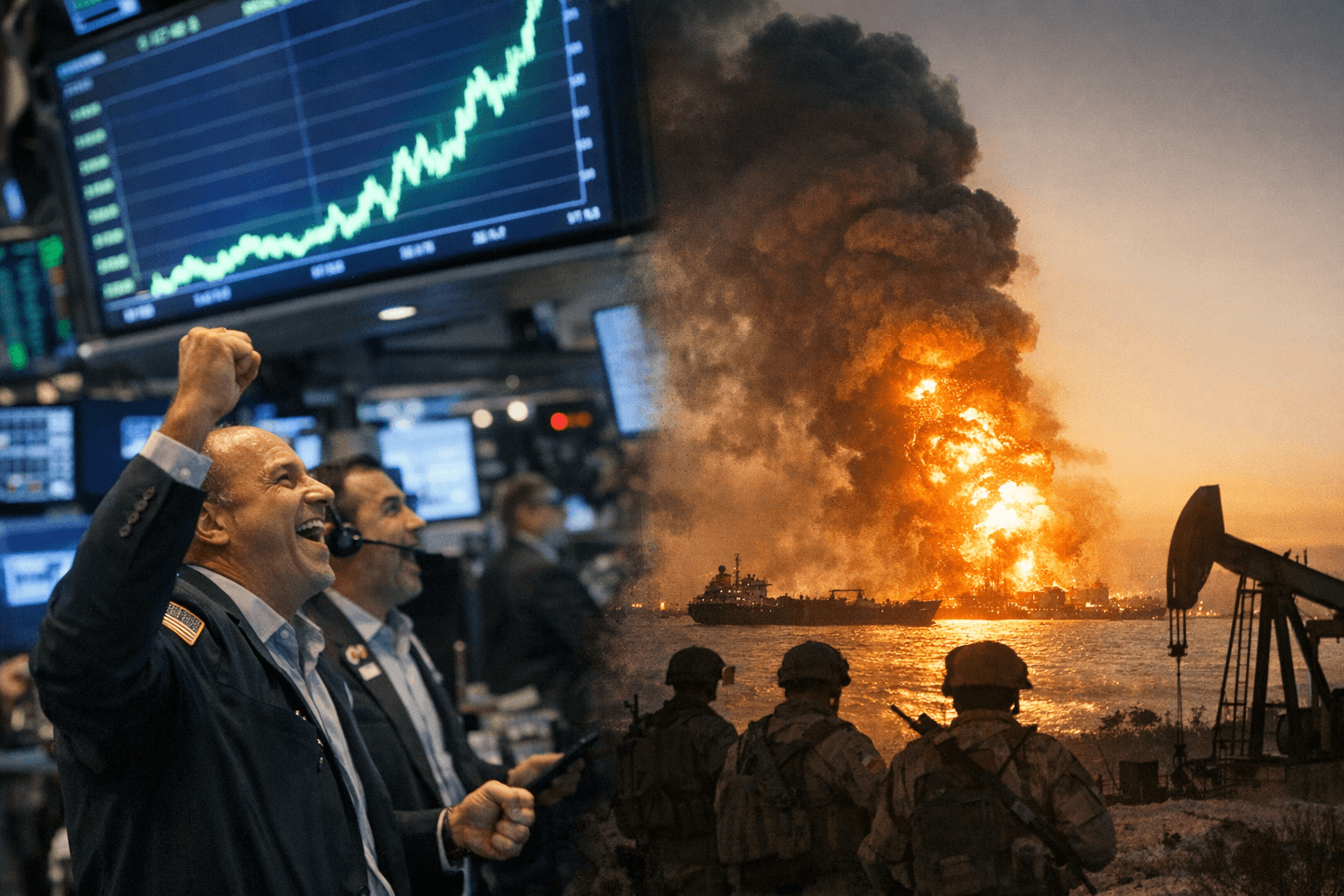
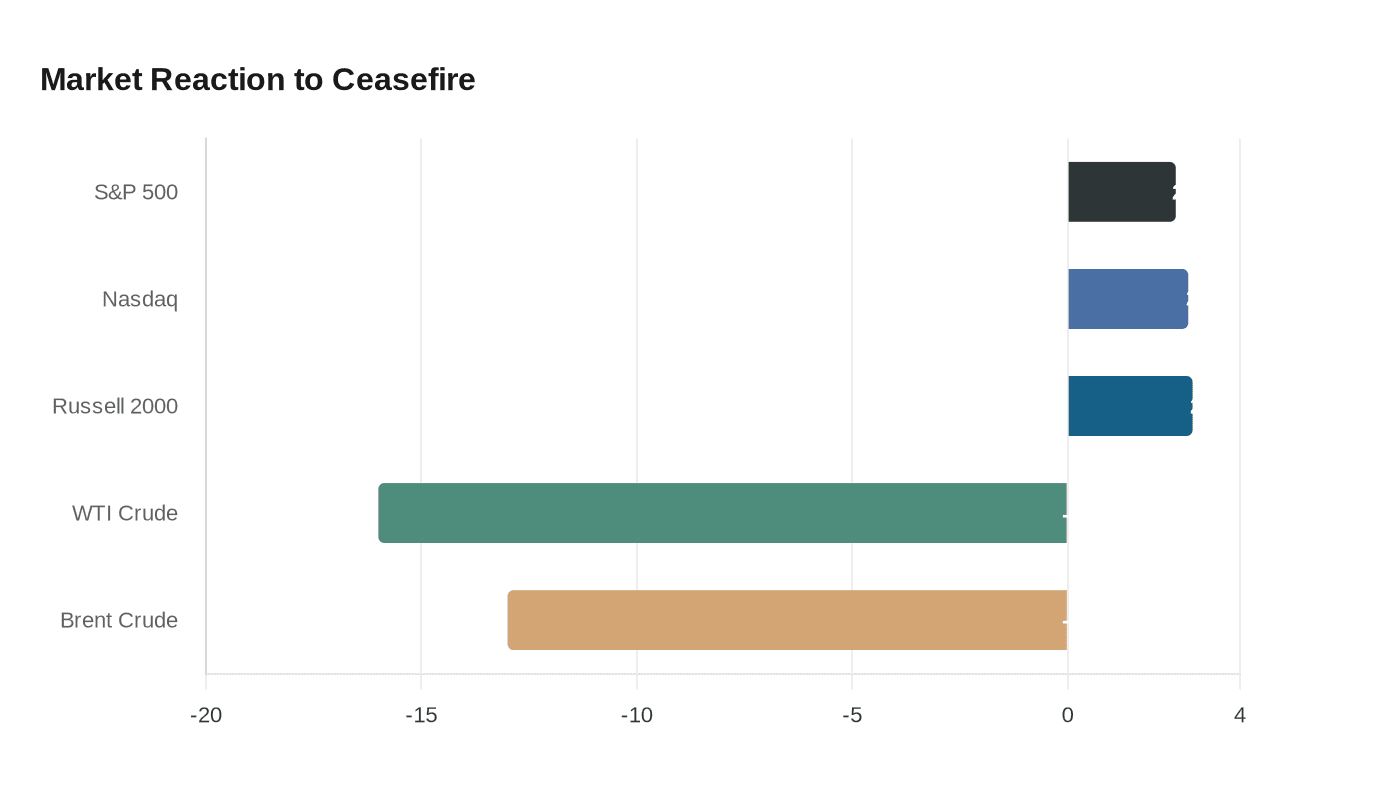
Markets responded as if a structural overhang had been lifted overnight. The Dow Jones Industrial Average surged 1,325 points Wednesday, its best single-day gain since April 2025. The S&P 500 closed up 2.51% at 6,782.81, the Nasdaq Composite rose 2.80% to 22,635.00, and the Russell 2000 added 2.9%. Equity markets in Asia and Europe had already posted strong overnight gains ahead of the Wall Street open, telegraphing the relief rally before American trading began. JPMorgan analysts wrote that the S&P 500 "could climb even higher as euphoria returns to markets."
The oil market told the mirror-image story. West Texas Intermediate crude, which had traded as high as $117 per barrel earlier in the week, plummeted more than 16% to close at $94.41, its largest single-day drop since April 2020. Brent crude fell roughly 13% to $94.75. Natural gas, wholesale gasoline, and heating oil fell sharply alongside. The speed and magnitude of the reversal illustrated precisely how much of oil's elevated price reflected geopolitical risk premium rather than underlying supply fundamentals. WTI remains up more than 65% year-to-date and more than 40% since the war began on February 28, underscoring how far markets still are from a pre-war baseline.
The Strait of Hormuz sits at the center of that premium. Since the IRGC issued warnings prohibiting commercial vessel passage following the initial U.S.-Israeli strikes on February 28, the same operation that killed Supreme Leader Ali Khamenei, the strait has been effectively shut to commercial shipping. Analysts had warned that if the chokepoint did not reopen by mid-April, supply disruptions would worsen significantly. The ceasefire, with its explicit condition tying the truce to the strait's reopening, was therefore not just a diplomatic development but an energy market event of the first order.
Consumers hoping for immediate relief at the pump should temper expectations. Official statements from Washington and Tehran left the precise mechanics of shipping resumption unresolved, and the pipeline from crude prices to retail gasoline takes time even under stable conditions. With WTI still above $94 a barrel after a 16% plunge, the structural price level remains historically elevated.
The deal also showed signs of strain within hours. Iran reported a strike against its Lavan oil refinery on Wednesday. The UAE, Saudi Arabia, Kuwait, and Bahrain all reported strikes within their territory. Israel continued its campaign in Lebanon against Hezbollah in one of the most intense days of strikes since that conflict began. In the final hour of U.S. trading, comments from Iran's parliamentary speaker Mohammad Bazargan pulled stocks back from their intraday highs, a compressed demonstration of how swiftly geopolitical risk premiums can re-inflate.
The durability of Wednesday's rally depends almost entirely on whether the Strait of Hormuz actually reopens. Iran's IRGC demonstrated throughout the conflict that its arsenal of low-cost Shahed drones can impose a de facto blockade through the credible threat of attack alone. Roughly a month into the war, Iran struck U.S. forces at Prince Sultan Air Base in Saudi Arabia, hundreds of miles from the strait, demonstrating the geographic reach of that threat. Even with a signed ceasefire, energy analysts caution that damage to shipping insurance markets and long-haul supply chains may take considerable time to reverse. The geopolitical risk premium vanished on Wednesday almost as fast as it appeared in February; whether it stays gone hinges on what happens in the strait next.
Sources:
Know something we missed? Have a correction or additional information?
Submit a Tip