Investors Still Have Questions About the Cease-Fire
The two-week Iran ceasefire sent oil plunging 16%, but gold and Treasuries signal investors aren't convinced calm will last.
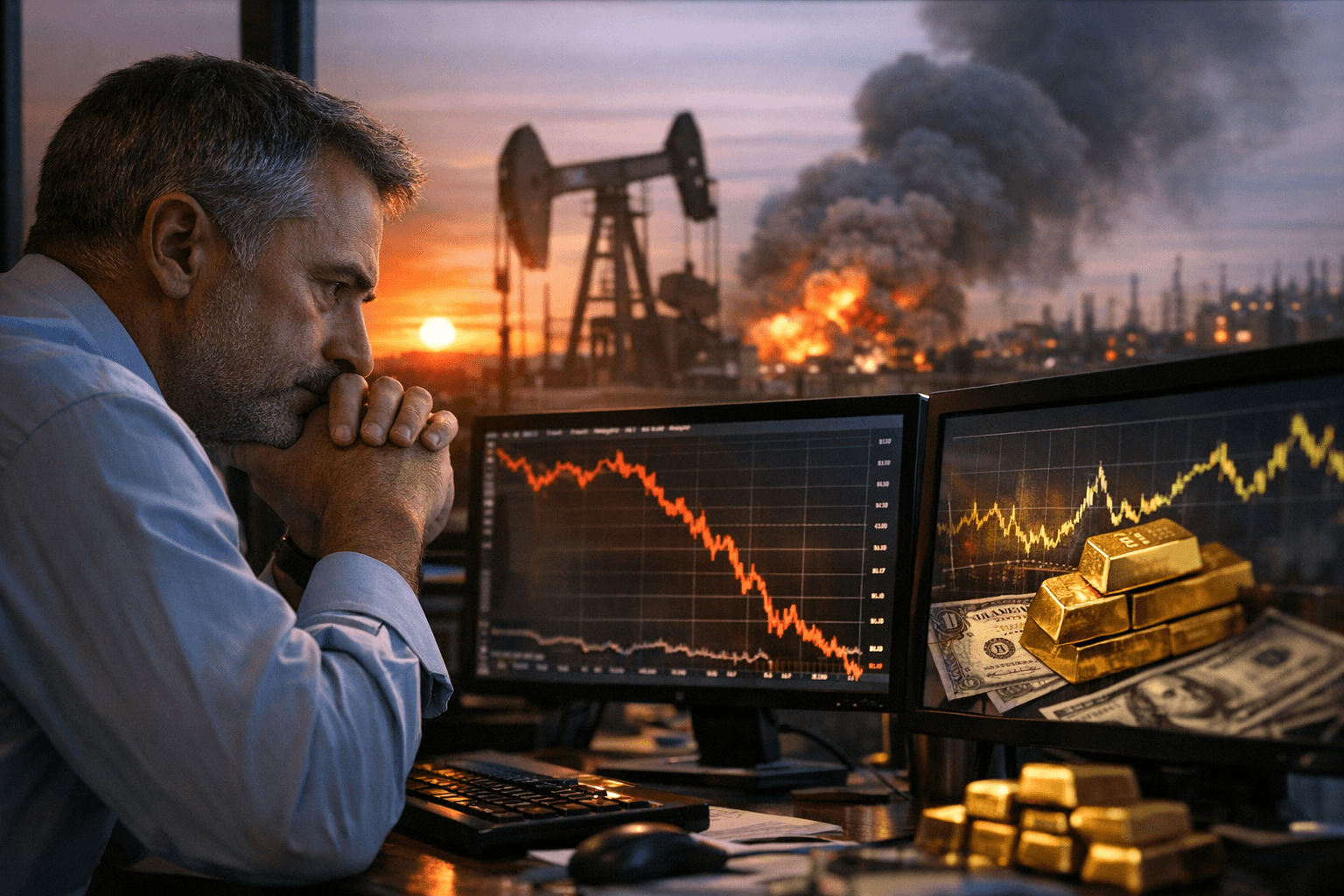
The two-week ceasefire brokered between the United States and Iran produced an enormous single-session relief rally, but the Strait of Hormuz remains the world's most consequential single-point failure in global energy markets, and analysts are warning that its risk premium can snap back the moment talks stumble.
WTI crude plunged roughly 16% to approximately $94.55 per barrel on April 8, retreating from a conflict-era high of about $117 the previous day. Brent crude fell 13.8% to approximately $94.13 per barrel, and the Dow Jones Industrial Average surged approximately 1,300 points. But gold rose and Treasury yields fell simultaneously, a divergence that signals institutional investors remain far from persuaded that durable peace is near.
The stakes are embedded in every barrel. According to the International Energy Agency, nearly 15 million barrels per day of crude oil, nearly 34% of all global crude trade, transited the Strait in 2025. China and India together accounted for 44% of those flows; China alone represented 37.7% of total crude exports through the waterway as of the first quarter of 2025. About 93% of Qatar's LNG exports and 96% of the UAE's also move through the Strait. The Dallas Federal Reserve described the closure, the first in recorded history, as a supply shortfall three to five times larger than the disruption seen during the 1990 Gulf crisis. Brent had risen from roughly $75 per barrel at the start of 2026 to near $120 at its peak, a roughly 60% surge driven almost entirely by the chokepoint blockage.
The ceasefire was brokered by Pakistani Prime Minister Shehbaz Sharif and Field Marshal Asim Munir after President Donald Trump set an 8 p.m. ET deadline for Tehran to reopen the Strait or face what he described as seeing its "whole civilization" die. Iranian Foreign Minister Seyed Abbas Araghchi announced Tehran's acceptance, stating that "for a period of two weeks, safe passage through the Strait of Hormuz will be possible via coordination with Iran's Armed Forces." Trump called it "a double sided CEASEFIRE" on Truth Social. The agreement halted approximately 40 days of U.S.-Israeli strikes on Iranian targets.
The negotiations that follow carry much heavier freight. Iran's 10-point proposal, which Trump accepted as a "workable basis," diverges substantially from the U.S. 15-point framework that Tehran rejected through intermediaries on March 25. Iranian Parliament Speaker Mohammad Bagher Ghalibaf, who will lead Iran's delegation at the upcoming Islamabad talks, declared as recently as March 29 that "Iran could not be forced into submission." Argus Media noted that public statements from both sides "differ on the status of navigation through the Strait of Hormuz," a gap in understanding that exists even over the ceasefire's own terms.
The Economist Intelligence Unit flagged a "deep trust deficit" between Washington and Tehran, while IG International cautioned that "investors should resist the temptation to treat this as an all-clear signal," noting that the Islamabad talks "carry no guarantee of success." Economists warned of "a real risk that talks break down and the conflict reverts to its previous state, or even escalates further." Safe-haven assets held firm through the rally, and more than $170 million flowed through the prediction platform Polymarket in ceasefire bets, drawing insider-trading scrutiny.
For those reading the signals, the short checklist runs through shipping traffic and tanker rates in the Strait, the pace of the Islamabad talks, proxy attack activity in Lebanon and Iraq, and whether Washington and Tehran can even agree on what the two-week window actually permits. The Strait of Hormuz does not care about press releases. What closed it once can close it again.
This article was produced by Prism’s automated news system from verified source data, official records, and press releases, then run through automated quality and moderation checks before publishing. The system is built and supervised by the people who set the standards it runs under. Read our full AI policy.
Did this article answer your question?

