Iran Ceasefire May Hold, But the World Faces a Darker Future
The truce was sealed one hour before Trump's deadline, then Israel launched 100 strikes on Lebanon in 10 minutes, and oil tankers stopped moving.
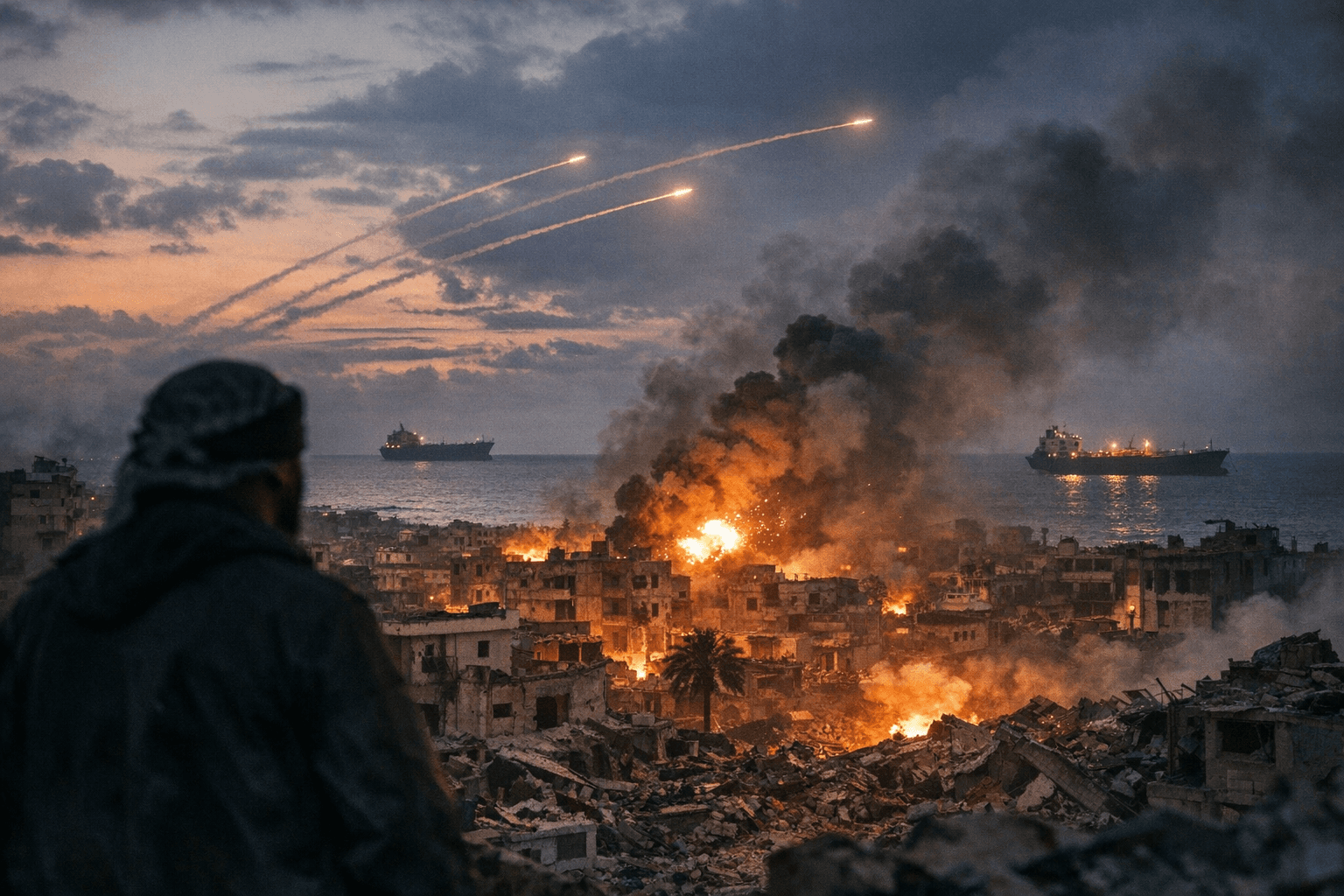
The ceasefire arrived with barely an hour to spare. Iran's agreement to reopen the Strait of Hormuz on the night of April 7-8 pulled two nuclear-armed alliances back from open war. But within minutes, Israel launched 100 strikes across Lebanon in under 10 minutes, oil tanker movement through the Strait froze, and the brief optimism that had sent U.S. crude prices plunging 15% to around $95 per barrel began to look premature.
The war began on February 28, 2026, when the United States and Israel launched coordinated strikes on Iran. At his State of the Union address four days earlier, Trump had declared publicly that Iran had restarted its nuclear program and was developing ballistic missiles capable of striking the United States, findings the International Atomic Energy Agency subsequently corroborated. The campaign came after a prior 12-day military confrontation in June 2025 that had already targeted nuclear facilities at Natanz, Fordow, and Isfahan, and a domestic crisis in which Iranian security forces killed more than 6,000 protesters across all 31 provinces amid economic collapse.
Pakistan played a central role in halting the latest escalation. Prime Minister Shehbaz Sharif and Field Marshal Asim Munir personally appealed to Trump to hold back a planned strike and urged Iran's leadership to open the Strait as a goodwill gesture, barely an hour before Trump had threatened that "a whole civilisation will die" if Iran did not comply.
The two-week truce is contingent on Iran keeping the Strait open. Iran's Supreme National Security Council confirmed the agreement but said explicitly that "the war itself had not ended yet." Its state media outlined a 10-point framework for broader peace talks, demanding complete U.S. troop withdrawal from the region, financial compensation, and the lifting of all international sanctions. Trump called the plan a "workable basis" for negotiations, but it conflicts sharply with America's own 15-point proposal.
Skepticism was immediate. Israeli Prime Minister Benjamin Netanyahu and Sen. Lindsey Graham (R-S.C.) are highly skeptical of the deal. Hezbollah has not confirmed it will abide by the truce, and Lebanon was explicitly excluded from the ceasefire by both Trump and Netanyahu. Israel's subsequent 100-strike barrage triggered fresh fears the agreement would unravel before it had taken hold.
The human cost of the six-week conflict has been severe. The human rights group HRANA estimated at least 657 people killed and 2,037 wounded by strikes on Iran; Iran's health ministry put the toll above 2,500. UN human rights experts urged that post-conflict conditions must not become a pretext for intensifying repression inside Iran.
Pratibha Thaker, the Economist Intelligence Unit's regional director for Africa and the Middle East, called the ceasefire "a huge relief" but warned of "a deep trust deficit on both sides." Evercore vice chairman Krishna Guha told investors: "We are not out of the woods yet. The ceasefire could fall apart. There will still be an initial inflation shock."
The deeper problem may outlast the truce. Iran's nuclear infrastructure has been damaged, but the successive collapse of international frameworks designed to contain it, from the 2015 Joint Comprehensive Plan of Action to multiple rounds of failed talks in 2025 and 2026, has left no agreed mechanism to prevent Tehran from reconstituting its program. The release of two French citizens held on espionage charges for nearly four years offered a rare diplomatic gesture, but gestures are not architecture. If this deal fails to produce a durable agreement, the world will have paid the full cost of the war without securing any of its objectives.
This article was produced by Prism’s automated news system from verified source data, official records, and press releases, then run through automated quality and moderation checks before publishing. The system is built and supervised by the people who set the standards it runs under. Read our full AI policy.
Did this article answer your question?