Iran Seizes Ships in Strait of Hormuz After Ceasefire Extension
Iran seized two ships in the Strait of Hormuz after Trump extended a ceasefire, putting a chokepoint that carries a fifth of global oil and gas on edge.
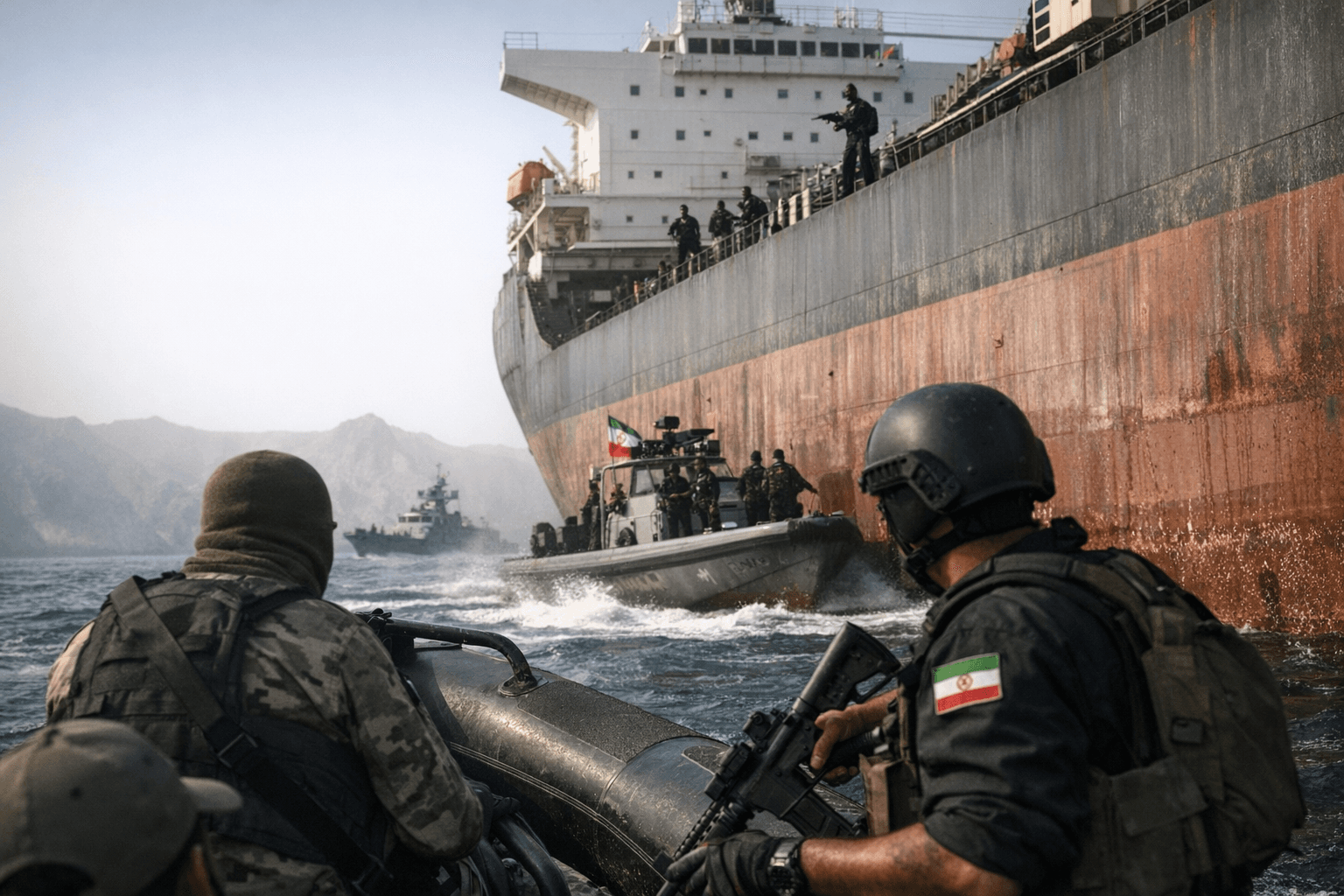
Gunfire and ship seizures in the Strait of Hormuz immediately raised the stakes far beyond the waterway itself, because any disruption there can rattle oil flows, lift shipping insurance costs, and eventually reach U.S. fuel prices. Iranian forces seized two ships in the strait after the White House said the ceasefire with Tehran would be extended indefinitely, turning a fragile truce into a test of control over one of the world’s most sensitive trade corridors.
The Strait of Hormuz connects the Persian Gulf and the Gulf of Oman, and about 20% of global oil and gas typically moves through it. UKMTO reported that three vessels came under fire, with one ship saying it was hit about eight nautical miles off Iran’s coast and another incident reported roughly 15 miles northeast of Oman. In one case, the bridge was heavily damaged, but crews were reported safe and no injuries were reported. Iranian state media said the Iranian Revolutionary Guard Corps seized the vessels for maritime violations and escorted them to Iranian shores. Reuters said it was the first time Iran had seized ships since the war began.
Donald Trump said Tuesday, April 21, 2026, that the ceasefire would be extended indefinitely at Pakistan’s request so Iran’s leaders could produce a unified proposal, but he also said the U.S. would continue its naval blockade of Iranian trade by sea. The planned peace talks in Pakistan never materialized after Iran did not confirm attendance and a U.S. delegation led by JD Vance never left Washington. Iranian officials and advisers responded skeptically, with Tasnim News Agency reporting that Tehran had not asked for a ceasefire extension and Mahdi Mohammadi, an adviser to Abbas Araghchi, called the move a possible ploy.
The clash underscored how quickly maritime tension can become an economic problem for households far from the Gulf. Even short-lived disruption in Hormuz can tighten supply expectations, force insurers to reprice risk, and push energy markets higher before cargoes are ever delayed. With the route carrying so much of the world’s oil and gas, the question is no longer just whether the ceasefire holds, but whether the shipping lane that underpins it can stay open.
Meanwhile, a separate strain is spreading across the United States. Drought.gov said 96.83% of the Southeast was in moderate to exceptional drought as of April 16, the largest drought footprint in the region since the U.S. Drought Monitor began in 2000. More than 61% of the Lower 48 was in moderate to exceptional drought, including 97% of the Southeast and two-thirds of the West, while Florida has already seen more than 100 fires burn nearly 12,000 acres amid record dry conditions in Georgia, North Carolina and South Carolina.
Know something we missed? Have a correction or additional information?
Submit a Tip