Iran Threatened Civilian Infrastructure as Israel Vowed Hezbollah Escalation
Israel promised an intensified Lebanon campaign while Iran warned it would strike civilian targets if Trump carried out his ultimatum against Tehran.
Iran threatened to attack civilian infrastructure Sunday if President Trump followed through on his ultimatum against the Islamic Republic, as the Israeli military simultaneously declared its campaign against Hezbollah in Lebanon would intensify — a convergence of escalating pressures that pushed the Middle East closer to a broader regional confrontation.
The dual warnings marked one of the most combustible days in a conflict that has already reshaped the region's security architecture. Iran's threat to target civilian infrastructure represented a significant rhetorical escalation, signaling Tehran's willingness to absorb or redirect aggression toward populations rather than military assets alone. Such a posture, if carried out, would almost certainly trigger international condemnation and invoke protections under international humanitarian law, which explicitly prohibits deliberate attacks on civilian infrastructure.
Trump's ultimatum, the precise terms of which have been a source of diplomatic tension for weeks, appeared to accelerate Iranian decision-making at the highest levels. Tehran's response suggested that Iran's leadership calculates it has limited options in absorbing American pressure short of demonstrating credible deterrence through threatened force.
On Israel's northern front, the military's pledge to intensify operations against Hezbollah carries weight beyond rhetoric. The Lebanese militant group, which spent years rebuilding its arsenal after the 2006 war, has faced sustained Israeli strikes targeting command structures and weapons depots. An intensification of that campaign risks drawing Lebanon deeper into a conflict its fragile state institutions are ill-equipped to withstand, and raises the prospect of renewed civilian displacement in southern Lebanon on a scale not seen since 2006.
The timing is geopolitically significant. Israel's stated commitment to pressing harder against Hezbollah arrives as Washington's posture toward Iran grows increasingly confrontational, creating a dual-front pressure that Iranian strategists have long feared. The coordination, whether explicit or tacit, between Israeli military operations and American diplomatic ultimatums has historically been a source of acute anxiety in Tehran.
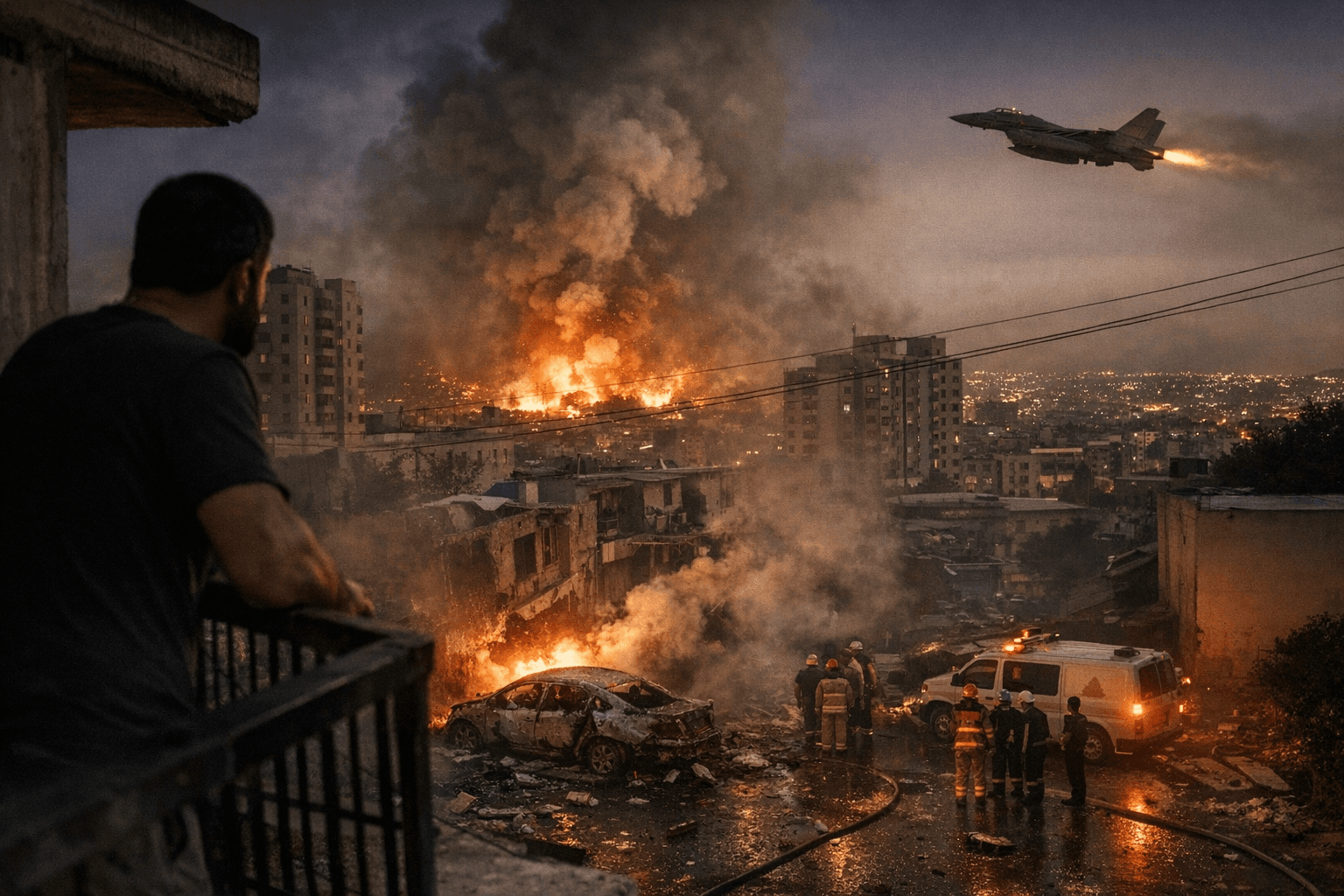
For Lebanon, the consequences could be severe. The country's economy remains in near-total collapse, its government institutions hollowed out, and its population deeply polarized over Hezbollah's role as both a political actor and a military force. An intensified Israeli campaign in the south would fall hardest on communities already bearing the weight of years of economic devastation.
The international diplomatic response remained largely reactive Sunday. European capitals, which have consistently urged restraint from all parties, face the familiar problem of having limited leverage over any of the principal actors. The United Nations Security Council, divided along familiar lines, has proved unable to impose a durable framework on a conflict that keeps expanding its geographic and political scope.
What distinguishes this moment from prior cycles of escalation is the simultaneity of pressure vectors: an American president issuing direct ultimatums to Iran, an Israeli military explicitly promising an intensified northern campaign, and an Iranian government threatening civilian targets in return. Each actor is signaling resolve. The danger is that in a region where miscalculation has repeatedly transformed threats into catastrophes, all three may be counting on the others to blink first.
Know something we missed? Have a correction or additional information?
Submit a Tip