Iran Warns U.S. Against Ground Invasion as Pakistan Hosts Diplomatic Talks
Iran's parliament speaker threatened to set U.S. troops "on fire" as 2,500 Marines arrived in the region and Pakistan scrambled to host peace talks.

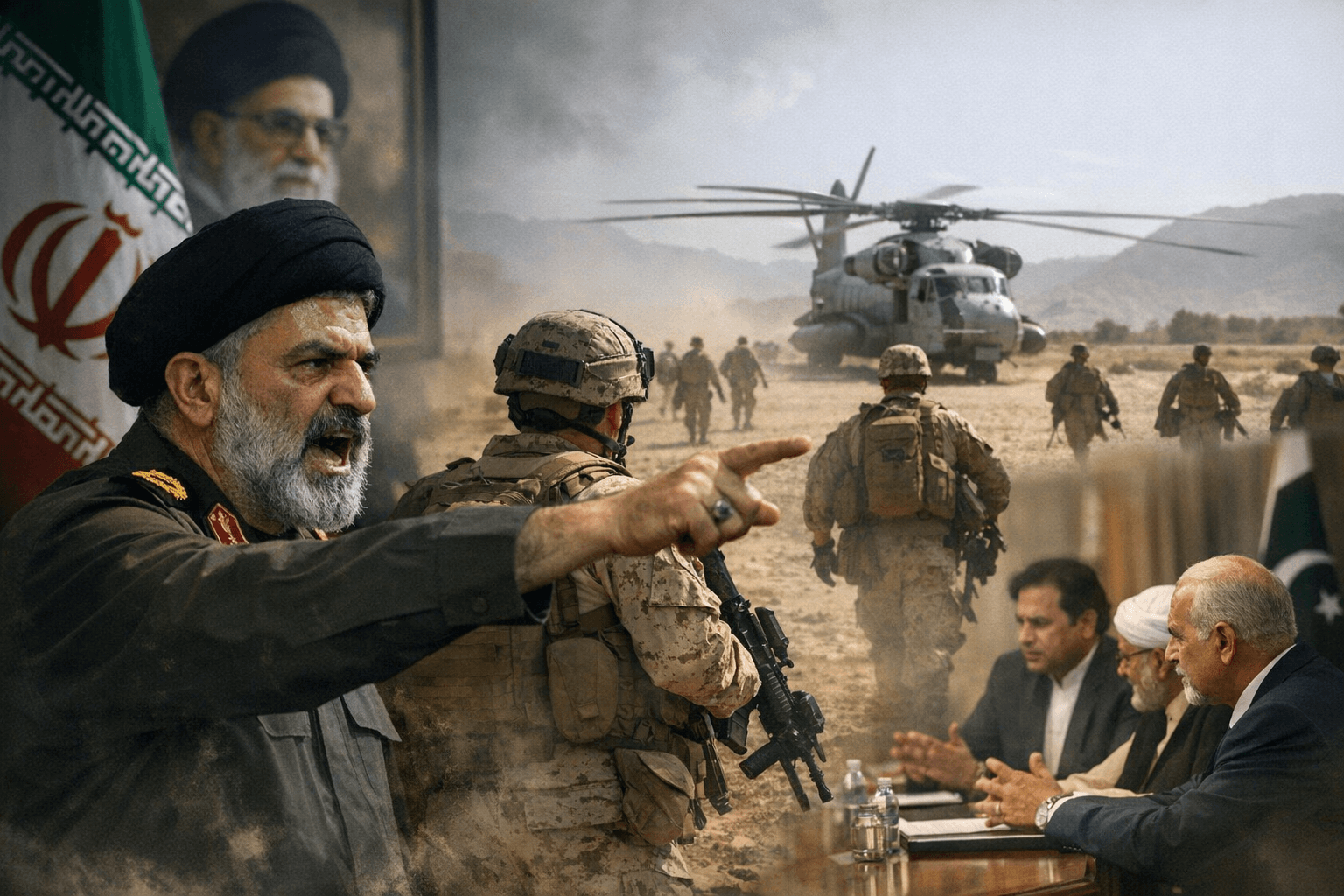
Iranian parliament speaker Mohammad Bagher Qalibaf issued a stark warning to Washington on Sunday, saying Tehran's forces were "waiting for the arrival of American troops on the ground to set them on fire and punish their regional partners forever," even as regional diplomats convened in Islamabad in a push to broker an end to the monthlong war.
The threat came hours after some 2,500 U.S. Marines trained in amphibious landings arrived in the Middle East, a deployment Qalibaf dismissed as proof that weekend diplomatic activity was nothing more than cover. "Our firing continues. Our missiles are in place. Our determination and faith have increased," he added, according to Iranian state media.
The warnings arrived against a war that has killed more than 3,000 people since U.S. and Israeli strikes on Iran triggered retaliatory attacks on Israel and Gulf Arab states. On Sunday alone, Israel announced waves of incoming strikes from Iran, and explosions could be heard throughout Tehran.
Pakistan positioned itself as a potential mediator, announcing it would host talks between the U.S. and Iran, though Washington and Tehran offered no immediate confirmation, and it remained unclear whether any such discussions would be direct or indirect. Foreign ministers from Saudi Arabia, Turkey and Egypt met in Islamabad without U.S. or Israeli participation and were expected to convene again Monday. Pakistani Prime Minister Shehbaz Sharif said he and Iranian President Masoud Pezeshkian held "extensive discussions" on the regional hostilities.
Pakistan's Foreign Minister Ishaq Dar framed the gathering as a necessary pivot, saying "dialogue, diplomacy, and such confidence-building measures are the only way forward." The U.S. had separately offered Iran a 15-point "action list" as a framework for a possible peace deal, though U.S. officials acknowledged the war may be nearing an inflection point while Iranian leaders continued to publicly reject negotiations.
Even as missiles flew, Iran signaled limited economic flexibility. Tehran agreed Saturday to allow 20 more Pakistani-flagged vessels to transit the Strait of Hormuz, adding to a small number of ships it had previously permitted through as it worked to restrict, but not fully close, the critical waterway. Asif Durrani, Pakistan's former ambassador to Iran, said the concession "sends a clear signal that Iran remains open for business with the world, provided the United States abandons coercion."
The UAE offered a sharper assessment. Anwar Gargash, an adviser to the UAE government, called for any settlement to include "clear guarantees" that Iranian attacks on neighbors would not be repeated, and said Iran had become "the main threat" to Persian Gulf security, demanding compensation for damage to civilian infrastructure. The scope of that destruction sharpened when Emirates Global Aluminium confirmed an Iranian attack had wounded several workers and caused significant damage to its plant.
The conflict continued to pull in new actors. Iranian-backed Houthi militants in Yemen fired the first missile they had launched since the war began, targeting Israel on Saturday; Israel's military intercepted it, but the strike signaled the opening of another front as the war entered its second month. In Lebanon, Israeli strikes killed Hezbollah's al-Manar TV correspondent Ali Shoeib in Jezzine on March 28, along with other journalists, as Israel continued targeting Hezbollah positions there.
With 3,000 dead, two navies contesting a global shipping chokepoint, and a new front opening in Yemen, the gap between Pakistan's diplomatic ambitions and the battlefield reality had rarely looked wider.
Know something we missed? Have a correction or additional information?
Submit a Tip