Nicholas Haysom, Anti-Apartheid Lawyer Turned U.N. Peacemaker, Dies at 73
A white South African jailed under apartheid helped draft the constitution that ended it, then spent three decades brokering peace from Baghdad to Juba.
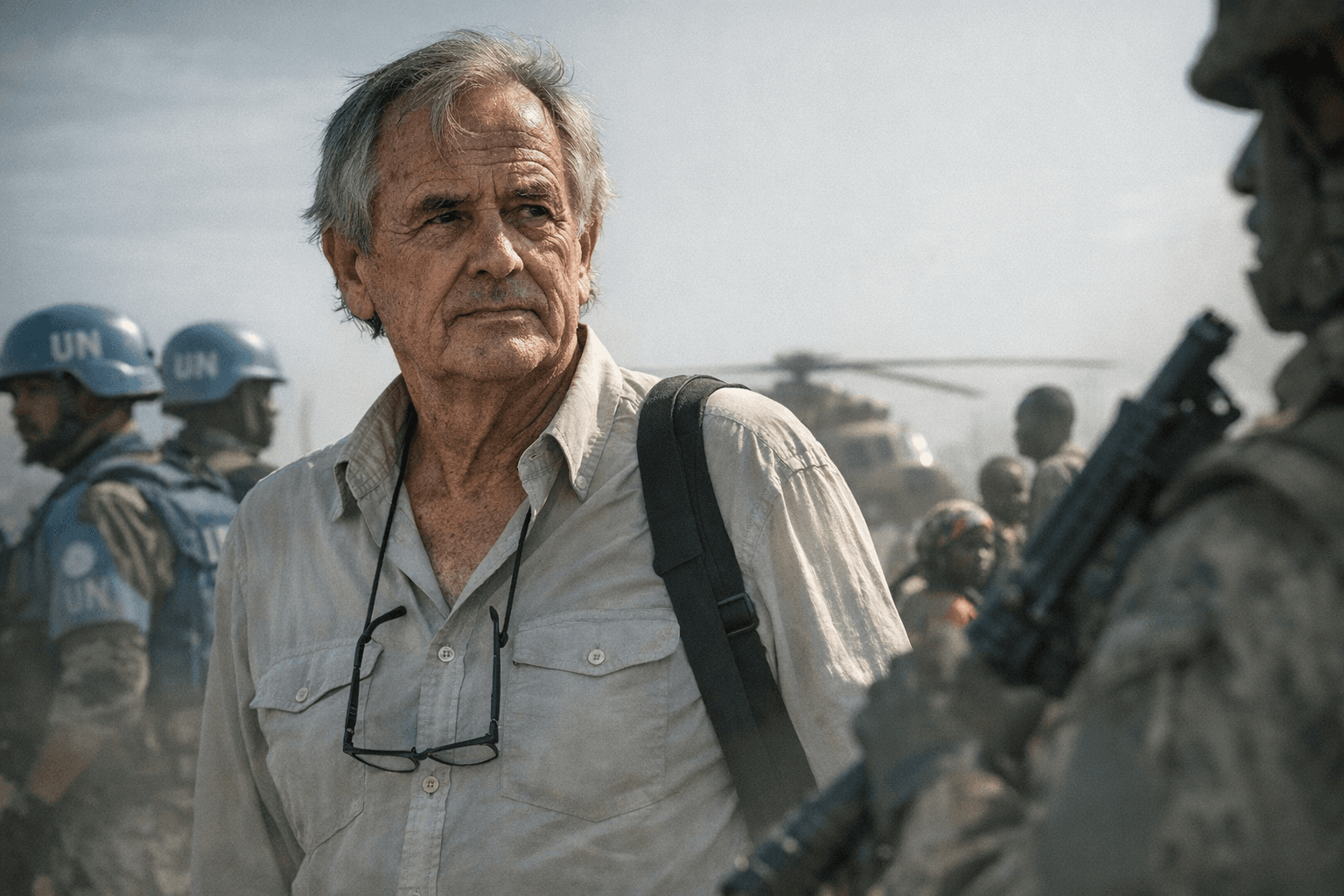
Six months in solitary confinement, sometime around 1980, in a South African prison: that was the price Nicholas "Fink" Haysom paid for opposing apartheid. Three decades later, the same man was in Juba, South Sudan, trying to stop a different country from tearing itself apart.
Haysom, who helped draft South Africa's post-apartheid constitution and served as Nelson Mandela's chief legal adviser, died on March 19 while still serving as Special Representative of the Secretary-General and head of the U.N. Mission in South Sudan, a post he had held since January 2021. He was 73. The U.N. mourned the loss of what it called a "constitutional lawyer-turned top crisis diplomat" and "a tireless champion of crisis diplomacy."
Haysom grew up in Durban in a white liberal family that believed in racial equality; his mother was an anti-apartheid activist. He studied law at the Universities of Natal and Cape Town, then became president of the National Union of South African Students in 1976, taking over an organization already fractured by the arrest of many of its leaders. By his own account, given in a U.N. interview in 2024, he was arrested or detained about half a dozen times, once spending six months in solitary confinement around 1980.
The transformation from prisoner to constitution-drafter came quickly after Mandela's release in 1990. Haysom was already a founding partner of Cheadle Thompson & Haysom Attorneys in Johannesburg and an associate professor at the University of the Witwatersrand's Centre for Applied Legal Studies when Mandela tapped him to help write the constitution that enshrined equal rights for Black South Africans, minorities, and white South Africans alike. He served as Mandela's chief legal adviser through the entirety of his presidency, until 1999. "Nobody at that time thought apartheid would end," Haysom said of that period, calling Mandela's release a "tremendous moment."
What he extracted from that experience and carried into his U.N. work was a specific theory of conflict resolution: that communities emerging from organized violence need a legal framework they can contest within, not a victor's settlement imposed from outside. He tested it in Burundi in the 1990s, helping mediate Hutu-Tutsi violence. He applied it to the Sudan negotiations, work that eventually contributed to South Sudan's secession and independence in 2011. He carried it to Iraq from 2005 to 2007, trying to design a formula for Shia, Sunni, and Kurdish communities to share a state.
Iraq illustrated both the method and its limits: Haysom could construct the architecture for coexistence, but could not manufacture the political will to inhabit it. The same tension ran through his four years in Afghanistan from 2012 to 2016 and his Special Representative posting in Somalia beginning in November 2018. South Sudan, his final assignment, was still unresolved when he died.
South African President Cyril Ramaphosa remembered him "for applying his legal acumen, mentorship, wisdom and integrity to the development of our constitution," urging South Africans "to honor his contribution to our nation and the international community by upholding the fundamental rights and maintaining the peace he advocated so passionately and eloquently."
In a podcast recorded for U.N. Under-Secretary-General Melissa Fleming, Haysom offered his own summary of what four decades of this work had taught him. "The lesson of [Nelson] Mandela is not just being a nice person," he said. "It's perseverance in your ideals. It'll change the world." He was born on April 21, 1952, and was also, in what Ramaphosa noted as a testament to his range, South African Playwright of the Year in 1987.
Know something we missed? Have a correction or additional information?
Submit a Tip