Iran Warns U.S. Ground Troops Would Be Set on Fire if Invasion Begins
Iran's parliament speaker vowed to "set on fire" any U.S. ground troops as 2,500 Marines arrived in the region and diplomats raced to Islamabad for emergency talks.

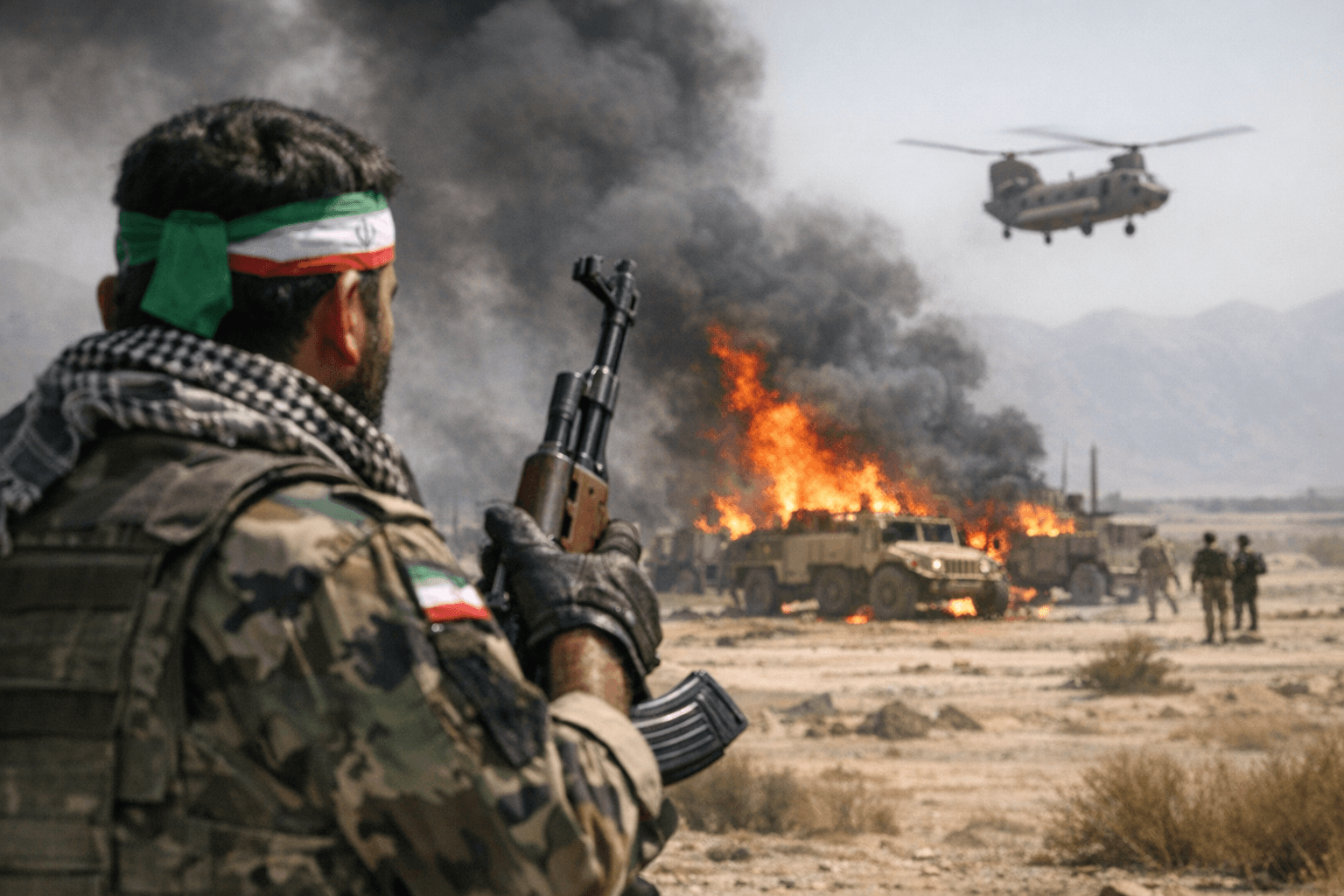
Iran's parliament speaker Mohammad Bagher Ghalibaf declared Sunday that Iranian forces were "waiting for the arrival of American troops on the ground to set them on fire and punish their regional partners forever," issuing one of Tehran's most explicit military threats since the U.S.-Israel-Iran conflict entered its second month.
The warning, reported by Iranian state media, came two days after USS Tripoli (LHA 7) arrived in the U.S. Central Command area of responsibility carrying U.S. Sailors and Marines, part of a deployment that brought approximately 2,500 U.S. Marines into the region. Ghalibaf showed no signs of treating the buildup as a deterrent. "Our firing continues. Our missiles are in place. Our determination and faith have increased," he said, adding that accepting terms on Washington's timeline was inconceivable: "As long as the Americans seek Iran's surrender, our response is clear: Far be it from us to accept humiliation."
The statements arrived on the same day regional diplomats convened in Islamabad in an effort to arrange direct U.S.-Iran talks. Saudi Foreign Minister Prince Faisal bin Farhan flew to Pakistan on Sunday for the meetings, and Turkey and Egypt were expected to send senior diplomats to the Pakistani capital. Ghalibaf dismissed the gathering outright, characterizing the peace push as a cover for the arrival of U.S. Marines rather than a genuine path to a ceasefire.
Washington had already put a formal proposal on the table. The U.S. offered Iran a 15-point "action list" as a framework for a possible peace deal, but Iranian officials rejected it and publicly dismissed the concept of negotiating under pressure. That refusal, paired with Ghalibaf's inflammatory Sunday remarks, left the Islamabad talks facing long odds before Saudi, Turkish, and Egyptian diplomats had taken their seats.
The broader economic stakes sharpened the urgency. Iran's hold on the Strait of Hormuz has shaken markets and energy prices since the conflict began. The entry of Iranian-backed Houthi rebels into the fighting introduced a second chokepoint: if the Houthis resume targeting commercial vessels in the Bab el-Mandeb Strait off the Red Sea, roughly 12 percent of all global trade that normally transits that waterway would face renewed disruption. The war has already threatened global supplies of oil and natural gas, sparked fertilizer shortages, and forced widespread disruptions to commercial air travel.
The conflict, which involves the U.S., Israel, and Iran, had reached approximately the one-month mark as Ghalibaf spoke. Whether the Islamabad diplomatic channel survives his threats, and whether Washington responds to his missile posturing with further force deployments, will likely define the conflict's next phase.
Know something we missed? Have a correction or additional information?
Submit a Tip