Iran War's Fertilizer and Fuel Shock Squeezes Vietnam's Rice Farmers
A two-week ceasefire halted the bombs but not the price shocks; global urea hit $700 a ton and Vietnam's Mekong Delta rice farmers absorbed the full impact.
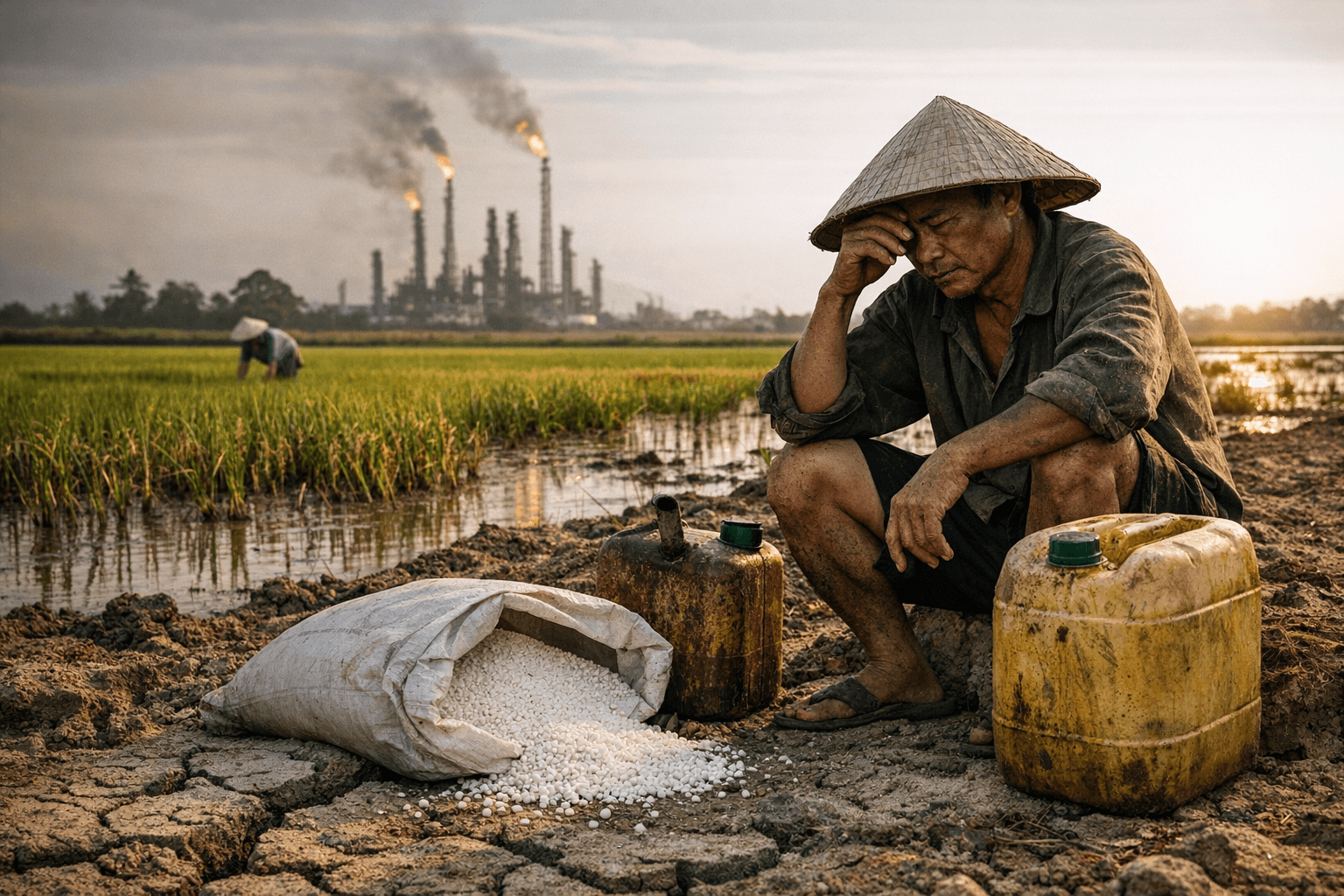
The bombs over Iran went quiet two weeks ago, but in the Mekong Delta, the war's economic blast radius has not narrowed. Vietnamese rice farmers, who collectively supply nearly 90% of the country's rice exports, have been absorbing fertilizer and fuel costs that surged the moment the conflict began on February 28, when U.S. and Israeli strikes disrupted the Strait of Hormuz and choked the arteries of global commodity trade.
The Strait, through which roughly one-third of the world's seaborne fertilizer trade moves each year, was effectively shut to tanker traffic in the weeks following the strikes. Global urea prices spiked 40% in a matter of weeks, hitting $700 per ton in March. Morningstar analyst Seth Goldstein projected that nitrogen fertilizer prices could ultimately double from 2024 levels, with phosphate costs rising roughly 50%. In Can Tho, one of the delta's main agricultural trading hubs, a bag of urea rose by more than VND200,000, about $8, in a single week. DAP fertilizer climbed nearly VND100,000 per bag.
For farmers already absorbing a 15 to 18% drop in rice prices as markets softened, the arithmetic turned brutal fast: input costs rising sharply while the value of what those inputs would produce fell.
Vietnam is the world's third-largest rice exporter, behind India and Thailand, shipping more than 8 million tons annually. The Mekong Delta generates roughly half of Vietnam's total rice output and nearly all of its export volume. A supply shock absorbed quietly at the farm level rarely stays quiet for long in a country with that much exposure to global grain markets.
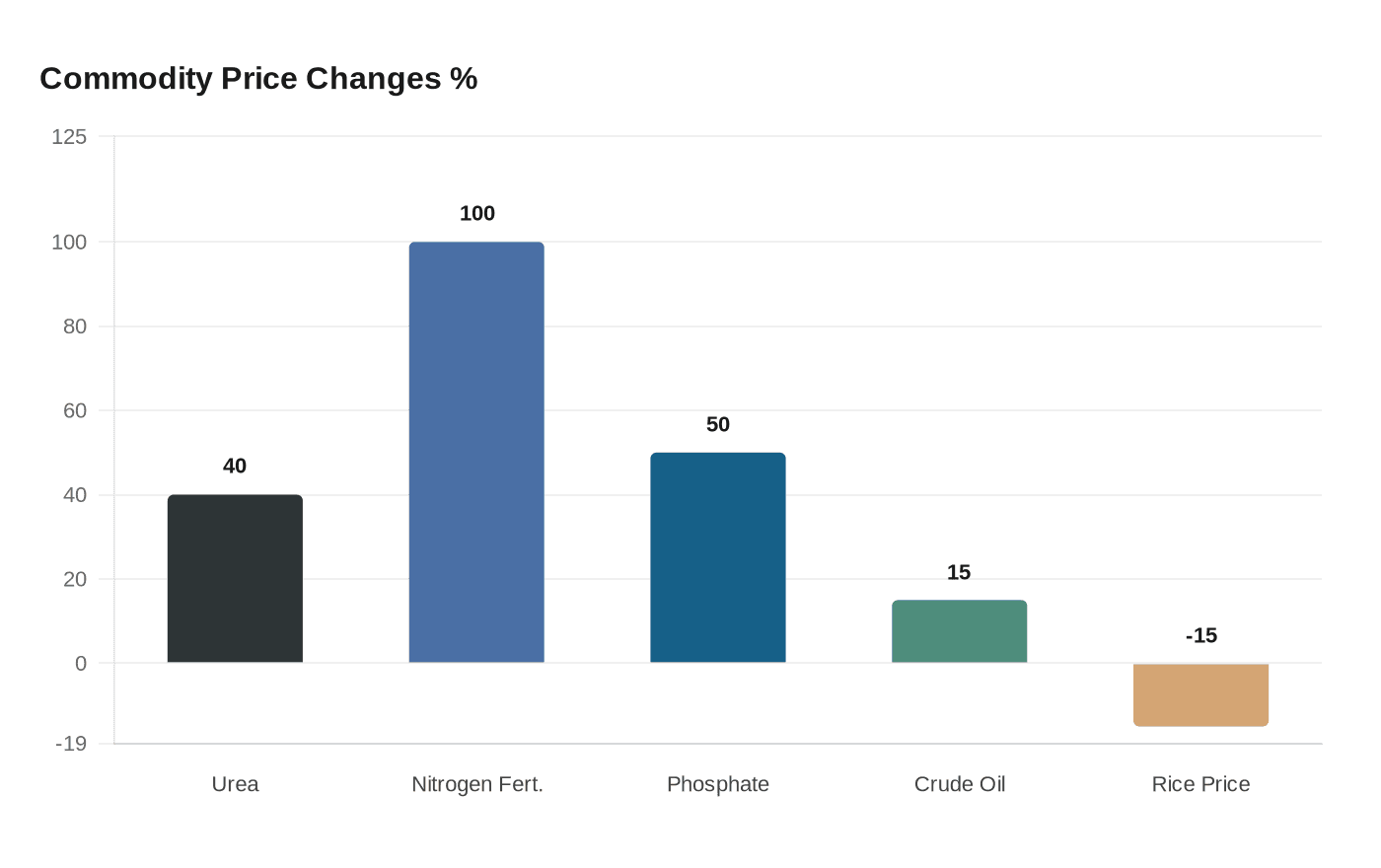
Oil prices compounded the strain. Crude futures for May 2026 delivery rose more than $10 per barrel, a 15% increase, in the weeks following the February 28 strikes, pushing up diesel costs for the fuel-powered pumps that move water through the delta's dense irrigation grid. Farmers running those pumps through a dry season faced a cost floor that kept rising while their revenue ceiling dropped.
The ceasefire's durability remains in question, with both sides publicly disputing its terms. Fertilizer markets tend to recover slowly even when the underlying disruption ends, and farmers planting their next crop cycle have no mechanism to wait out diplomatic uncertainty. The warning embedded in the delta's distress is not about this harvest alone; it is about what happens to the nations across Asia and Africa that depend on Vietnamese rice if farmers reduce inputs or abandon marginal fields to manage losses that no longer make sense to sustain.
This article was produced by Prism’s automated news system from verified source data, official records, and press releases, then run through automated quality and moderation checks before publishing. The system is built and supervised by the people who set the standards it runs under. Read our full AI policy.
Did this article answer your question?