Iranian Drone and Missile Strikes Hit Gulf Energy, Industrial Sites
Iran's strikes on Gulf energy hubs put 4-9% of global aluminium supply at risk and briefly froze Saudi oil exports as the region absorbed two days of attacks.
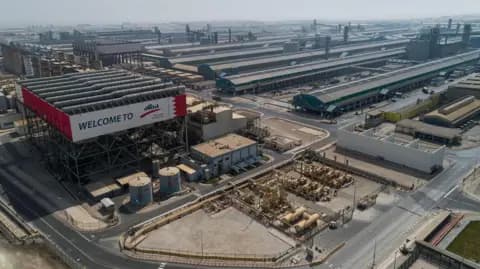
Two employees at Aluminium Bahrain's coastal plant and six more at an Emirates Global Aluminium site in Abu Dhabi were hospitalized as Iranian drone and missile strikes swept through the Gulf's industrial heartland on March 18 and 19, battering the world's largest liquefied natural gas facility, silencing oil loading at a key Saudi port, and forcing more than 25 energy companies to invoke force majeure in a conflict now in its fifth week.
The focal point of the two-day campaign was Ras Laffan Industrial City, about 80 kilometers north of Doha. Qatar's Defense Ministry reported two Iranian missiles struck the facility on March 18; three rounds of attacks hit the complex within several hours that day, with Qatar intercepting several incoming projectiles. QatarEnergy CEO Saad al Kaabi confirmed the missiles damaged two LNG facilities, and the state energy company described the hub as having sustained "extensive damage." The International Energy Agency identifies Ras Laffan as the world's largest liquefaction facility; restarting a damaged LNG train is not measured in days but in weeks of safety assessments, specialized equipment procurement, and systematic recommissioning checks.
On March 19, an Iranian drone struck the SAMREF refinery in Saudi Arabia. Sources told Reuters the attack triggered a temporary halt to oil loadings at nearby Yanbu Port, a detail of particular strategic weight. Yanbu, on the Red Sea, is the principal alternative export route to the Strait of Hormuz, and with both corridors now under pressure, the Gulf's ability to route crude to global markets has narrowed sharply. Saudi air defenses intercepted seven Iranian missiles and 34 drones on March 19 alone; Kuwait's Mina Al Ahmedi refinery endured two separate waves of attacks the same day, and the IISS confirmed hits on key Saudi refineries at Ras Tanura as well.
The aluminium sector adds a direct consumer dimension to the supply-chain stress. The Gulf supplies an estimated four to nine percent of global aluminium production. Alba confirmed two of its employees were injured; EGA reported significant damage at its Abu Dhabi facility and six workers hurt. "This certainly threatens global supply," said Al Jazeera correspondent Zein Basravi, reporting from Dubai. Aluminium prices feed directly into automobiles, packaging, and construction materials worldwide.
The cascading effects extended to shipping. Maersk temporarily suspended operations at Oman's Salalah port after a drone strike there injured a worker. Beyond oil and gas, disruptions are threatening helium supplies critical to semiconductor manufacturing and sulfur used in fertilizer production, a chain of consequences that runs from refinery gates to grocery shelves and microchip factories.

More than 4,000 Iranian projectiles had been launched against GCC states as of March 19, according to the IISS, though only a few struck intended targets. Even so, the institute described the strikes as having "sent shockwaves across global energy, industrial and financial markets." The UAE intercepted seven missiles and 15 drones on March 19; Kuwait intercepted 18 drones; Bahrain's Defense Force intercepted two missiles and four drones.
The IRGC described the campaign as retaliation for a US-Israeli attack on Iranian industrial infrastructure launched from military bases hosting US forces in Gulf states. The IDF claimed on March 19 that a combined force had destroyed roughly 85 percent of Iran's surface-to-air missiles. President Donald Trump threatened on March 18 to "blow up the entirety of the South Pars Gas Field" if Iran launched further attacks on Qatar, posting on Truth Social that Iran had "unjustifiably and unfairly attacked a portion of Qatar's LNG Gas facility." Bahrain's UN Ambassador Jamal Alrowaiei subsequently convened an urgent closed session of the Security Council, citing the "cowardly attacks by Iran" and pressing members to enforce a March 11 resolution demanding Iran halt strikes on civilian and energy infrastructure.
The IISS warned Iran's current campaign has "firmly crossed red lines that the GCC had hoped would be safeguarded by their diplomacy," and with no member state left unaffected, the compound question facing global commodity markets is not whether more facilities will be hit, but which ones the world can least afford to lose next.
Know something we missed? Have a correction or additional information?
Submit a Tip